How to receive help without feeling like a burden
When someone offers help and your first instinct is to refuse—even though you need it—and what that reflex is protecting.
By Trupti Gavit
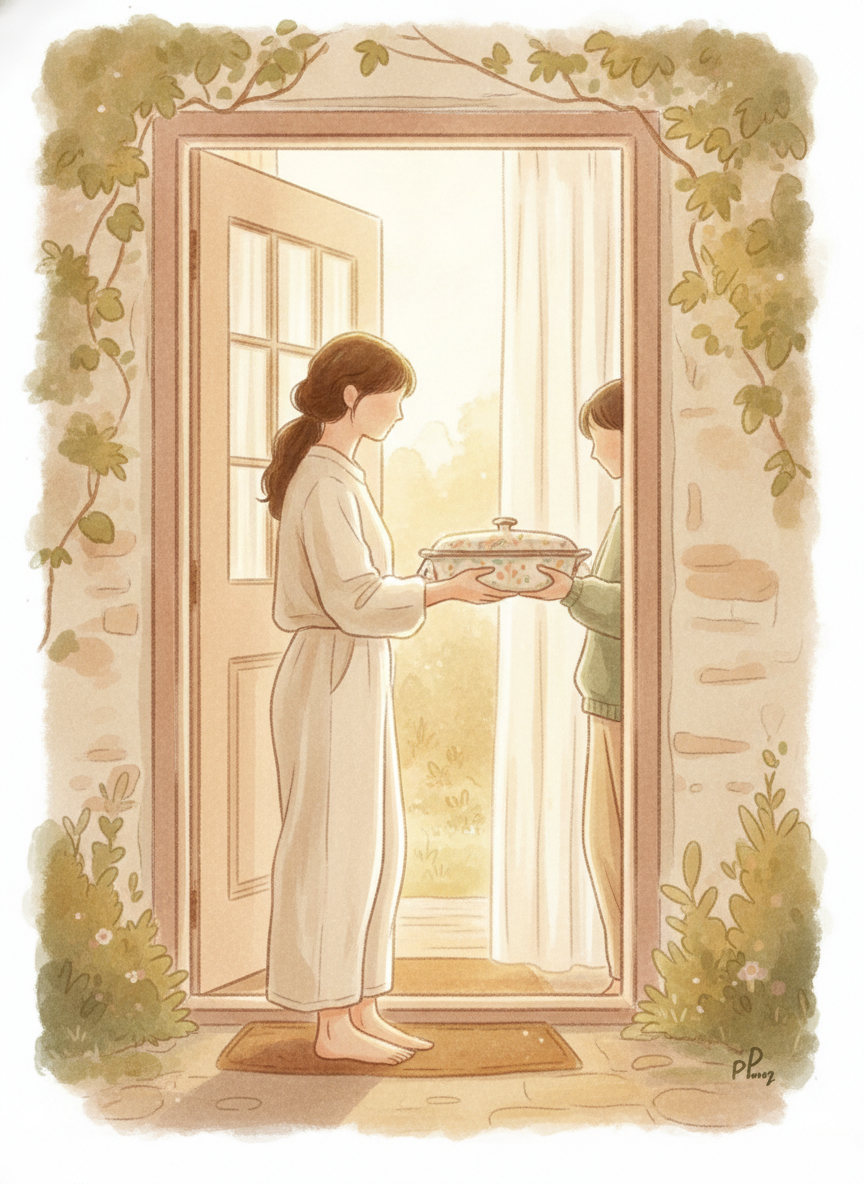
They offered and your first instinct was to refuse — even though you needed it.
Your friend texted: Can I bring dinner Thursday? You typed three versions of no before settling on That's so kind, but we're fine.
Your sister said: Let me watch the kids so you can rest. You laughed it off. Changed the subject. Went home and made dinner with the baby on your hip, more tired than you wanted to admit.
Someone held the door. Someone offered to carry the bag. Someone noticed you were struggling and asked if you wanted company. And each time, something in you pulled back—quick, automatic, like a hand returning to a hot stove.
Not because you don't trust them. Not because you're proud in the loud way people talk about on the internet. Because accepting help has always felt like taking up too much room.
The reflex that says no first
For some of us, refusing help isn't stubbornness. It's a language we learned early.
Maybe help came with conditions you couldn't see until later. Maybe needing something meant watching someone's face change. Maybe the people who cared for you were stretched thin, and you learned to need less so they wouldn't have to stretch further.
Or maybe you were the one who noticed when others were tired. You became good at reading the room, at making yourself small, at handling things quietly so no one else had to adjust their plans.
Saying no to help isn't always independence. Sometimes it's the body remembering what it cost to need something last time.
So when someone offers now, your body doesn't hear generosity. It hears a question underneath the question: Can you carry this? Can you owe someone? Can you be the reason someone else's day gets heavier?
You refuse before you can think it through. And afterward, alone with the thing you still need to carry, there's a quiet ache—not just from the weight, but from the distance you put between yourself and the person who reached out.
What "being a burden" really means to your body
Burden isn't just a word. It's a felt sense—a tightening in the chest, a urge to apologize, a mental calculation of how much you've already asked for this month.
You might notice it in small moments. Someone offers to split the bill and you insist on paying your half plus a little extra. Someone asks how you're doing and you say fine before you've checked whether that's true. Someone says I'm here if you need me and you nod but never call.
The fear isn't always that they'll say no. Sometimes it's that they'll say yes—and then you'll have to live with having needed them.

Because needing people opens something tender. It says: I can't do this alone right now. And if you learned that needing things made you harder to love—or made love feel less steady—you learned to close that door before anyone could see you standing on the other side of it.
You can love people deeply and still find it hard to let them love you back in the ways that require something from them.
This isn't a character flaw. It's an adaptation. Your system found a way to stay connected while minimizing risk. If you don't ask, you can't be disappointed. If you don't need, you can't be too much.
But connection that only flows one direction isn't really connection. It's performance. And performing fine is exhausting in a way that has nothing to do with the actual weight you're carrying.
The loneliness of handling it alone
There's a particular kind of loneliness that comes from being surrounded by people who would help if you let them—and not letting them.
You watch others accept casseroles, rides, listening ears. You tell yourself it's different for them. They have more reason. They're going through something harder. They actually need it.
Meanwhile you're making the third trip to the car with arms full of groceries, or sitting with worry at midnight without sending the text, or saying I'm good when you're not because good feels like the price of admission to not being a problem.
The people who love you often don't know. You got good at looking like someone who has it handled. And over time, they learned to take your word for it—not because they stopped caring, but because you were so careful not to ask.
What help actually asks of you
Receiving help asks for something small and terrifying: letting someone see that you're not always fine.
Not falling apart dramatically. Not oversharing. Just the honest version where you say Actually, Thursday would help instead of We're fine.
It asks you to trust that someone's offer was real—that they meant it when they said it, and that their yes isn't a debt you have to repay with interest.
It also asks you to tolerate the discomfort of being cared for. The awkwardness of accepting a meal. The vulnerability of letting someone sit with you when you're sad. The strange feeling of not earning your place in the room.
Being cared for can feel unfamiliar—not because you don't want it, but because your body hasn't learned yet that it's allowed.
This takes time. You don't undo a lifetime of handling things alone in one conversation. You practice in small doses. You say yes to the ride. You let someone hold the bag. You text back Thank you, dinner would help and then you don't immediately offer three ways to pay them back.
Learning to receive without keeping score
One thing that helps: separating help from transaction.
Not every kindness needs to be returned in equal measure. Not every meal needs a reciprocal meal. Not every listening ear needs you to listen back in the same conversation.
Sometimes help is just help—a moment of one person having enough to give and another person having a need that fits inside that enough. It doesn't make you smaller. It doesn't put you in debt forever. It makes you human, in a room with other humans.
You might still feel the urge to refuse. You might still calculate. That's okay. You can notice the reflex and choose differently, once, and see what happens.
Maybe they bring the casserole and stay for twenty minutes. Maybe they don't. Maybe it feels awkward and then it doesn't. Maybe nothing bad happens—no sigh, no change in tone, no quiet resentment you were bracing for.
Your body collects these small pieces of evidence slowly. Not proof that you'll never be disappointed again. Just proof that sometimes, help is simply help.
You weren't wrong to learn self-sufficiency. It kept you moving through seasons when no one was available, or when needing felt too costly.
And you also weren't meant to carry everything alone forever.
Letting someone bring dinner on Thursday doesn't erase the strength it took to get here. It just means you're allowed to be held, too—even if holding still feels unfamiliar in your hands.
Related book
The Feeling Has a Reason
Keep reading
- You're not behind — you're on a different pathEveryone else seems on schedule while you're still figuring it out. There is no schedule — just your life, unfolding the only way it could.
- Why spending feels like relief (and then regret)The cart fills when something inside feels empty. For a moment spending helps — then the package arrives and the relief is already gone.
- Why you always expect the worstWhen good news arrives and some part of you is already bracing for it to fall apart—and what that habit is really protecting.