Why checking your bank account feels like opening a wound
Your finger hovers over the banking app, and your whole body braces. Money anxiety isn't about math. It's about what your body learned long before you ever had a balance to check.
By Trupti Gavit
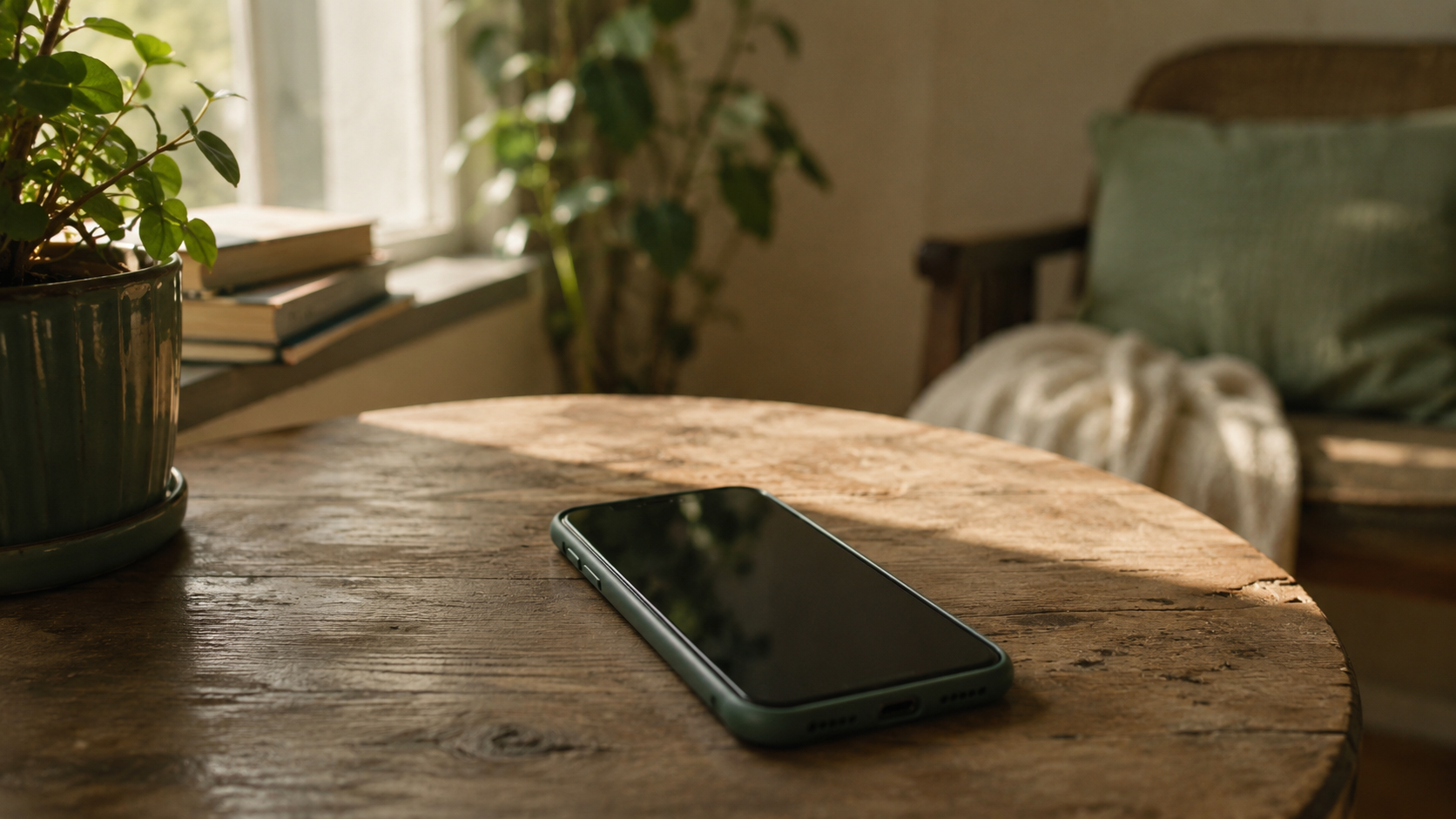
Your finger hovers over the banking app. It's been three days, maybe four. You know you need to check. You know the number doesn't change just because you're not looking at it. But your whole body is bracing anyway, like the app might reach through the screen and grab you by the throat.
This isn't about being irresponsible. You pay your bills. You show up. You manage. But there's this gap between knowing you're probably fine and feeling like you're about to see evidence that you're failing at something fundamental. The number loads, and even when it's okay, even when it's more than you expected, there's this split second where your chest tightens and your breath catches and you have to remind yourself you're safe.
Money does that. Not because you're bad with it. Not because you're irresponsible or anxious or too sensitive about something that's "just numbers." But because money was never just numbers. It's been tied to survival and safety and whether you're okay in the world since before you could spell "budget." And your body remembers that, even when your bank account doesn't actually threaten your survival anymore.
The thing nobody names
There's a specific flavor of shame that comes with money anxiety. It's not like other worries where people say, "Oh yeah, I get that too." With money, you're supposed to just handle it. Be an adult. Check your balance like it's a weather app. But for some of us, opening that app feels like lifting a rock to see what's crawling underneath.
You learn not to talk about it. You learn to laugh it off or make jokes about being broke, even when you're not really broke, just terrified of becoming broke. You learn to manage the fear quietly, privately, in those moments when you're alone with your phone and your body is screaming at you not to look.
Money was never just numbers. It's been tied to survival and safety and whether you're okay in the world since before you could spell "budget."
The fear isn't even always about the present. Sometimes your account is fine. You have enough. You've been careful. But your body doesn't care about your current balance. It cares about the time you didn't have enough. The time you saw your parents fight about money. The time you had to choose between two necessary things and could only afford one. The time you felt the ground disappear underneath you and realized that money was the ground.
Your body holds that. Not as a memory you can recall and process and file away. As a live wire. A threat that might return at any moment. So even when you're stable, even when you've built some cushion, some part of you is still waiting for the floor to drop out. That's why checking your balance feels like opening a wound. Because it's not about the number. It's about what the number represents: whether you're safe, whether you're okay, whether you've done enough to protect yourself from the thing you're most afraid of.
Money and your body
Money anxiety isn't a character flaw. It's not a sign that you're bad at adulting or that you need to just "get better with money." It's your body doing exactly what it was designed to do, which is track resources and alert you to potential threats to your survival.
The problem is, your body can't tell the difference between actual danger and remembered danger. It can't distinguish between "I might not make rent this month" and "I once saw someone I love panic about money and now I carry that panic in my body." Both register as threat. Both activate the same cascade of stress hormones, the same bracing, the same impulse to avoid or control or make the number mean something it might not.

This is why you can know intellectually that you're fine and still feel like you're not. Your rational brain sees the balance and does the math. Your body sees the balance and scans for threats that might not even be there yet. It's protecting you. Just not always in ways that feel helpful.
Some of us learned that money is what kept the family together or tore it apart. That it's the thing people lied about or fought about or used to measure worth. That having it meant safety and not having it meant chaos. Those lessons don't just live in your head. They live in your body, in the way your stomach drops when you think about checking your account, in the way you hold your breath before the number loads.
The stories underneath the numbers
You probably have a money story. Something you learned early about what money means and what it says about you. Maybe you learned that not having enough is shameful. That asking for help is weak. That you have to earn security by being perfect and careful and never making mistakes.
Or maybe you learned that money is unpredictable. That even when you think you're safe, something can take it away. That planning doesn't help because the ground shifts without warning. So you stopped planning. Or you over-plan, making spreadsheets and checking your balance twice a day, trying to control the uncontrollable.
Money anxiety isn't a character flaw. It's your body doing exactly what it was designed to do: track resources and alert you to potential threats.
These stories shape how you move through money now. They're the reason you avoid looking at your account, or look at it obsessively. The reason you feel guilty spending on something you want, even when you can afford it. The reason you swing between deprivation and impulse, never quite finding the middle ground where money is just a tool instead of a verdict on your worth.
The tricky thing is, these stories were usually true once. You did experience instability. You did watch someone you love suffer because of money. You did learn that resources are scarce and you have to be watchful. Your body isn't making it up. It's remembering. And it's trying to make sure you never have to live through that uncertainty again.
But memory and reality aren't always the same. What was true then isn't necessarily true now. The problem is, your body doesn't automatically update that information. It needs new experiences, repeated over time, to learn that the old threat isn't the current one. That you can look at your balance and survive what you find there. That even when the number is lower than you want, it doesn't mean you're failing or in danger or about to lose everything.
What actually soothes
You can't logic your way out of this. Telling yourself "it's just money" doesn't work because it's not just money. It's safety, security, evidence that you're doing okay in a world that often feels like it's measuring you by what you have or don't have.
But you can start to separate the old fear from the current reality. You can check your balance, notice the fear, and then notice whether the fear matches the situation. Sometimes it does. Sometimes the number is scary and you need to make a plan. But often, the fear is bigger than the facts. And naming that gap, just noticing it, can help your body start to recalibrate.
One thing that helps: checking your account at the same time every week, even when you don't want to. Not as punishment, but as practice. Your system needs evidence that looking doesn't destroy you. That you can see the number, feel the fear, and still be okay. Over time, the fear gets smaller. Not because the number changes, but because your system learns that you can handle whatever you find there.
Your body needs evidence that looking doesn't destroy you. That you can see the number, feel the fear, and still be okay.
Another thing: noticing what you do right before you check. Do you hold your breath? Tense your shoulders? Brace like you're about to be hit? Those are cues. Your body preparing for impact. You can soften that. Take a breath before you open the app. Remind yourself out loud, "I'm about to look at a number. Just a number. I'm safe right now." It sounds small, but it interrupts the pattern. It tells your system that this moment is different from the ones you're remembering.
And sometimes, the kindest thing you can do is acknowledge that money is hard. That it's okay to have feelings about it. That anxiety about resources isn't a personal failing. It's a human response to living in a world where resources matter and not everyone has enough. It makes sense that this is hard to carry.
Money will probably always carry some weight. That's okay. The invitation isn't to stop caring or to feel completely neutral. It's to stop letting the fear run the show. To check your balance when you need to, feel whatever you feel, and then make decisions from a place that's grounded instead of panicked. Your body can learn that it's safe to look. It just needs time and practice and a lot of gentleness while it figures that out.
The phone is still on the table. The screen is still dark. Your finger can hover there as long as it needs to.
Related book
Why Money Hits So Deep
Keep reading
- How to receive help without feeling like a burdenWhen someone offers help and your first instinct is to refuse—even though you need it—and what that reflex is protecting.
- You're not behind — you're on a different pathEveryone else seems on schedule while you're still figuring it out. There is no schedule — just your life, unfolding the only way it could.
- Why spending feels like relief (and then regret)The cart fills when something inside feels empty. For a moment spending helps — then the package arrives and the relief is already gone.