What if nothing is actually wrong with you?
You've spent years trying to change yourself. But what if your patterns were never evidence that something is wrong with you? What if they were just protection that worked, until it didn't?
By Trupti Gavit

You've spent years working on yourself. Reading books, trying techniques, following accounts that promise you can heal if you just do the right things in the right order. And maybe some of it has helped. But there's still this baseline feeling that something is wrong with you. That other people don't have to work this hard just to feel okay. That you're somehow fundamentally flawed in a way all the self-help hasn't reached yet.
What if that feeling is the thing that needs tending, not the patterns themselves?
What if nothing is actually wrong with you? What if every single thing you do that you've labeled as "too much" or "not enough" or "the wrong way" was just your system doing exactly what it needed to do to survive the circumstances you were actually in?
This isn't about pretending hard things didn't happen. This is about pausing the argument with yourself long enough to consider that maybe you're not the problem. Maybe you never were.
The weight of trying to become different
There's a particular exhaustion that comes from trying to change yourself for years. You've tried to be more present, less anxious, better at boundaries, more open, less reactive. You've worked on your attachment style, your communication, what activates old patterns in you. And some days you feel like you're getting somewhere, and other days you're right back in the same patterns, wondering why you can't just be different already.
So much of what we read tells us there's a right framework, a right therapist, a right morning routine — and then we'll finally arrive at the version of ourselves that doesn't struggle anymore. But that version doesn't exist. And chasing it just keeps you locked in the same story: that who you are right now isn't enough.
What if every single thing you do that you've labeled as "too much" or "not enough" was just your system trying to survive?
You learned early that there was a right way to be, and you weren't it. Maybe you were too loud or too quiet. Too sensitive or too closed off. Too needy or too independent. Somehow, the way you naturally moved through the world didn't match what the people around you needed or wanted. So you started adjusting. Trying to fit. Trying to be easier, smaller, more convenient, more acceptable.
And those adjustments worked. They kept you safe, or at least safer. They helped you navigate situations where being fully yourself felt dangerous. The problem is, you internalized the message that the real you was the problem. That the adjustments were who you should be, and anything else was just you failing to maintain them.
But what if the adjustments were never meant to be permanent? What if they were just temporary strategies that you had to use because you didn't have other options at the time? Your body isn't broken. It didn't create these patterns randomly. It created them because they worked. They protected you from something real. The issue isn't that the patterns exist. It's that they're still running, even though the original threat might not be.
Protection, not pathology
Every pattern you have made sense once. People-pleasing kept you safe in a home where conflict was dangerous. Shutting down protected you from overwhelm when no one was there to help you settle. Constant watchfulness kept you prepared for the next unpredictable thing. Perfectionism earned you the approval you needed to feel secure.
These weren't mistakes. They were adaptations. Smart ones. Your system looked at the environment it was in and figured out how to survive. The fact that those strategies don't serve you the same way now doesn't mean there's something wrong with you. It just means your context changed, and your body is still catching up.
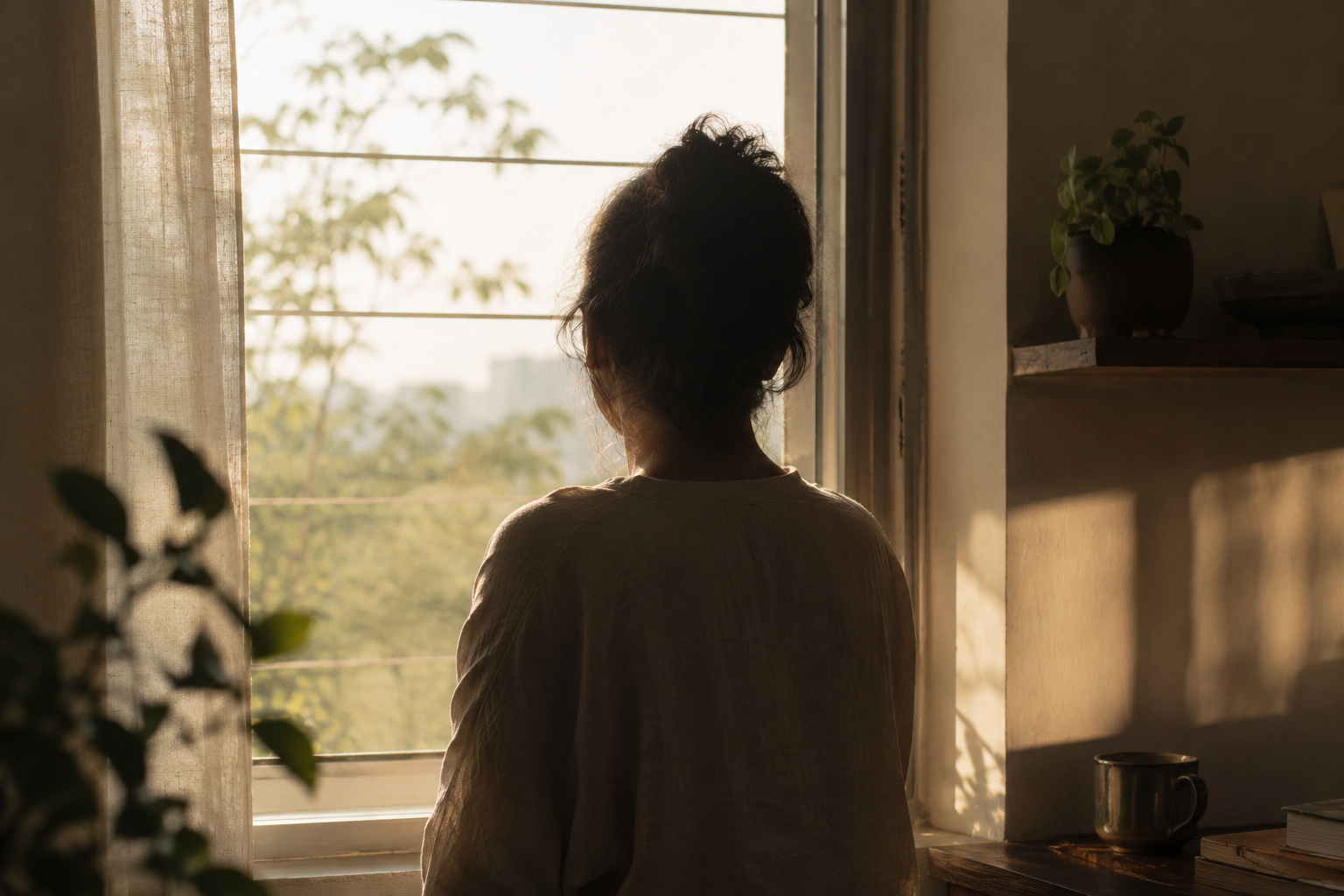
We pathologize normal responses to hard things. We call anxiety a disorder when it's often just a system that learned early to prepare for threat. We call avoidance a problem when it's a body protecting itself from more than it can handle. We label ourselves as "too sensitive" when we're just people who feel things deeply in a world that doesn't always make space for that.
This doesn't mean the patterns are comfortable or that you have to keep them. It just means they don't prove something is wrong with you. They prove you survived. And survival is not the same thing as thriving, which is why you're here now, trying to figure out how to live differently. Not because you're wrong, but because you're ready for something that fits better.
Your patterns don't prove something is wrong with you. They prove you survived. Survival is not the same thing as thriving.
The shift happens when you stop trying to erase the parts of you that adapted and start thanking them instead. When you can look at your people-pleasing and say, "You kept me safe when I couldn't afford to upset anyone. Thank you. I've got it from here." When you can see your constant watchfulness and acknowledge, "You were watching for danger because no one else was. I see you. I'm watching now."
That doesn't make the patterns disappear. But it changes your relationship to them. They're no longer evidence of failure. They're just old protections that you don't need as much anymore. And when you approach them with gratitude instead of shame, they soften. Not because you forced them to, but because they finally feel seen for what they were trying to do.
What changes when you stop treating yourself like a project
When you stop treating yourself like a project, something unexpected happens. You start to notice what you actually need, instead of what you think you should need. You start to trust your own instincts again, instead of outsourcing every decision to some framework or expert.
You realize that rest isn't something you have to earn. That boundaries aren't mean. That feeling your feelings doesn't make you weak. That wanting connection doesn't make you needy. That needing time alone doesn't make you cold. You start to see that most of the things you were trying to change were just human responses to being human in a world that often isn't set up for humans to thrive.
The invitation isn't to become some perfected version of yourself. It's to arrive at a place where you can be who you are without apology. Where your patterns are just information, not verdicts. Where you can notice, "Oh, I'm people-pleasing right now," and decide whether that's what you want to do, instead of spiraling into shame about it.
The invitation isn't to become a perfected version of yourself. It's to arrive at a place where you can be who you are without apology.
This is harder than it sounds. There's a whole culture built around the idea that you're not enough yet — that you need one more course, one more tool, one more breakthrough before you can just be. But you can be, right now. Exactly as you are. With all the patterns and the struggles and the ways you're still figuring it out.
That doesn't mean you stop growing. It just means you grow from a place of wholeness instead of lack. You're tending what's tender. You're updating strategies that used to work but don't fit anymore. You're learning new ways to be in the world, not because the old ways were wrong, but because you have more capacity now. More safety. More space to try something different.
The practice of enough
What if you woke up tomorrow and decided you were enough? Not in some distant future when you've finally healed all your wounds and learned what still stirs old patterns in you. But right now. With the anxiety and the overthinking and the ways you still sometimes shut down or reach for old coping mechanisms. What if all of that was okay, and you were still enough?
You don't have to believe it fully. You just have to try it on for a minute. Notice what it feels like to consider that maybe you're not the problem you've been taught to believe you are. That maybe you're just a person with a body that's been working really hard for a really long time, and it makes sense that you're tired.
The work isn't about becoming someone else. It's about coming home to yourself. The self that existed before you learned you had to be different. The one that knew what it needed and what it felt and what it wanted before someone taught you that those things were too much or not right or not acceptable.
That self is still there. Underneath all the strategies and the adjustments and the ways you learned to be smaller or quieter or more manageable. And the work isn't about remaking that self. It's about making enough space for it to breathe again. To exist without constantly defending its right to be here.
You are not a project. You are not a problem to solve. You're a person who has lived through things, and your system responded in the ways it knew how. Some of those ways don't fit anymore, and that's okay. You can learn new ones. But you can do that from a place of compassion instead of shame. From a place that says, "Nothing is wrong with me. I'm just here, doing my best, and that's allowed to be enough."
The bed is still unmade. The morning light is still coming through. You can lie there a little longer, if you want to.
Related book
Before You Know It
Keep reading
- How to receive help without feeling like a burdenWhen someone offers help and your first instinct is to refuse—even though you need it—and what that reflex is protecting.
- You're not behind — you're on a different pathEveryone else seems on schedule while you're still figuring it out. There is no schedule — just your life, unfolding the only way it could.
- Why spending feels like relief (and then regret)The cart fills when something inside feels empty. For a moment spending helps — then the package arrives and the relief is already gone.