That weird guilt you feel when you rest
Why your body won't settle when you finally have time to do nothing, and what that restless guilt is really trying to tell you.
By Trupti Gavit

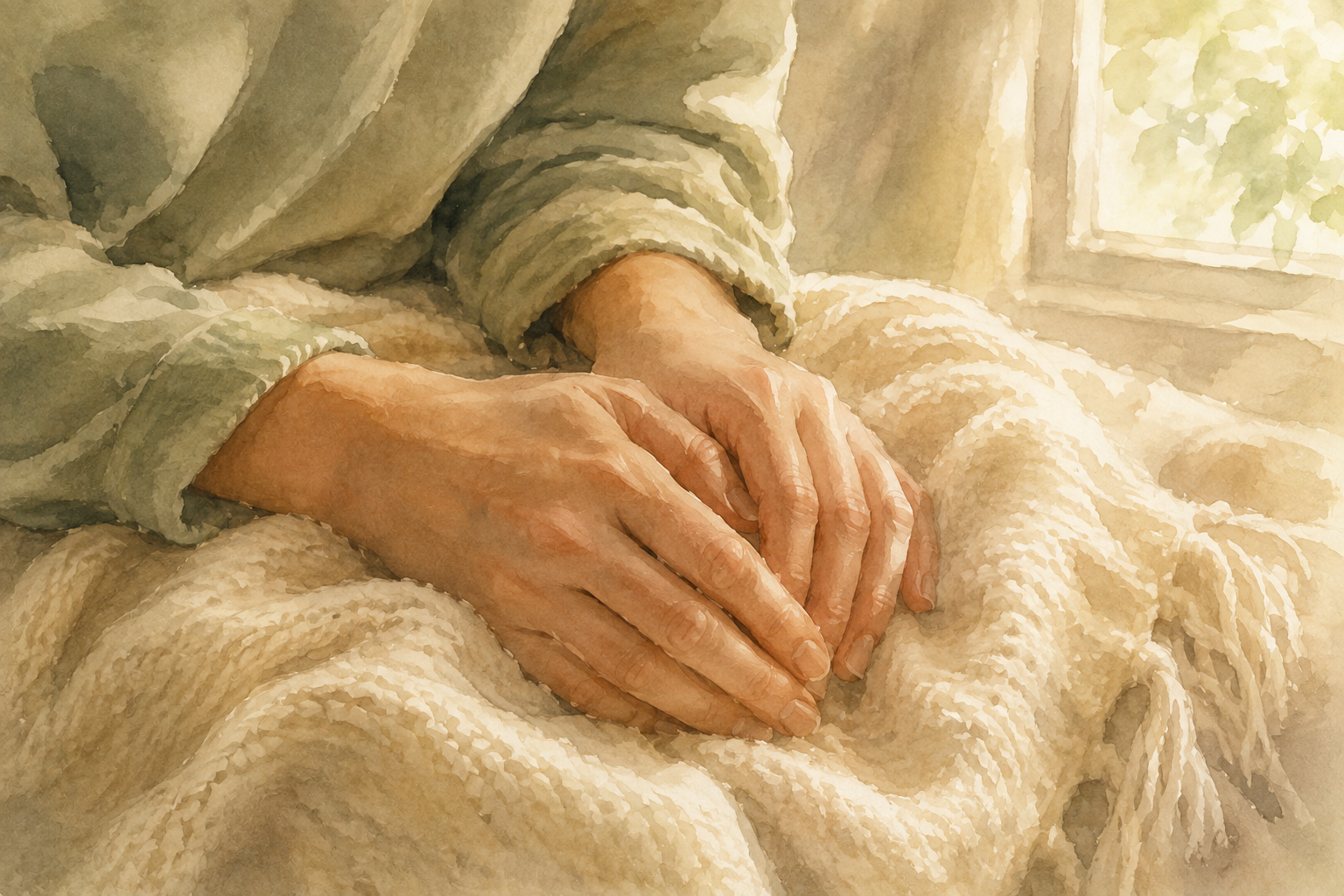
It's Saturday afternoon. You're on the couch. Your to-do list is manageable. There's no deadline breathing down your neck. You have permission—actual, real permission—to do nothing.
And your body is a riot.
Your leg bounces. Your jaw is tight. You pick up your phone, put it down, pick it up again. You think about the laundry in the basket, the emails you could get ahead on, that drawer you've been meaning to organize. Your chest feels like it's waiting for something to happen, except nothing's happening. That's the whole point.
You wanted this. You carved out time specifically for rest. But now that you have it, you can't seem to land in it.
There's a low hum of guilt threading through everything, a feeling that you should be doing something. And underneath that, a stranger feeling: that rest isn't a reward you've earned yet. That stopping still needs to be justified somehow.
When stillness feels like an emergency
Your body is treating rest like an unfinished emergency.
For a lot of us, doing nothing doesn't register as safety. It registers as a gap where something bad could slip in. Our bodies were trained, often very early, that stopping means being vulnerable. That productivity equals protection. That if we slow down, we'll be caught unprepared, criticized, left behind.
So even when our minds say "It's fine, we're allowed to rest," our bodies say "But what if it's not fine? What if we're missing something?"
Your body isn't trying to sabotage your Saturday. It's trying to keep you ready for a danger that hasn't been real in a long time.
That guilt you feel? It's not moral failure. It's not laziness creeping in. It's your system scanning the environment, finding no immediate task, and interpreting that as risk.
The math that doesn't add up
There's a silent equation a lot of us carry: If I rest, I'll lose ground.
It shows up in small ways. You take a Sunday off and spend Monday feeling behind. You skip the gym to sleep in and feel guilty instead of restored. You sit down to watch something and think about all the things you're not doing while you watch.
The equation says: rest is a deficit. Doing is the only way to stay even.
But that math doesn't track. Because here's the truth: you can't outrun exhaustion by doing more. The body doesn't work that way. Rest isn't the thing that puts you behind. The absence of it is.
Real Rest—the kind that actually restores—doesn't happen when your body is braced and scanning for the next task. It happens when your body believes it's safe to stand down.
And for a lot of us, that belief was interrupted early. Maybe you grew up in a home where love was conditional on achievement. Maybe stillness meant being forgotten, or criticized, or left with your own thoughts when they weren't safe. Maybe rest was something other people got to do, and you learned to earn your place by being useful.
So now, even when no one's watching, even when there's no real consequence, your body still thinks rest is risky.
The guilt isn't the problem. The belief underneath it is—that you have to earn the right to exist without producing something.
What your body is actually asking for
The guilt doesn't go away when you push through it and rest anyway. It loosens when you start to notice it, name it, and let your body learn—slowly—that nothing bad happens when you stop.
That restless feeling on the couch? It's not evidence that you're doing rest wrong. It's information. It's your body saying, "This is new. This is unfamiliar. I don't know yet if this is safe."
And the only way to teach it that rest is safe is to practice staying in it, even when it feels uncomfortable. Not forever. Not for hours. Just a little longer than your body wants to bolt.
You don't have to talk the guilt away. You don't have to argue with it. You just have to let it be there while you stay on the couch anyway.
That's the practice. Not feeling peaceful. Not forcing your body to relax. Just choosing rest even when your system is telling you it's the wrong move.
Over time, with enough repetition, your body starts to update its data. It learns that rest doesn't mean disaster. That you can stop and still be okay. That stillness isn't a gap where danger lives—it's the place where you get to come back to yourself.
Rest isn't a reward you earn after you've done enough. It's the thing that makes you able to do anything at all.
Ten minutes on the couch
You don't have to overhaul your life or block off whole weekends to start unwinding this. You can start with ten minutes.
Pick a time when the guilt usually shows up—Saturday morning, Sunday evening, a weekday afternoon when you're technically "off." Sit down. Let your body feel whatever it feels. Notice the urge to get up, check something, be productive.
And instead of fighting it or obeying it, just name it: "There's that feeling again. The one that says I should be doing something."
Then stay for one more minute.
That's it. Not an hour. Not a whole day. Just one minute past the point where your body wants to move.
You're not trying to feel relaxed. You're teaching your system that rest doesn't have consequences. You're updating old data with new evidence.
And if the guilt comes back tomorrow? Good. That means your body is still learning. That means there's still more safety to build.
Real Rest isn't the absence of activity. It's the moment your system stops bracing — even briefly — and discovers the world didn't collapse. Some days that lasts ten minutes. Some days ten seconds. Both count. Both are how a body that learned emergency begins to learn enough.
Rest isn't something you have to earn. It's not a luxury or a reward. It's the baseline your body needs to function. And if that feels hard to believe right now, that's okay. Your system just learned something different a long time ago.
Maybe it can learn something new. Slowly. On a Saturday afternoon, with the book still unread and the laundry still in the basket.
Related book
Why You Can't Rest
Keep reading
- How to receive help without feeling like a burdenWhen someone offers help and your first instinct is to refuse—even though you need it—and what that reflex is protecting.
- You're not behind — you're on a different pathEveryone else seems on schedule while you're still figuring it out. There is no schedule — just your life, unfolding the only way it could.
- Why spending feels like relief (and then regret)The cart fills when something inside feels empty. For a moment spending helps — then the package arrives and the relief is already gone.