Being angry without being cruel
Nobody showed you that anger can be honest without being harmful. What it looks like to feel the heat without letting it burn what you care about.
By Trupti Gavit
The email was unfair. You read it twice, jaw tight, heat rising from your chest to your face. You knew exactly what you wanted to say — every sharp word, every sentence designed to land.
You typed it. You deleted it. You typed something softer that didn't say what you meant. You deleted that too.
Now you're sitting at the kitchen table with the laptop closed, hands around a mug you haven't drunk from, feeling the anger with nowhere to go.
Nobody showed you that anger can be honest without being harmful.
When anger was the thing that got you in trouble
For many of us, anger wasn't treated as information. It was treated as a problem.
Maybe you watched someone else's anger reshape a whole room — and learned that heat meant danger, that volume meant someone would pay. Maybe your own anger was met with punishment, dismissal, or the silent treatment. Maybe you were the peacekeeper, the one who swallowed it because someone had to keep things steady.
So you learned to choose: speak and risk everything, or stay quiet and let the feeling eat you from the inside.
Neither option taught you what anger actually is — a signal that something matters, that a boundary was crossed, that you need something to change. Without that frame, anger becomes either an explosion or a secret. And both leave you feeling like the feeling itself is wrong.
Anger isn't the opposite of kindness. It's what happens when something you care about is threatened — and caring is never the problem.
The difference between heat and harm
There's a moment — brief, easy to miss — where anger is still just heat.
Your chest is tight. Your thoughts are fast. Your body is ready. In that moment, the anger hasn't become words yet. It hasn't become the email, the sharp reply, the thing you can't take back.
Harm happens when the heat moves faster than your care does. When the sentence is designed to wound rather than to say this hurt me. When the volume is meant to win rather than to be heard.
Cruelty isn't always loud. Sometimes it's quiet precision — the comment that finds the exact place someone is vulnerable. Sometimes it's withdrawal used as punishment. Sometimes it's the calm voice that says something devastating because you learned that controlled anger feels safer than messy anger.
Honest anger looks different. It names the thing without inventorying every past wound. It says I was hurt before it says you always. It leaves room for the other person to respond — not because they owe you agreement, but because you're not trying to end the conversation. You're trying to start one that matters.

What your anger is trying to tell you
Before the words arrive, it helps to listen to what the anger is pointing at.
Not the story your mind builds — the one where you're right and they're wrong, where every past slight gets pulled into the present. The signal underneath. I felt dismissed. I wasn't considered. I said yes when I meant no and now I'm paying for it.
That signal is worth hearing. It's your system telling you that something needs attention — a boundary, a need, a pattern that keeps repeating because it hasn't been named out loud.
When you skip this step and go straight to expression, the anger often comes out sideways. It finds the wrong target, the wrong words, the wrong moment. You end up fighting about the dishes when what you actually needed to say was I felt alone in that decision.
Listening first doesn't mean suppressing. It means giving the feeling enough room to clarify itself before it becomes speech.
The sharpest words are often the least accurate ones. Anger that has been heard by you first tends to arrive differently in the room.
When the heat stays in your hands a little longer
The email sits in drafts. Your feet are on the floor. Your jaw is still tight, but the first wave has moved through — and something quieter is underneath it.
I'm angry about this. Here's what happened from my side. Here's what I need going forward. Not here's everything you've ever done wrong. Not you always, you never. Just the thing in front of you, spoken in a voice that wants to be understood, not to win.
Sometimes the most honest thing is I need a minute before I can talk about this well. That's not avoidance. That's anger meeting care — the care that says this conversation matters enough to wait until you can show up in it honestly.
And if the words come out sharper than you intended — because sometimes they will — repair still belongs on the table. That came out harder than I meant. What I was trying to say is... That sentence is not weakness. It's what keeps anger from becoming the last word.
When the other person can't hear you
Sometimes you do everything carefully and the other person still gets defensive, still deflects, still makes it about your tone instead of what you said.
That's painful. It doesn't mean your anger was wrong. It might mean this isn't a conversation that can happen safely right now — or with this person at all.
You can leave a discussion without leaving your truth. You can say, I'm not willing to keep going like this, and mean it. You can write the honest version in a journal, say it to a friend, carry it with you as information about what you will and won't accept.
Being angry without being cruel includes being angry without abandoning yourself. You don't have to shrink the feeling to keep the peace. You don't have to perform calm to prove you're reasonable. You can hold the anger and the boundary at the same time — quietly, firmly, without needing anyone to be wrong for your feeling to be real.
Honest anger doesn't need an audience to be valid. Sometimes the most careful thing you can do is tell the truth and let it stand, even if no one else claps.
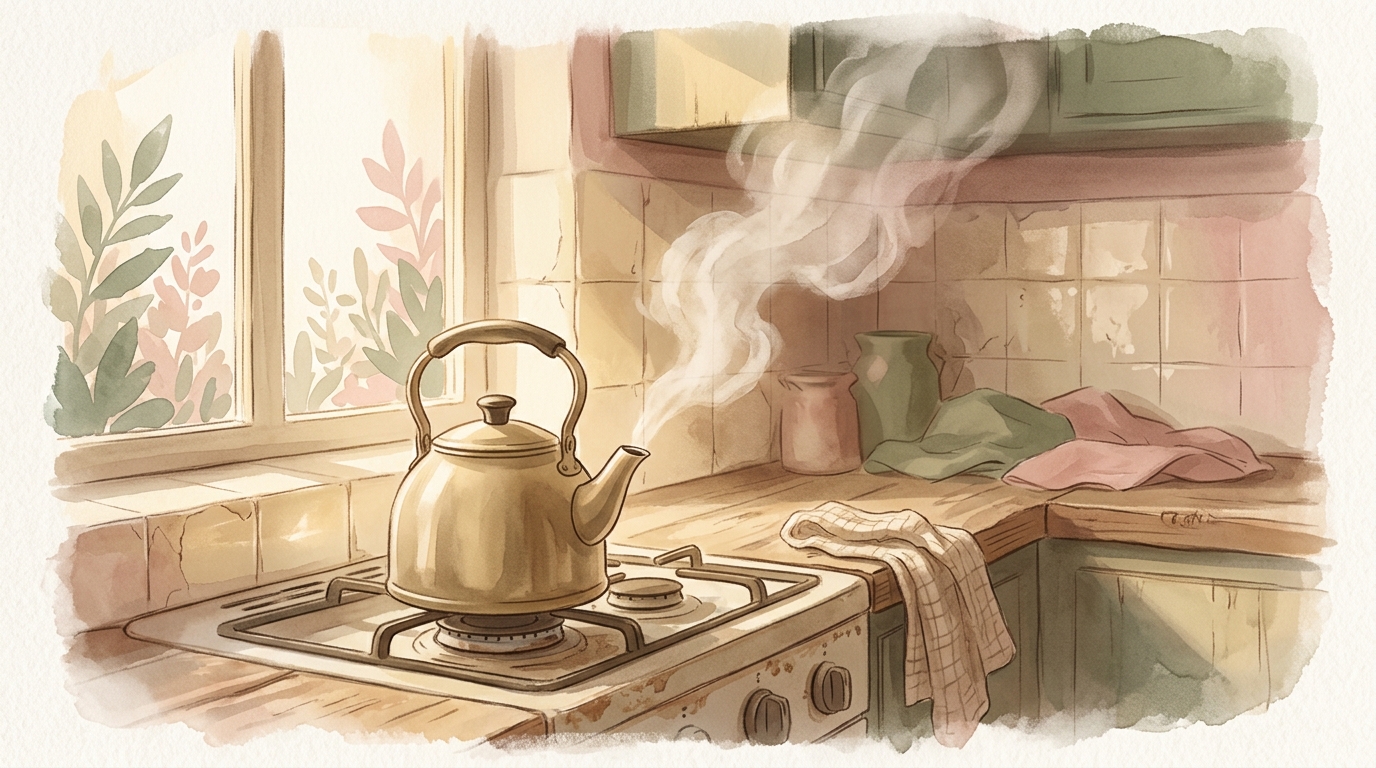
The kettle has gone quiet on the stove. The steam thins. The mug in your hands is cool enough to drink from now. The email can wait until tomorrow — or it can go out tonight, one honest paragraph, nothing extra. Either way, the anger is still yours to hold. And it doesn't have to burn the house down to be real.
Related book
Why Love Is So Complicated
Keep reading
- What it means to feel less alone — even by one personYou don't need a crowd. You need one person who stays when things aren't pretty.
- Why the people who get you don't always get you right awayReal belonging takes time. The instant click is rare. The slow build is where trust lives.
- The exhaustion of performing connection without feeling itYou showed up. You smiled. You asked questions. And you drove home feeling emptier than before.