What it means to feel less alone — even by one person
You don't need a crowd. You need one person who stays when things aren't pretty.
By Trupti Gavit
You don't need a crowd. You need one person who stays when things aren't pretty.
Not a fan club. Not a full table. Not evidence in the eyes of many that you're lovable — just one person who knows the unedited version of your Tuesday and doesn't leave when the edited version stops working.
One person who has seen you quiet, seen you wrong, seen you need something without asking you to justify the needing first. One person whose name you would call at an odd hour — not because you've tested it, but because something in you believes they would answer, or try to, or at least receive the call without making you feel like a burden for making it.
That's not a small thing. For many of us, it's everything.
What one person actually changes
Loneliness doesn't always mean zero people. It often means zero people who know you — really know you, past the warm version, past the competent version, past the version that keeps the room easy.
One person who knows you changes the weight of a room even when they're not in it.
You walk into a hard week differently when someone has your real number — not just your phone number, but the number of who you are when no one is performing. You carry a decision differently when there's one voice you can say the true thing to and expect, not agreement necessarily, but presence. Not a solution. Not a pep talk. Just someone on the other end of the sentence who doesn't disappear when the sentence isn't cheerful.
Your body registers this. It's the difference between alone and lonely — between solitude that feels chosen and solitude that feels like waiting. One person doesn't fill every empty hour. They change the texture of the empty hours. They make alone feel less like absence and more like a room you can return from, because someone knows you're in it.
One person who stays is not a consolation for not having more. It's a foundation — the kind that holds even when the rest of life is thin.
When one person is enough
Enough is a word that makes people suspicious. As if naming one person as enough means you've given up on connection, or settled, or stopped wanting the fuller table that others seem to have without trying.
But enough isn't settling. Enough is accuracy.
Some of us have one person — a friend, a sibling, a partner, a parent who finally learned how to stay — and that one person has changed what loneliness feels like in our bodies. Not erased it entirely. Loneliness has seasons, and even the most held among us know nights when the ache returns. But changed it. Made it less total. Made the world feel less like a place where no one would notice if you went quiet.
One person who texts back. One person who remembers the thing you mentioned once. One person who sits with you when the news is bad and doesn't rush to brighten it. One person who makes the ordinary Tuesday feel less like a test of your own company and more like a day you're living inside a life that includes being known.
That's not less than a crowd. For some of us, it's the whole thing — the difference between enduring and living, between performing okay and having one place where okay isn't required.
The particular gift of being known by one
Being known by many is a different experience from being known by one.
The crowd offers warmth, belonging, the pleasure of shared laughter and collective memory. It offers evidence that you fit somewhere, that people want you around, that your absence would be noticed at the party.
One person offers something narrower and deeper. They know how you take your tea. They know the particular way you go quiet when something hurts. They know the story behind the story you tell at gatherings — the version beneath the version, the one that doesn't come out in groups because groups don't always have room for it.

You don't need everyone to know that version. You might not want them to. Some truths are for one person, or for a few — not because you're hiding, but because intimacy has a scale, and the deepest scale is often quiet, often one-to-one, often built in kitchens and cars and late-night conversations that never become stories you tell at dinner.
When you don't have the one yet
Some of you are reading this without the one person in mind. Without the name you'd call at an odd hour. Without the evidence that someone would stay if things got unpretty.
That ache is real. It's not a failure of personality or effort. Some of us are between people right now — between friendships, between cities, between the person we lost and the person we haven't met yet. Some of us have people who like us without knowing us, and the gap between liked and known is its own particular loneliness.
If that's where you are, this isn't a promise that the one person is coming soon. It's a naming of what one person changes — the texture of alone when someone knows your real number, or when a friendship at the shallows deepens because one true sentence finally got said. Sometimes the one person isn't new. They've been in your life already, at the edges, waiting for the conversation to go one layer deeper.
Feeling less alone by one person isn't about counting contacts. It's about one relationship where you don't have to translate yourself before you speak.
What it means to be that person for someone else
You might also be the one person for someone — without fully knowing it.
The friend who doesn't realize their texts are the thing that gets someone through a hard week. The sibling who picks up without making it dramatic. The neighbor who remembers the detail and asks about it months later, and doesn't know that question landed like being seen — really seen — in someone's life.
Being the one person for someone else isn't a role you audition for. It's often accidental — built from showing up consistently, from listening without rushing to solve, from staying when the conversation goes somewhere uncomfortable and not changing the subject to something lighter.
You might be someone's one person right now, and they might not have told you, because telling is its own vulnerability — admitting that your presence matters that much, that their loneliness eases when you're in contact, that you are, quietly, part of what keeps them going.
Holding two truths
You can want more connection — more depth, more people, a fuller table — and still recognize that one person who truly knows you has already changed what alone feels like in your body.
You can be between people right now — lonely, waiting, unsure whether the one person exists for you yet — and still hold the shape of what you're looking for. Not a crowd. Not perfection. Just one person who stays.
Neither truth cancels the other. Both can live in the same life, the same week, the same you who is held by one and still hungry for more, or held by none and still knowing what holding would feel like when it comes.
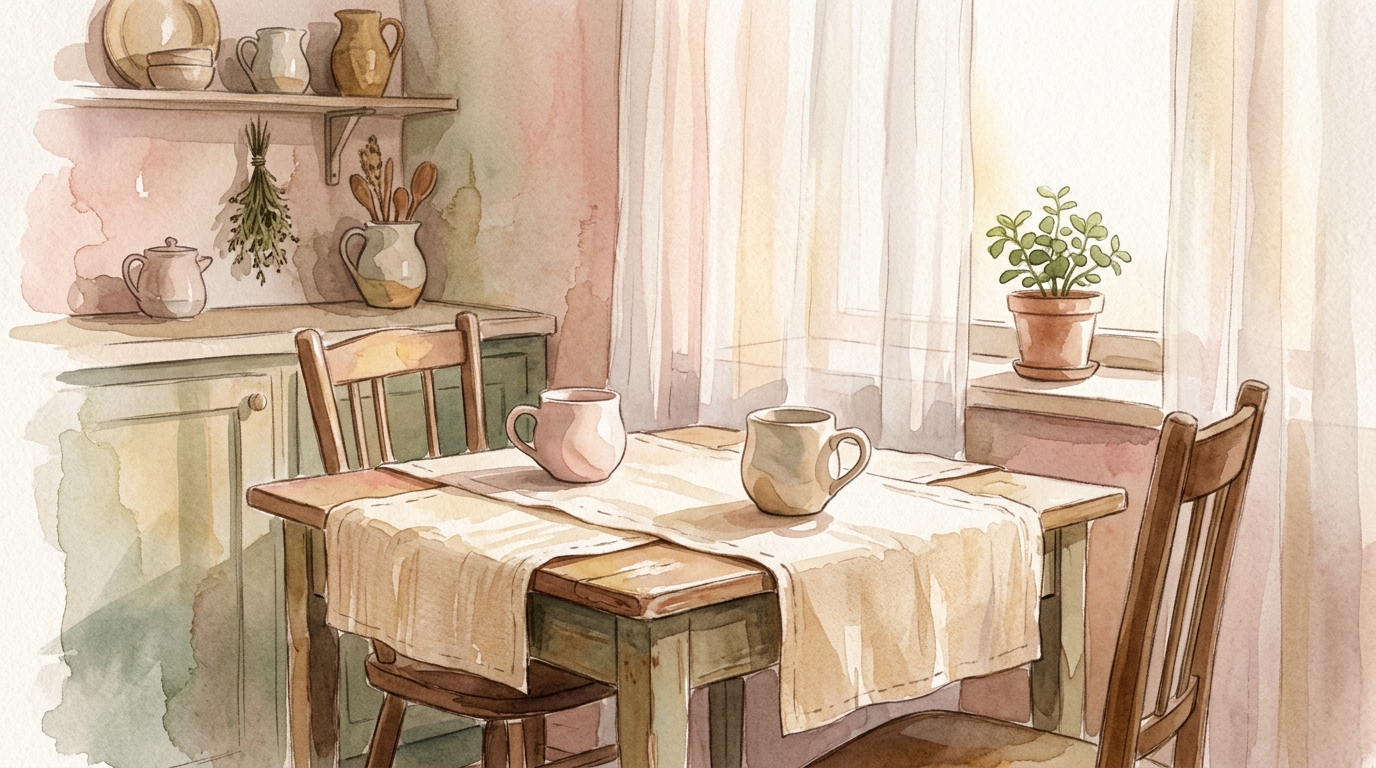
The kitchen is quiet. Two mugs on the table, or one mug and the memory of someone who used to sit there, or one mug and the hope of someone who might. Morning light through the curtain. The particular stillness of a life that includes being known by one — or the particular honesty of a life that doesn't yet, but knows what it's looking for.
You don't need a crowd. You never did. You need one person who stays when things aren't pretty — and if you have them, the evening is softer than it would have been. If you don't yet, the knowing of what you're looking for is already a kind of company — quiet, incomplete, but real.
The lamp stays on in the window. The room holds you either way.
Related book
Why Love Is So Complicated
Keep reading
- Why the people who get you don't always get you right awayReal belonging takes time. The instant click is rare. The slow build is where trust lives.
- The exhaustion of performing connection without feeling itYou showed up. You smiled. You asked questions. And you drove home feeling emptier than before.
- What happens when you walk with strangers and no phonesAt first it's awkward. Then someone says something honest. And something settles — a quiet kind of connection that only happens when nobody is performing for a screen.