Why your appetite disappears when life gets hard
Nothing is wrong with you — when food loses its pull during difficult seasons, and what your body might be doing with the energy instead.
By Trupti Gavit
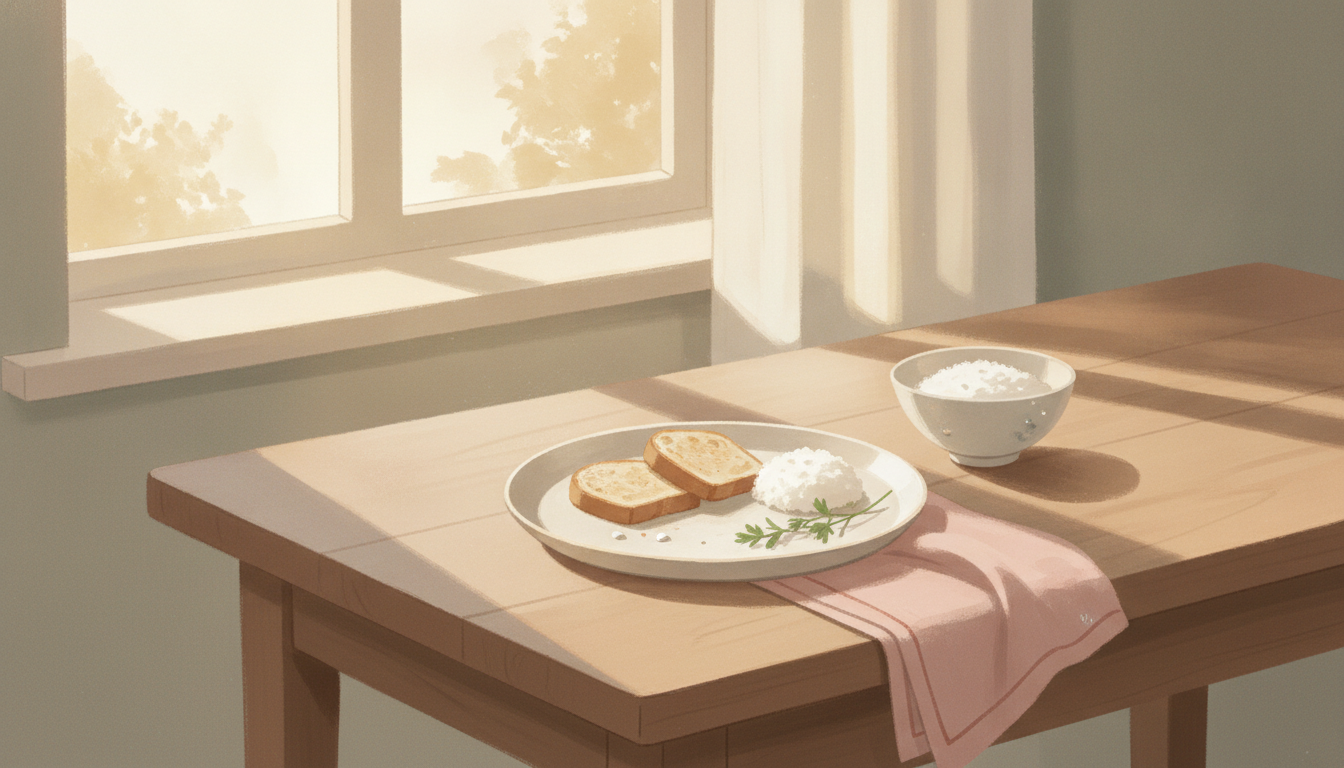
You made the food because you know you're supposed to eat. You even chose something you usually like — soup, toast, the familiar comfort of something warm.
You sat down. You took a bite. It tasted like nothing, or like cardboard, or like effort.
The plate is still mostly full. Your stomach isn't growling. You're not exactly nauseous. You're just... not hungry. And somewhere underneath the not-hungry, a quiet worry: Shouldn't I want this? What's wrong with me?
Nothing is wrong with you. Your body is redirecting energy somewhere else.
When eating becomes another task your body can't afford
Appetite isn't only about food. It's about safety. About room. About whether your body believes it has enough margin to digest, rest, take in.
When life gets hard — grief, uncertainty, conflict, too many demands landing at once — your body often shifts into a kind of triage. It sends resources toward what feels most urgent: staying alert, holding together, getting through the hour. Digestion, pleasure, the gentle pull toward nourishment — those move down the list.
This isn't a character flaw. It's not a sign that you're failing yourself. It's your body making choices you didn't consciously make, because something in you decided — below language — that now is not the time to receive.
You might still eat mechanically. Coffee because you need to function. A few bites because someone is watching. Food at odd hours because the day didn't have a shape. But the appetite — the wanting, the savoring, the ease of it — goes quiet.
When food stops calling to you, your body might not be rejecting nourishment. It might be saying the kitchen isn't the room that needs attention right now.
What disappears along with hunger
For some people, appetite loss comes with shame. Food is love in many homes. Eating together is connection. Not eating can look like not caring, not trying, not being grateful for what's offered.
You might hear old voices: Don't be difficult. Clean your plate. You're making this harder.
Or newer ones from a culture obsessed with control: Listen to your body. Honor your hunger. Why can't you do the basic thing?
Both miss the point. Your body isn't refusing to cooperate. It's responding to load.
You might notice other things going quiet too — taste, smell, the small pleasure of a favorite meal. Sleep might change. Your jaw might tighten. Your chest might feel full in a way that has nothing to do with food. These often travel together. One body, one season, one set of priorities you didn't vote on but are living inside anyway.
The body that learned to tighten during hard seasons
Some of this is universal biology — stress changes how we eat. Some of it is personal history.
Maybe food was controlled in your house. Maybe eating was commented on. Maybe hunger felt unsafe to show, or fullness felt like taking too much. Maybe hard seasons in childhood meant adults were too preoccupied to notice whether you ate — and your body learned to manage without being managed.
None of that has to be present for appetite to vanish when life gets heavy. But if it is, the silence around food might carry old echoes. Not eating might feel like the only part of the day you can control. Or eating might feel like too much exposure — too much comfort when comfort doesn't feel permitted.

What gentle looks like when food feels far away
You don't have to force a full meal to prove you're okay. You don't have to wait until appetite returns before you offer your body something.
Gentle might look like sips instead of plates. Something cold and simple. Broth. Crackers. The food that asks almost nothing of you. It might look like eating at the same time each day not because you're hungry, but because rhythm helps when appetite doesn't.
It might look like telling someone you trust, I'm not eating much right now, without turning it into a crisis or a project they need to solve. Sometimes being seen in the change is part of what makes room for appetite to return.
And it might look like noticing when the loss persists — when weeks pass and food still tastes like distance, when weight drops quickly, when eating feels frightening rather than merely absent. That's worth bringing to someone who can help, not because you're failing, but because some silences need company.
Offering your body small nourishment during hard seasons isn't about looking well for other people. It's about staying in contact with yourself when contact feels thin.
When appetite returns — or doesn't, yet
Appetite often comes back when the load shifts. Not always on a schedule you can predict. Sometimes one morning you want eggs again. Sometimes the wanting returns slowly, like light after a long gray week.
You might feel guilty for how you ate — or didn't eat — during the hard part. You might wonder why you couldn't just take care of yourself better when it mattered.
Your body was taking care of you the only way it knew how in that season. Redirecting. Tightening. Getting you through. The return of hunger isn't a grade on how well you handled it. It's just a sign that something has loosened enough for wanting to come back.
And if it hasn't returned yet, that doesn't mean you're stuck forever. It might mean the season isn't over. It might mean your body still needs gentleness more than it needs pressure.
Holding the worry without turning it into a verdict
You can be concerned about not eating and also refuse to treat your body like a problem to solve by force.
Both can be true: I wish I wanted food and I understand why I don't right now.
The plate can sit untouched without meaning you're falling apart. The soup can go cold without meaning you've failed at healing. Sometimes the most honest thing is to eat three bites, wash the bowl, and lie down — and let that be enough for today.
Appetite is a conversation your body has when it has room to speak. Hard seasons often leave that conversation whispered, not gone.
The plate is still by the window. The afternoon light has moved across the table. Somewhere in you, appetite may still be turned toward whatever needed holding first — and when the holding loosens, even a little, the first bite might taste like something again. Not because you forced it. Because you stayed gentle long enough for wanting to find its way back.
Related book
Why You Can't Rest
Keep reading
- What it means to feel less alone — even by one personYou don't need a crowd. You need one person who stays when things aren't pretty.
- Why the people who get you don't always get you right awayReal belonging takes time. The instant click is rare. The slow build is where trust lives.
- The exhaustion of performing connection without feeling itYou showed up. You smiled. You asked questions. And you drove home feeling emptier than before.