Attention fragmentation isn't laziness — it's exhaustion
Your brain isn't weak. It's been pulled in forty directions since breakfast — why scattered attention is often a sign of depletion, not failure.
By Trupti Gavit
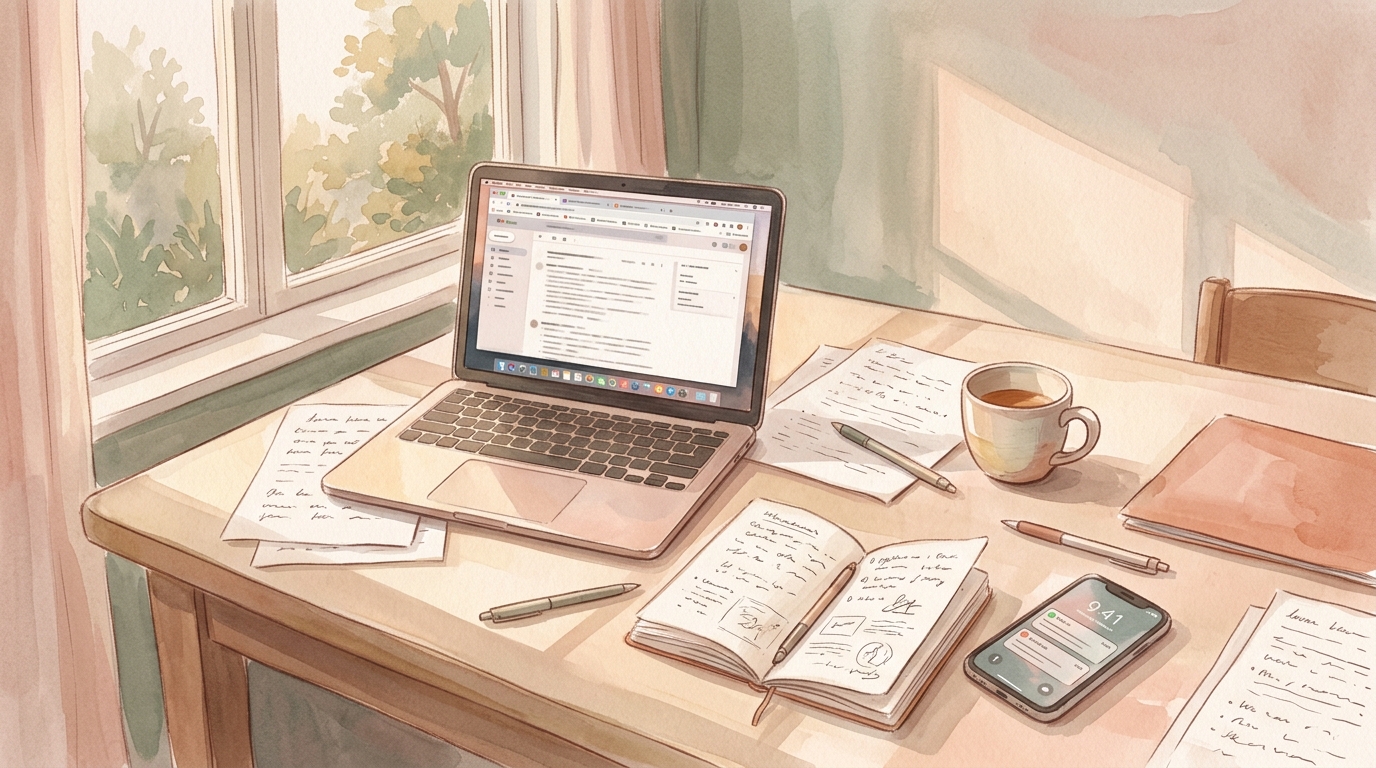
Your brain isn't weak. It's been pulled in forty directions since breakfast.
You sat down to do one thing. You know you did — you remember the intention clearly, the moment you chose the task and opened the right window and told yourself this, just this, for the next hour. And then the message came, and the reminder, and the thought about the thing you forgot yesterday, and the sound of someone needing something from another room, and the email that felt urgent because everything feels urgent now.
An hour passed. The one thing is still one thing — barely touched, or touched in fragments, or done badly because your attention kept leaving before it could land. And now there's the shame. The quiet voice that says what is wrong with you, you used to be able to focus, everyone else seems fine.
That voice is loud. It is also wrong about what scattered attention usually means.
What fragmentation actually looks like
Fragmentation isn't the absence of attention. It's attention divided beyond what any one mind was built to hold.
You read half a sentence and your eyes move to a notification. You start a reply and remember the laundry. You open a document and simultaneously rehearse a conversation, monitor your phone, and track the time until the next obligation arrives. Each thread gets a slice. No thread gets enough to feel whole.
From the outside, it can look like laziness — someone who can't be bothered to finish. From the inside, it feels like drowning in shallows. So much motion. So little depth. A day spent responding without ever fully arriving at your own life.
This isn't a character flaw. It's what happens when the demands on your attention exceed the capacity your body has left to give — and when the world has trained you to treat every interruption as mandatory.
Scattered attention isn't a mind that won't try. It's a mind that has been trying in too many directions for too long.
The exhaustion underneath
Fragmentation and exhaustion feed each other in a loop that's easy to misread as personal failure.
When you're depleted — from too little sleep, too much worry, too many days of holding more than you can carry — your capacity for sustained attention shrinks. Not because you've become less intelligent or less capable. Because the body prioritizes survival over depth when resources are low, and survival, in a modern life, often looks like scanning — staying ready, staying reachable, staying on top of everything just enough to keep the day from collapsing.
You might not feel exhausted in the obvious way. You might have slept. You might have eaten. But there's a tiredness that sleep doesn't touch — the tiredness of a mind that hasn't been allowed to stay with one thing long enough to rest inside it.
That tiredness makes fragmentation worse. And fragmentation makes the tiredness worse. The shame adds a third layer — the belief that if you just tried harder, pushed through, became the person who can focus, everything would be fine.

Some days the fragmentation is situational — too many real demands, too little support, a season where the math of your life genuinely doesn't add up to sustained focus. Other days it's cumulative — weeks or months of partial attention adding up to a body that no longer trusts it can stay anywhere safely.
Both ask for compassion, not correction.
You might notice, on the worst days, that you're not avoiding the task — you're avoiding the feeling of failing at the task while doing it. That the scatter is sometimes a kindness your body offers when staying would mean feeling something you don't have room for yet.
Why the shame makes it worse
The cruelest part of fragmented attention is often the story we tell about it.
I should be better than this. Other people manage. I'm falling behind. Something is wrong with me.
That story adds a second task to every moment — not just do the thing, but do the thing while proving you're the kind of person who can do things. The monitoring itself fragments attention further. You can't fully be in the email because part of you is watching yourself fail at being in the email, and judging the failure, and planning how to be different tomorrow.
Compassion doesn't undo fragmentation. But shame almost always deepens it — because shame is itself a pull on attention, a thread that never lets you land fully in anything else.
Your attention isn't scattered because you're lazy. It's scattered because your days have been asking too much of it — and because you've been blaming yourself for a capacity problem dressed up as a character problem.
Holding two truths
You can want more sustained attention in your life — and also recognize that fragmentation often means you're carrying more than one person should have to carry alone.
You can feel frustrated by your scattered days — and also feel tenderness toward a mind that learned to split and scan because splitting and scanning kept you connected, employed, available, safe.
You can wish you could finish one thing whole — and also understand that on some days, touching many things badly is the best your body can offer, and that offering still counts as showing up.
Neither truth cancels the other. Both can sit in the same room without needing resolution.
What gentleness might look like
Gentleness toward fragmented attention isn't permission to give up. It's recognition that force rarely restores capacity — rest, reduction, and small repetitions in conditions gentle enough to stay often do.
Some days gentleness looks like choosing one thread and protecting it imperfectly for twenty minutes — not the most important thread, just one thread, long enough to remember what landing feels like. Some days it looks like admitting the day is a fragments day and lowering the expectation without lowering your worth. Some days it looks like asking for help carrying something that was never meant to be yours alone.
Some days it looks like nothing at all — just stopping the story that you're lazy long enough to notice you're tired, and that tiredness has a context, and the context isn't your fault.
The table is quieter now. Not empty — the threads are still there, most of them still open. But something has softened in how you're sitting with them. Not as evidence of failure. As information about a life that has been asking your attention to be in too many places at once. The fragments aren't who you are. They're what exhaustion looks like when it wears the mask of a busy, capable day — and the mask, however convincing, was never the whole story.
Related book
The Loop You're Stuck In
Keep reading
- What it means to feel less alone — even by one personYou don't need a crowd. You need one person who stays when things aren't pretty.
- Why the people who get you don't always get you right awayReal belonging takes time. The instant click is rare. The slow build is where trust lives.
- The exhaustion of performing connection without feeling itYou showed up. You smiled. You asked questions. And you drove home feeling emptier than before.