Attention is a kind of care
What you pay attention to is what you're saying matters. Not as a rule — as a quiet truth about how presence moves through an ordinary day.
By Trupti Gavit
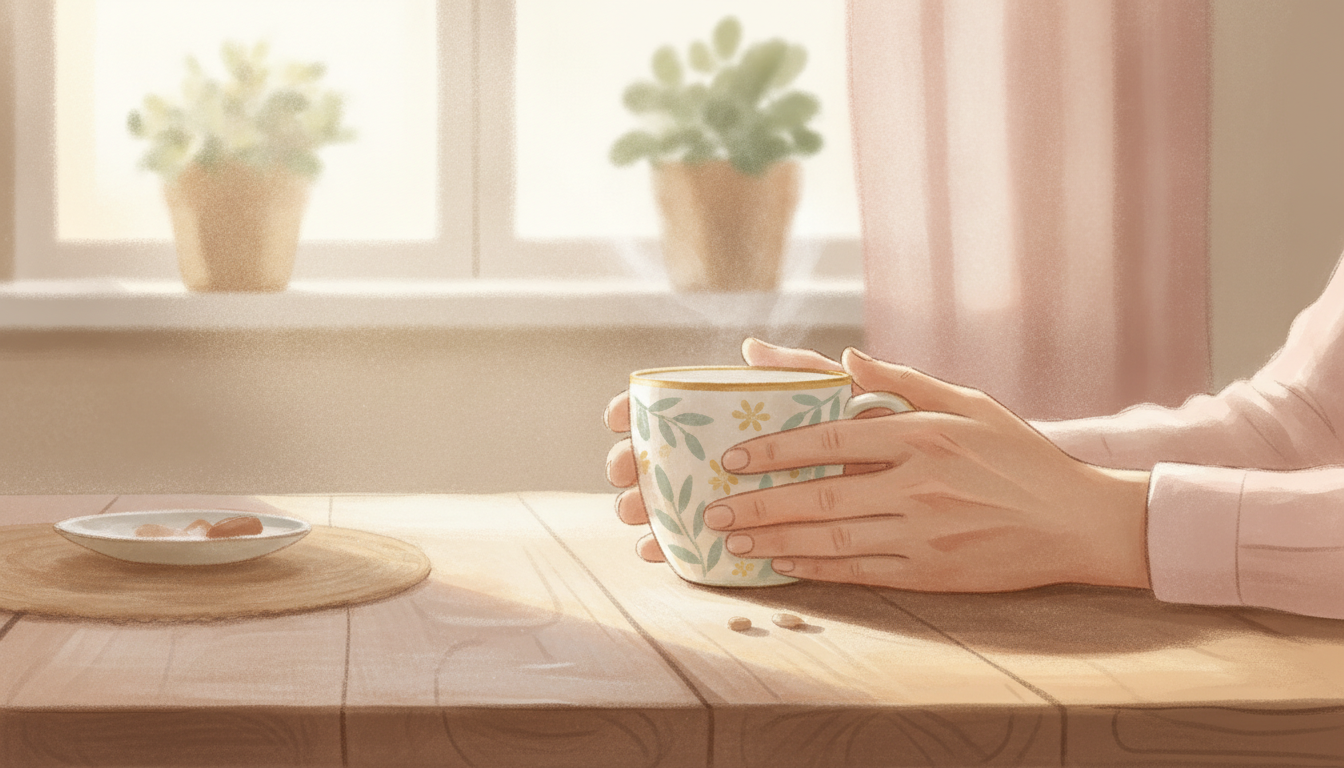
What you pay attention to is what you're saying matters.
Not in a grand, declarative way. Not as a philosophy you have to live up to. More quietly — in the small ledger of an ordinary Tuesday. The email you answered immediately and the one you kept meaning to return. The friend whose voice you heard fully and the friend whose message you read while doing three other things. The meal you tasted and the meal you ate while scrolling, unable afterward to say what was on the plate.
Attention isn't only a cognitive resource. It's a form of care — given, withheld, split, or offered whole. And most of us are giving it away in fragments all day long, without realizing what we're saying with each fragment.
Where your attention goes
It goes to the urgent more easily than the important. To the loud more easily than the quiet. To what's in front of you and what's in your pocket, often at the same time, which means neither gets the fullness of you.
It goes to other people's moods before your own. To the performance of being fine before the feeling underneath. To the next task before the current one has been allowed to finish.
Some of that is necessity. Some of it is love — you pay attention to your child because your child needs you. You pay attention to your partner's bad day because that's what partnership looks like. You pay attention to your boss's email because the rent is real.
Attention given from love and attention given from reflex can look the same from the outside. Only you know which is which — and what it costs to keep them confused.
But some of it is habit. The phone during dinner not because someone needs you, but because the table got quiet and quiet started to feel like something to fill. The half-listening during a conversation because part of you is already in the next hour. The project you keep starting because finishing would mean being still long enough to feel what's underneath the busyness.
Care you didn't know you were giving
Every scroll is care — directed somewhere. Every hour given to comparison, to outrage, to the curated lives of people you barely know — that's attention spent, and spent generously, even when it leaves you depleted.
This isn't a judgment. It's an observation with soft edges.
You might care about the news because the world is genuinely frightening and looking away feels like a luxury you can't afford. You might care about the feed because loneliness is real and the screen offers a simulation of company. You might care about the group chat because belonging matters and you don't want to be the one who missed the thread.
All of that is human. All of it makes sense.
And still — the question lingers, not as accusation but as curiosity: If attention is care, who or what am I caring for most days? And is that where I mean for it to go?

The people who get the fragments
The people closest to you often receive your most divided attention — not because you love them less, but because they're the ones present during the hours when you're most split.
Your partner gets you during the commute, half in a podcast. Your friend gets you on the phone while you're folding laundry, answering in the gaps. Your body gets you in the shower while you're rehearsing tomorrow's meeting.
They may not know the division. You might not either — until someone says you weren't really listening, and you realize they're right, and the shame arrives before the understanding does.
The people you love most aren't asking for all of your attention all the time. They're asking for enough of you to feel real — and you often know, quietly, when they didn't get it.
Whole attention doesn't require hours. Sometimes it requires three minutes — eye contact, a pause in the scrolling, a response that arrives after the other person has finished speaking instead of during. Sometimes it requires putting the phone in another room not as a rule, but as a small signal: Right now, you have my care.
That's not performance. It's presence — the kind that doesn't need to be named to be felt.
Care turned inward
Attention directed outward all day leaves very little for the person living the day.
You might reach evening without having noticed whether you're hungry, tired, sad, or simply full. Your body sends signals — tight shoulders, a headache, a restlessness you can't name — and you interpret them as problems to push through rather than messages to hear.
Turning attention inward isn't indulgence. It's the same care you'd offer someone you love, redirected toward the one person who is always in the room with you.
Noticing that you're thirsty before you're parched. Noticing that the conversation drained you before you agree to another. Noticing that you've been holding your breath for an hour and letting it go without making it mean anything about who you are.
Care for yourself isn't a separate category from care for others. It's the same quality of attention — offered inward when there's enough left to offer.
Some days there isn't enough. Some days everyone else gets the whole of you and you go to bed with nothing remaining — not even the energy to feel tired, just a blankness where the day was. Those days aren't failures. They're information about how much you're carrying, and how long you've been carrying it without pause.
Not a ledger — a relationship
It would be easy to turn this into a list of rights and wrongs. To sort your hours into worthy and unworthy, as if care were a finite resource you could allocate correctly if you just tried hard enough.
But attention isn't a budget. It's a relationship — with your days, with your people, with yourself — and relationships aren't managed. They're tended.
Some weeks you'll give more to work and less to rest, because the work is real and the deadline is too. Some weeks a friend will need you more than usual, and your attention will go there gladly. Some weeks you'll lose hours to nothing you can name and feel the hollowness afterward — and that hollowness, too, is worth noticing, not to punish, but to understand.
The daisy on the windowsill wasn't there this morning. Someone — maybe you, maybe not — put it in the glass of water and left it where the light would find it. A small thing, seen. A small care, given. The light moves across the glass. The water holds the stem. Tomorrow is still unwritten — and for now, the daisy is here, in the only hour that asks nothing of you.
Related book
The Loop You're Stuck In
Keep reading
- What it means to feel less alone — even by one personYou don't need a crowd. You need one person who stays when things aren't pretty.
- Why the people who get you don't always get you right awayReal belonging takes time. The instant click is rare. The slow build is where trust lives.
- The exhaustion of performing connection without feeling itYou showed up. You smiled. You asked questions. And you drove home feeling emptier than before.