How to become someone you actually trust
Not confident — trustworthy. Someone who keeps small promises to themselves, even when no one is watching and the stakes feel low.
By Trupti Gavit
You told yourself you'd go to bed by eleven.
It's 12:47. You're still on the couch, phone in hand, telling yourself one more scroll, one more episode, one more check of something that will still be there tomorrow. You know you'll wake tired. You knew that at 11:15 too. You stayed anyway.
This isn't about sleep hygiene. It's about the small rupture — the moment you said one thing to yourself and did another, and nobody else was there to notice except the part of you that keeps a quiet record.
Not confident — trustworthy. Someone who keeps small promises to themselves.
Self-trust isn't built from big declarations. It's built from the Tuesday when you said you'd drink water before coffee and actually did. From the evening you closed the laptop when you said you would, even though no one would praise you for it. From the walk you took not because it changed your life, but because you told yourself you would and you went.
The gap between intention and follow-through
Most of us are reliable for other people.
You show up for the meeting. You remember the birthday. You answer when someone needs you. You keep your word when someone else is counting on it — because the cost of letting them down feels immediate, visible, real.
With yourself, the cost is quieter. No one sends a disappointed text. No one knows you said you'd stretch for five minutes and didn't. The promise dissolves into the evening and the only witness is you — the you who made it, and the you who watched it go unkept.
Over time, that gap becomes a kind of background noise. You stop believing your own plans. You schedule the early morning walk knowing you'll probably snooze. You buy the journal knowing you'll write in it twice. You tell yourself you'll rest this weekend while already filling the calendar.
Self-trust erodes in small moments — not when you fail at something hard, but when you quietly abandon what you said you'd do.
This isn't a character indictment. It's what happens when your word to yourself becomes the easiest one to break. When the world taught you that your needs were the ones that could wait. When keeping promises to others felt like love, and keeping promises to yourself felt optional — or selfish, or naive.
Your past self wasn't wrong for learning that. They were surviving in a context where outward reliability was often the price of belonging.
Trust as something you practice, not something you feel
You can't affirm your way into self-trust. You can't wake up one morning and decide to believe in yourself because a quote told you to.
Trust is built the way trust is always built — through repetition. Through evidence. Through the slow accumulation of moments where you said you would and you did, even when the thing was small enough that no one would have noticed if you didn't.
That might mean going to bed when you said you would — not every night, but sometimes. It might mean the five-minute stretch, the glass of water, the ten minutes of quiet before the day starts. It might mean not filling every empty hour because you told yourself you'd leave one blank.

The size of the promise matters less than the keeping. Your body doesn't distinguish between the grand vow and the tiny one. It learns from both. Every time you follow through, you deposit something. Every time you don't, something withdraws — quietly, without drama.
When you break a promise to yourself
You will break them. Not because you're flawed — because you're human, and tired, and sometimes the couch at midnight is the only soft thing in a day that asked too much of you.
What matters is what happens after.
Not punishment. Not a spiral of why can't I ever. Not treating the unkept promise as evidence you'll never change. Just acknowledgment: I said I would. I didn't. That cost me something with myself.
And then — when you're ready, not from shame but from care — a smaller promise. One you can actually keep. Not a overhaul. Not a new personality. One glass of water. One honest bedtime. One evening with the phone in another room for ten minutes.
Becoming someone you trust isn't about never slipping. It's about coming back to your word without making the slip into a whole story about who you are.
The coming back is the practice. Not perfection. Return.
What changes when your word to yourself matters
Something shifts when you start treating your own promises with the same seriousness you'd give a friend.
You make fewer grand plans that collapse by Wednesday. You stop saying you'll transform and start saying you'll walk around the block. You begin to believe — not as an idea, but as a felt sense — that when you tell yourself something, you might actually do it.
That belief changes everything else. Not because you're suddenly disciplined. Because the inner negotiation gets quieter. The part of you that plans and the part of you that executes start to recognize each other again.
You might still doubt yourself in big ways. Self-trust in small things doesn't automatically mean confidence on a stage or certainty in a crisis. But it means there's a foundation — a record of kept word, however modest — that you can stand on when the larger questions arrive.
Confidence asks you to feel sure. Trust asks you to show up — quietly, repeatedly, in ways only you will notice.
Other people might not see it. They won't know you closed the laptop at nine because you said you would. They won't know you drank the water before the coffee, or walked even though the weather was gray. That's fine. This was never for them.
The long work of being on your own side
Becoming someone you trust takes longer than a week. Longer than a month. It's the kind of change that happens in margins — in the moments that don't photograph well, that don't become stories you tell at dinner.
You might keep a small list. Not a productivity system. Just three things you said you'd do today, written in your own handwriting, checked off or not without commentary. You might notice when you're making promises you already know you won't keep — and soften the promise instead of abandoning it entirely.
"I'll meditate for twenty minutes" becomes "I'll sit for three." "I'll transform my mornings" becomes "I'll put the phone across the room once this week." "I'll never stay up late again" becomes "Tonight I'll notice when I'm tired."
Smaller promises kept beat larger promises abandoned. Every time.
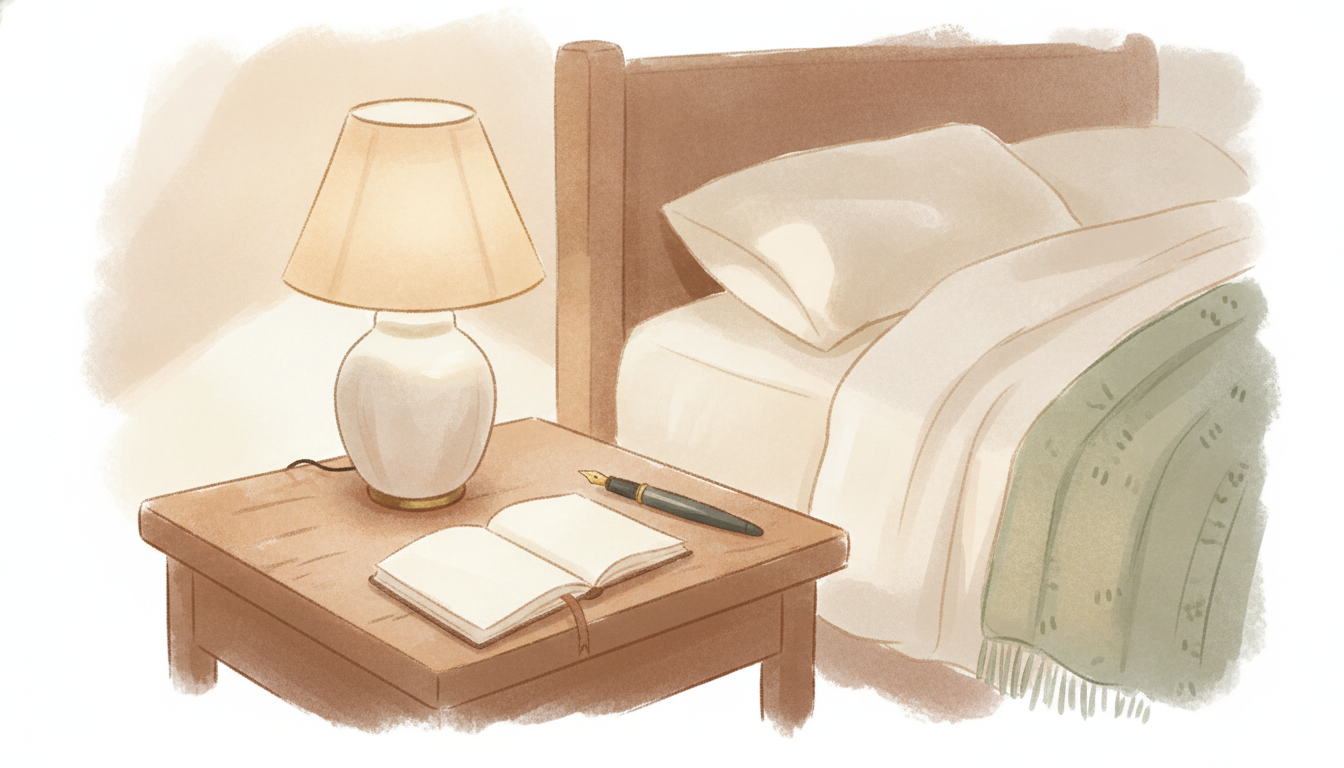
The notebook is still open on the bedside table. The pen hasn't moved. Outside, ordinary night — a car passing, a neighbor's light going off, the slow dark settling over the street. Inside, someone who might go to bed at eleven tomorrow, or might not — but who knows now that the promise matters, and that trust is built one kept word at a time, in rooms where no one else is watching.
Related book
What Should I Do With My Life?
Keep reading
- What it means to feel less alone — even by one personYou don't need a crowd. You need one person who stays when things aren't pretty.
- Why the people who get you don't always get you right awayReal belonging takes time. The instant click is rare. The slow build is where trust lives.
- The exhaustion of performing connection without feeling itYou showed up. You smiled. You asked questions. And you drove home feeling emptier than before.