What your body does when you finally feel safe
The exhale you didn't know you were holding — and what it means. What happens in the body when protection softens and something in you finally rests.
By Trupti Gavit
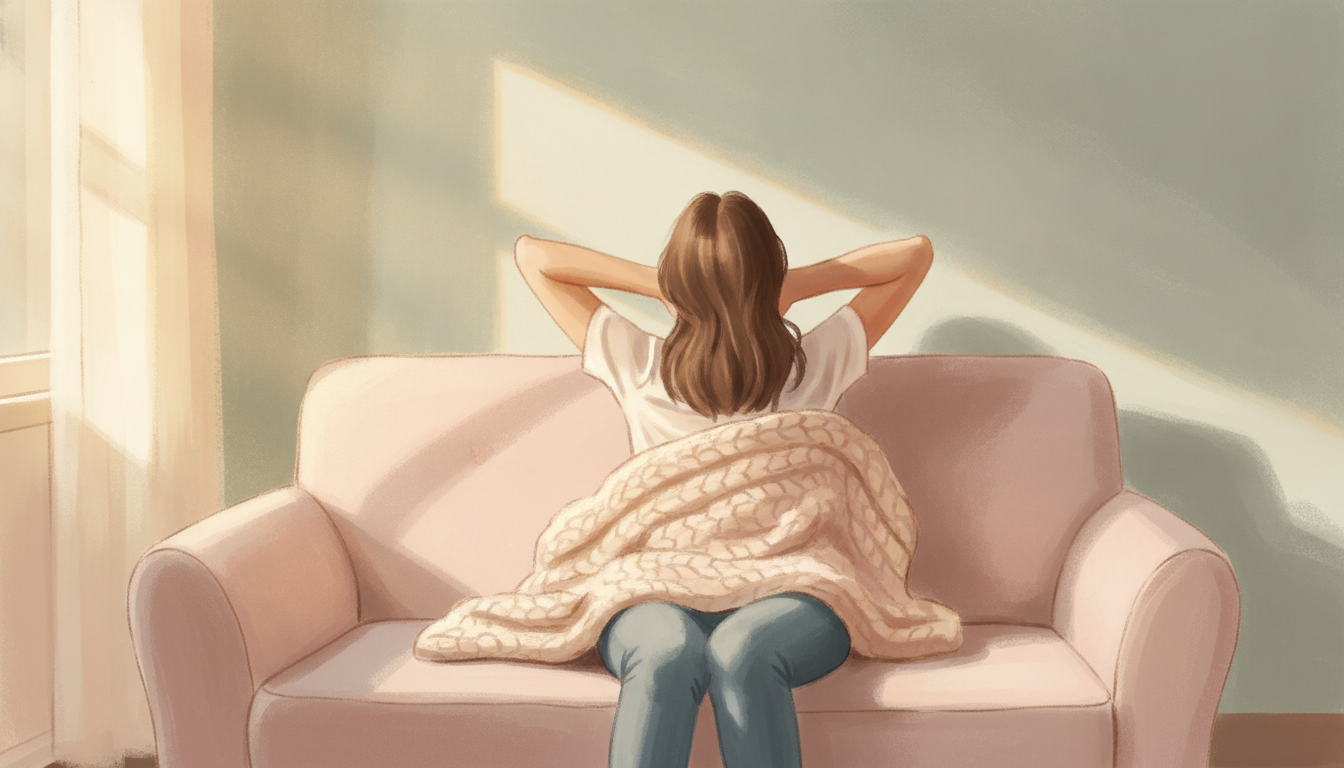
The exhale you didn't know you were holding — and what it means.
It might happen in a small room with someone you've come to trust. Or alone, on a Sunday afternoon, when nothing in particular is wrong. Or in the middle of an ordinary conversation when you realize you haven't been editing yourself for the last ten minutes.
Your shoulders drop. Not dramatically. Just half an inch — enough that you notice them afterward and wonder how long they were up there. Your jaw loosens. Your hands unclench. A breath leaves you that feels less like breathing and more like setting something down.
You might cry, unexpectedly, at nothing. Or yawn. Or feel suddenly, overwhelmingly tired — not the tiredness of a hard day, but the tiredness of a body that has been on alert for a long time and finally, briefly, doesn't have to be.
Safety isn't always a thought. Often, it arrives as a release.
What your body has been doing
While you were managing, scanning, adjusting, anticipating — your body was working.
It held your shoulders up. It kept your jaw ready. It shortened your breath, tightened your stomach, sent your attention outward to read every shift in the room. It did this quietly, without asking permission, because at some point it decided that staying ready was how you survived.
You might not have felt unsafe in the dramatic sense. You might have been in a decent job, a functioning relationship, a life that looked fine from the outside. But fine and safe aren't always the same address. Your body knows the difference before your mind names it.
The tension you carry isn't always about now. Sometimes it's the body still holding on for a then that hasn't fully let go.
The strange things that happen when safety arrives
When safety finally lands — in a friendship, a home, a season of life — the body doesn't always respond with pure ease.
Sometimes it responds with tears. With fatigue. With a sudden ache in places that have been clenched so long they forgot how to soften. Sometimes it responds with restlessness — because calm without a job to do can feel unfamiliar, even empty, when you've spent years managing the atmosphere around you.
You might think something is wrong. Why am I sad when things are good? Why do I feel worse now that I'm safe?
But your body might be catching up. Releasing what it couldn't release while it was still needed to stay ready. Grieving, in its own wordless way, the years spent braced. Not because the present is bad — but because the present is finally soft enough to feel what the hard years cost. Grieving, in its own wordless way, the years spent braced. Not because the present is bad — but because the present is finally soft enough to feel what the hard years cost.

Small signs you might miss
Safety rarely announces itself with fireworks. It shows up in details.
It's finishing a sentence without watching their face for the moment you went wrong. It's falling asleep without replaying the day. It's hunger returning when you'd forgotten to eat. It's laughter that comes from somewhere unguarded — not performed, not measured, just there.
It's the absence of the background calculation: How do I need to be right now for this to stay okay?
You might notice your appetite change. Your sleep deepen. Your shoulders lower in the car before you realize you've stopped gripping the wheel. You might notice you said what you meant instead of what was safe — and the world didn't end.
These aren't dramatic transformations. They're quiet reversions to something your body knew before it learned to stay ready.
You might not recognize safety at first because it doesn't ask you to perform. It just lets you be here.
When release comes in waves
Safety isn't a switch. It's a tide.
Some days you'll feel the exhale — open, loose, present. Other days the old holding will return without warning. A tone of voice. A text that doesn't come. A silence that sounds like the silences you grew up with, even when it isn't.
That return isn't failure. It's a body with a long memory, checking whether the safety is still real. Each time you survive the check — each time the warmth stays, the silence passes, the person doesn't leave — your body learns a little more that this present is not that past.
Release comes in waves because trust comes in waves. You don't have to rush the learning. The body has its own pace, slower and wiser than any timeline you'd prefer.
When rest feels unfamiliar
Some people feel guilty for resting once safety arrives — as if the softness has to be paid for first, or will be taken away if they enjoy it too much.
You might fill the quiet with tasks. You might wait for the other shoe to drop because good moments in your history often came with a cost attached. You might not trust the ease because ease was sometimes the pause before something shifted.
That mistrust isn't ingratitude. It's memory. Your body remembers what followed calm before — and it checks, quietly, whether this calm is different.
Each time the warmth stays, each time nothing bad follows the rest, your body learns a little more. Not all at once. Not on a schedule you can mark on a calendar. But in the accumulation of ordinary afternoons where you stopped bracing — and the world didn't punish you for it.
Rest after a long season of holding isn't laziness. It's the body finally believing it can put something down.
What it means to let the exhale be real
When the release comes, you might want to explain it away. I'm just tired. It's nothing. I shouldn't make a big deal of feeling lighter.
But the exhale is information. Your body telling you that something in this moment — this person, this room, this season — is different from what came before. That you don't have to hold yourself the same way here.
You can let that be true without needing it to last forever. You can let your shoulders stay down for the length of one conversation, one evening, one sleep. You can notice the softness without grabbing it so hard it disappears.
The body remembers how to rest. Sometimes it just needs long enough in a safe room to remember the way.
The curtain moves in the breeze. The window is open just enough. Your shoulders are lower than they were an hour ago — or a year ago — and the exhale you didn't know you were holding has already left the room. What remains is quieter. Softer. Yours.
Related book
Why You Can't Rest
Keep reading
- What it means to feel less alone — even by one personYou don't need a crowd. You need one person who stays when things aren't pretty.
- Why the people who get you don't always get you right awayReal belonging takes time. The instant click is rare. The slow build is where trust lives.
- The exhaustion of performing connection without feeling itYou showed up. You smiled. You asked questions. And you drove home feeling emptier than before.