Why you can't concentrate anymore
You used to read whole chapters. Now a paragraph feels like a long walk. Something changed — and it wasn't your capacity for attention.
By Trupti Gavit
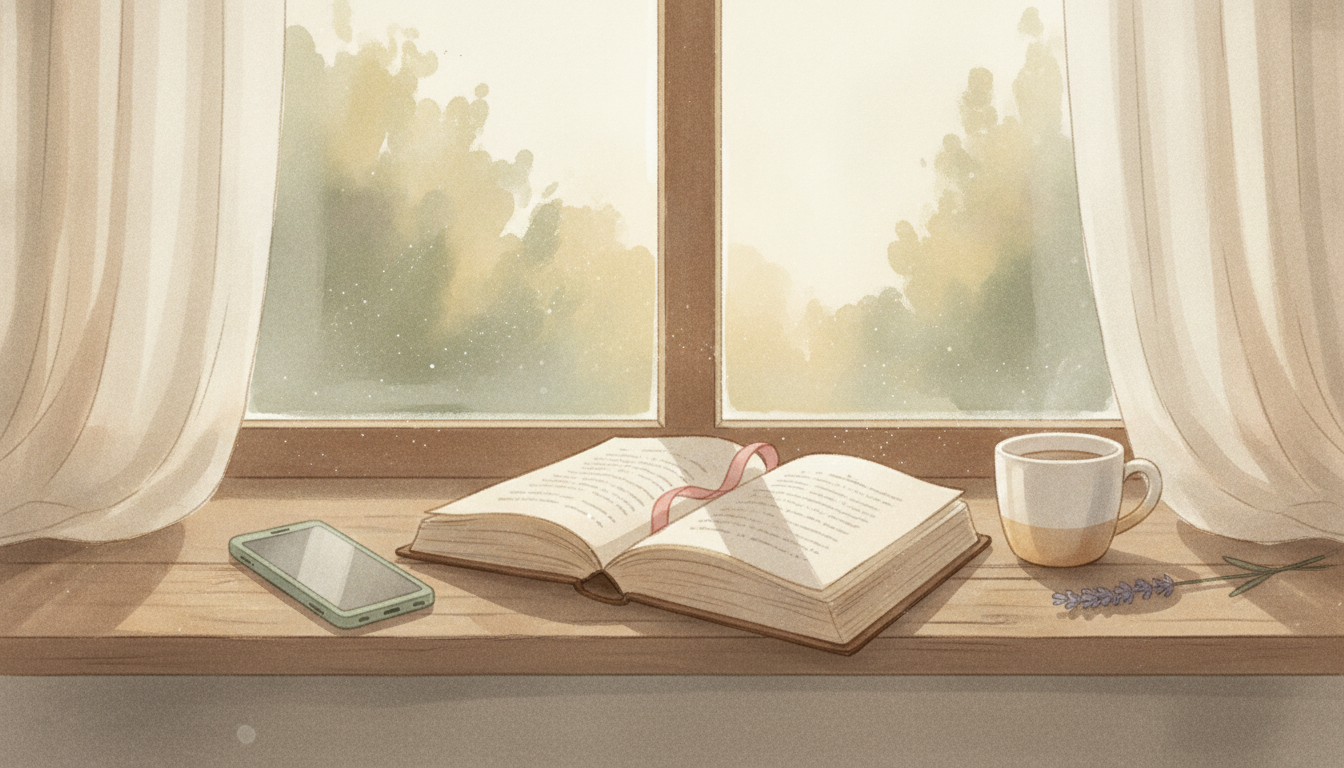
You used to read whole chapters. Now you can't finish a paragraph without reaching for your phone.
The book is still open on your lap — same one you've been reading for three weeks, bookmark barely moved. You read a sentence. You read it again. Your eyes keep moving but the meaning doesn't land. Somewhere between the first line and the third, your hand finds the phone without your permission. Not because you're looking for anything. Because staying with one thing has started to feel like holding your breath too long.
This isn't a character flaw. It isn't laziness, or a sign that you've lost something essential about yourself. Something in the world changed — and your attention changed with it, the way a river changes when the banks get narrower.
When concentration became a long walk
There was a time when a single thread could hold you. A novel on a rainy afternoon. A long email from someone you loved. The slow work of learning something that didn't offer immediate reward.
That capacity didn't disappear. It got crowded.
Every device you touch was designed to interrupt. Every platform learned that keeping you moving — from one thing to the next, from one feeling to the next — is how it stays alive. Your inbox refreshes. Your feed updates. The news cycles before you've finished your coffee. The world learned to speak in fragments, and your mind adapted because adaptation is what minds do.
You didn't stop being able to concentrate. You learned to survive in an environment that rarely asks you to stay with one thing.
For a lot of us, the change happened so gradually we blamed ourselves. We noticed we couldn't sit through a movie without checking something. We noticed we started more books than we finished. We noticed the shame — a quiet voice that said you used to be sharper than this — and we treated that voice as truth instead of as a symptom of something larger.
What your body is doing when you can't stay
When concentration slips, it often looks like failure from the outside. From the inside, it can feel like restlessness — a low hum of readiness, as if something important might arrive the moment you look away.
Your body learned that stillness sometimes meant missing something. That being unreachable had a cost. That the people who responded fastest were the people who stayed included, employed, loved. Attention became a currency you spend in small denominations all day long — a glance here, a reply there, half your mind on the conversation and half on what might be waiting in your pocket.
Reading a paragraph requires the opposite posture. It asks you to stay when nothing urgent is happening. To trust that the world won't collapse in the ninety seconds it takes to finish a page. For a body that spent years learning to stay alert, that trust doesn't come easily.

Some days the wandering is boredom. Some days it's grief, or worry, or the simple fact that you're tired in a way sleep doesn't fully touch. Concentration isn't only about will. It's about how much room your body has left for one thing when everything else is still asking.
The chapter you could read before
It's worth remembering who you were when chapters came easily — not to mourn that person, but to notice what was different.
Maybe you had fewer tabs open in your life, literal and otherwise. Maybe your work didn't follow you into every room. Maybe the phone wasn't the first thing you reached for in a moment of stillness, because stillness hadn't yet been trained to feel like emptiness.
Maybe you were younger and the world hadn't yet taught you that being available is how you stay safe. Maybe you simply had less to carry — fewer people depending on you, fewer decisions stacked behind your eyes before breakfast.
None of that means you've fallen behind. It means the conditions changed. And conditions, unlike character, can be tended — slowly, without punishment.
The distance between one paragraph and one chapter isn't a measure of who you are. It's a measure of how much the world has learned to pull at you.
Holding two truths at once
You can miss the version of yourself that read easily — and also recognize that your attention adapted for reasons that made sense at the time.
You can want more depth in your days — and also understand why your hand reaches for the phone before you've named what you're looking for.
You can feel frustrated sitting with a book — and also feel tenderness toward a mind that learned to scan, to split, to stay ready, because somewhere along the way, that readiness kept you connected, informed, part of things.
Neither truth cancels the other. Both belong.
What returning looks like (without forcing it)
Returning to longer attention isn't about white-knuckling through a chapter while your body screams for movement. It's not about deleting apps or declaring a digital detox as if your life were a problem to solve.
Sometimes it looks like reading one page and stopping before the restlessness wins — not as defeat, but as a conversation with a capacity that's out of practice. Sometimes it looks like putting the phone in another room for ten minutes and noticing what arrives in the quiet, even if the quiet feels uncomfortable at first.
Sometimes it looks like choosing the audiobook because your eyes are tired and your ears still want the story. Sometimes it looks like admitting that today isn't a chapter day — and that admission isn't giving up.
Attention returns the way a muscle returns — not through force, but through small repetitions in conditions gentle enough to stay.
Over weeks, not days, something can soften. The book on your lap might hold you for two pages, then five, then a whole sitting you didn't plan. Not because you became a different person. Because you stopped treating your wandering as evidence that something is wrong with you — and started treating it as information about what your days have been asking of you.
The book is still open on the windowsill. The bookmark has moved — not far, but enough to notice. Outside, the afternoon continues without needing your reply. Inside, a mind that forgot how to stay is remembering, one paragraph at a time, that staying was never impossible. It was just crowded — and the crowd can thin, if you give it room.
Related book
The Loop You're Stuck In
Keep reading
- What it means to feel less alone — even by one personYou don't need a crowd. You need one person who stays when things aren't pretty.
- Why the people who get you don't always get you right awayReal belonging takes time. The instant click is rare. The slow build is where trust lives.
- The exhaustion of performing connection without feeling itYou showed up. You smiled. You asked questions. And you drove home feeling emptier than before.