Why you can't sleep even when you're exhausted
When your body is tired but still thinks it needs to stay alert—and what rest asks of you beyond exhaustion.
By Trupti Gavit
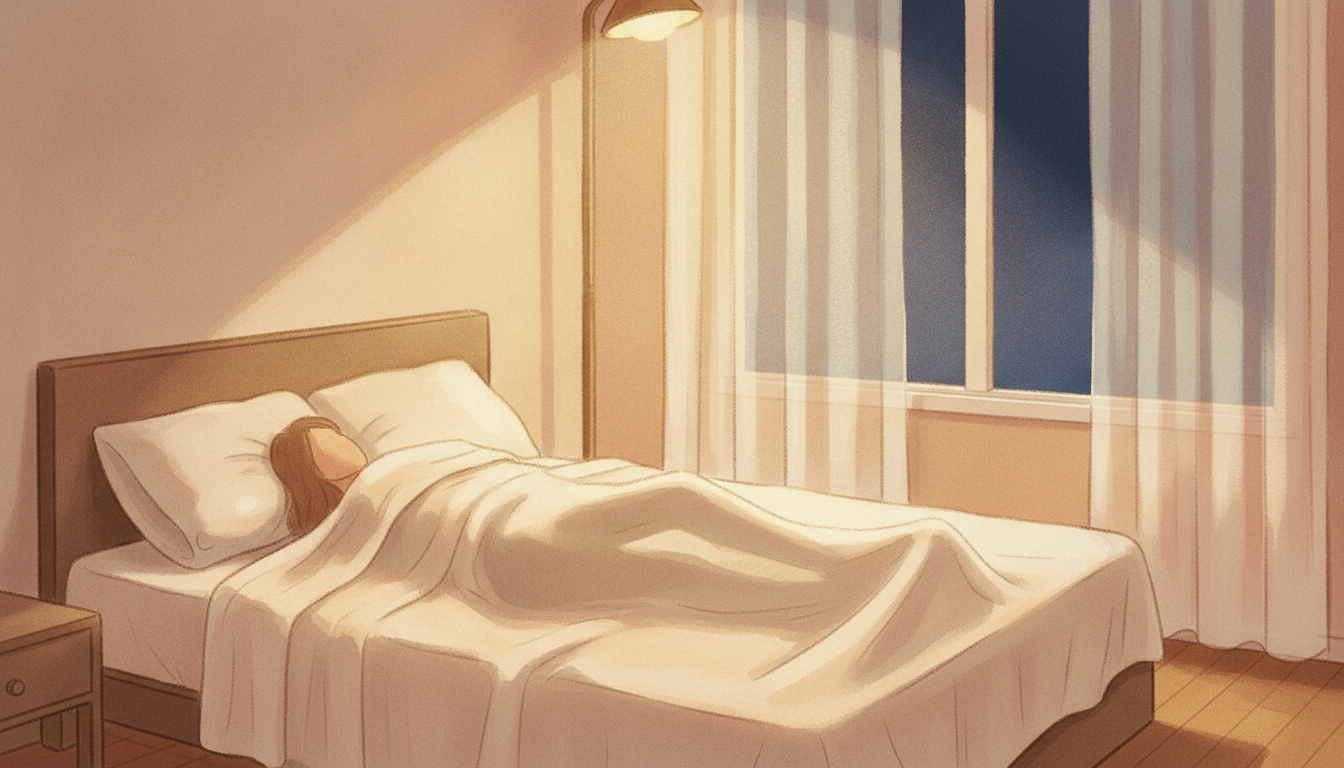
Your body is tired but still thinks it needs to stay alert.
It's past midnight. You've been awake since ten, or eleven, or you can't remember when the evening turned into this—lying in the dark, eyes closed, mind running its loops. Your limbs feel heavy. Your thoughts feel loud. The room is quiet in the way that makes every small sound matter: the refrigerator, a car passing, your own breathing.
You know you're exhausted. You felt it all day—the slow drag in your legs, the difficulty focusing, the longing for your pillow. And now you're here, exactly where you wanted to be, and sleep won't come.
Not because you don't want it. Because some part of you is still standing watch.
When tired and safe aren't the same thing
Sleep requires something beyond fatigue. It requires a felt sense of safety—a body willing to let go of alertness long enough to sink into rest.
For many of us, exhaustion and safety don't arrive together. You can be completely spent and still wired. You can want sleep desperately and lie there with your heart beating a little too fast, scanning the dark for nothing in particular.
This isn't a failure of willpower. It's physiology. When your system has spent days—or years—in a low-grade state of alert, it doesn't automatically stand down because the clock says bedtime.
Exhaustion tells your body it needs rest. Safety tells your body it's allowed to take it.
You might notice this most on the nights when the day was finally quiet. No more emails. No more demands. The house is still. And instead of relief, you feel a strange buzzing—as if the silence itself is something to manage.
Your body spent all day braced for the next thing. Now there's no next thing, and it doesn't know what to do with the empty space except stay ready.
What your body is still watching for
Alertness isn't random. It usually has a history.
Maybe sleep wasn't always safe—late-night voices, unpredictable footsteps, the need to listen for changes in the house before you could fully let go. Maybe rest came with a cost: slowing down meant missing something, or being caught off guard, or waking up to a mood that had shifted while you were gone.
Or maybe the danger wasn't in the room at all. Maybe it was in the day—the performance, the monitoring, the constant adjustment to other people's needs. Your body learned to do its processing after hours, when the world finally stopped asking things of you.

So now, when you lie down, the alertness doesn't always leave. It moves from the outside world to the inside one. You replay conversations. You plan tomorrow. You solve problems that don't need solving at 2:47 in the morning.
Your mind is busy because your system is still on duty.
Insomnia isn't always about the night. Sometimes it's about everything the day didn't give you space to feel.
The particular frustration of being tired and awake
There's a loneliness in this kind of tired.
You're not energized. You're not choosing to stay up. You're lying in the dark wanting something your body won't give you, and the wanting makes it worse. You watch the hours pass. You calculate how much sleep you'll get if you fall asleep now. Then now. Then now.
You might start blaming yourself—telling yourself you should have gone to bed earlier, shouldn't have looked at your phone, should be able to shut your brain off. But shame rarely helps your body settle. It just adds another thing to monitor.
The truth is simpler and kinder: your body is tired and alert at the same time. Both are real. Neither cancels the other out.
What rest asks for that exhaustion can't provide
You can't think your way into sleep. You can't force an alert body to stand down through effort.
What helps is often quieter—and slower—than we want it to be.
Sometimes it's physical: a weighted blanket, a cooler room, the hum of a fan that gives the silence something gentle to rest against. Sometimes it's rhythm: the same tea each night, the same few pages of a book you've read before, the same soft music that tells your body This is the part where we try.
Sometimes it's permission: you don't have to sleep right now. You can lie here. You can rest without sleeping. You can let your eyes be closed and your body be still even if your mind is still moving.
That permission matters more than it sounds. When you stop fighting wakefulness, the fight itself stops keeping you up.
The difference between rest and collapse
There's also a difference between rest and the kind of exhaustion that looks like rest but doesn't feel like it.
You might fall asleep finally and wake up at 3 AM with your chest tight. You might sleep eight hours and still feel like you didn't land anywhere. You might nap on the couch out of sheer depletion and wake up disoriented, as if you dropped rather than settled.
True rest—the kind that reaches your body—often comes in smaller pieces at first. Ten minutes with your feet up. A slow walk without headphones. An evening where you don't arrange anything, you just stop.
Sleep follows safety. Not always quickly. Not always completely. But the path usually runs through the body learning, bit by bit, that the night can be held.
You don't have to earn rest by being exhausted enough. You only have to create conditions where your body might believe it's safe to let go.
What changes when you stop fighting the wakefulness
The goal isn't perfect sleep every night. It's a gentler relationship with the hours when sleep doesn't come.
Instead of treating wakefulness as a problem to solve, you might treat it as information. What is your body still holding from today? What didn't get a name? What is the silence making room for?
You might keep a notebook by the bed—not to journal extensively, just to put the looping thoughts somewhere outside your head. You might place a hand on your chest and feel your breath without trying to change it. You might tell yourself, quietly: I'm allowed to be awake. I'm allowed to rest anyway.
Some nights you'll sleep. Some nights you won't. Both can coexist in the same life without meaning something is wrong with you.
Your body isn't refusing rest to punish you. It's staying alert because somewhere along the way, alertness kept you company through nights and days when letting go felt too uncertain.
That alertness has a history. And rest, when it comes, is allowed to come slowly—one quiet night at a time.
Related book
Why You Can't Rest
Keep reading
- What it means to feel less alone — even by one personYou don't need a crowd. You need one person who stays when things aren't pretty.
- Why the people who get you don't always get you right awayReal belonging takes time. The instant click is rare. The slow build is where trust lives.
- The exhaustion of performing connection without feeling itYou showed up. You smiled. You asked questions. And you drove home feeling emptier than before.