Why you clench your jaw without noticing
By evening your teeth hurt and you can't remember when it started — when your jaw holds what your mind hasn't put down yet, and why the clenching often begins long before you feel it.
By Trupti Gavit
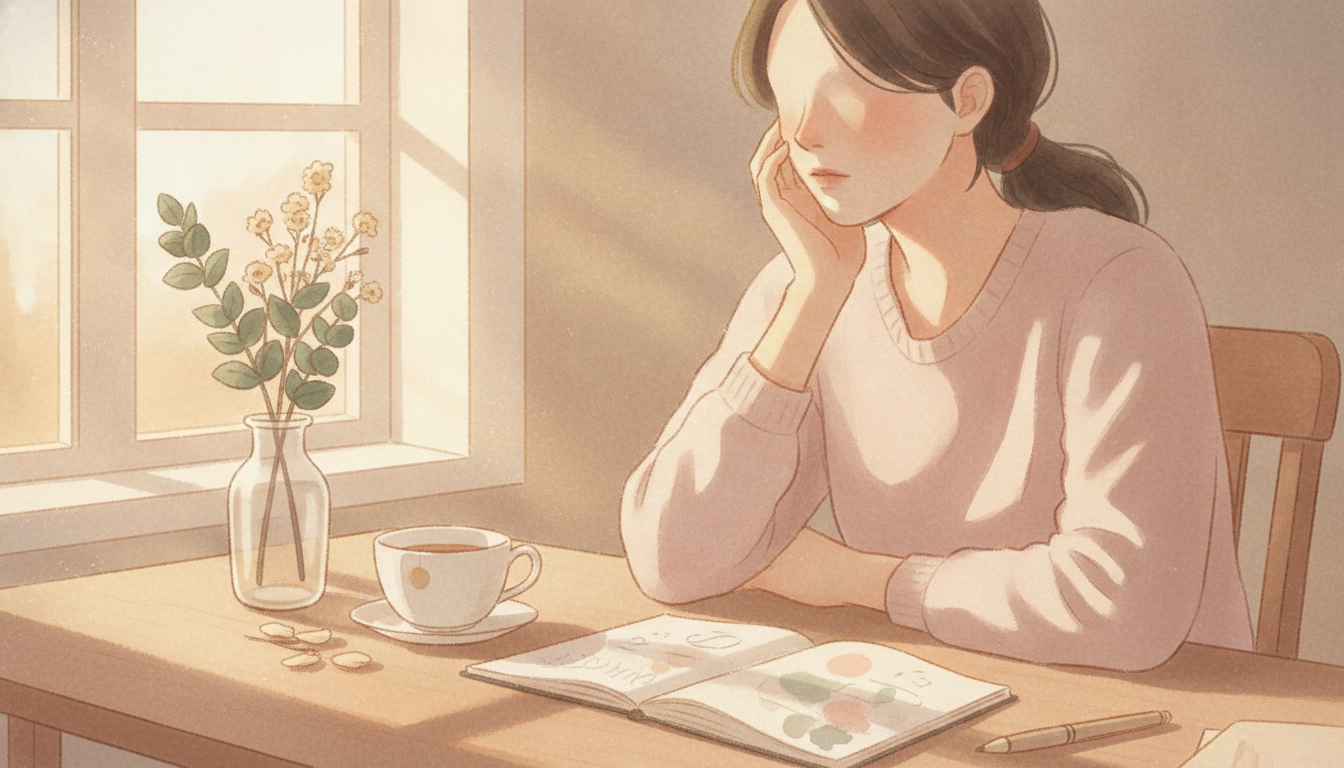
By evening your teeth hurt and you can't remember when it started.
You weren't grinding in your sleep — or anyway, not yet. You were just working, or driving, or sitting through a meeting that didn't ask much of you. And somewhere in the middle of an ordinary hour, your jaw decided to hold.
Not dramatically. Not with pain you couldn't ignore. Just a slow tightening — teeth lightly pressed, molars finding each other and staying there, as if your mouth had become a place to store something that didn't fit anywhere else.
You notice at 7 p.m., when you try to yawn and feel the resistance. When you touch your face and the muscle at the corner of your jaw feels hard, like a knot you didn't tie.
The jaw as a closed door
The body has places it goes when it can't put something down.
Shoulders rise. Breath shallows. Hands curl. And the jaw — the hinge between what you think and what you say — closes around words that never left, feelings that never found a room, the low hum of a day that asked you to stay pleasant while something in you wanted to scream or cry or simply stop.
Jaw clenching often isn't about anger in the obvious sense. It's about containment. About keeping the inside from showing on the outside. About holding yourself together when the world offers no pause long enough to fall apart safely.
Your jaw isn't failing you. It's doing what jaws do when there's nowhere else to put the pressure.
When the clenching starts before you feel it
You might not remember deciding to clench. That's because you didn't.
The tightening often begins below awareness — a reflex your body learned when speaking up cost something, when crying wasn't welcome, when the safest option was to become still and small and agreeable while everything else stayed locked behind your teeth.
By the time you notice, the day is mostly over. The emails are sent. The dinner is made. The conversations happened with your mouth doing its job while your jaw did another job entirely — holding, holding, holding.
This is why the ache can feel confusing. Nothing terrible happened today. And still your body is sore, as if it carried something heavy all day without you noticing.
What the jaw might be holding
You don't need a diagnosis to ask gently what your jaw has been carrying.
Sometimes it's a conversation you didn't have — the thing you wanted to say in the meeting and swallowed because the room felt too thin for it. Sometimes it's worry about someone you love, held quietly so you wouldn't become another person who needs tending. Sometimes it's the ordinary pressure of too many days without enough rest, too many small requests landing on a body that's already full.
For some of us, a clenched jaw was part of staying safe. Not making noise. Not taking up space. Not showing need in houses where need had a price attached.
Your jaw might still be doing that job — even in rooms where it's no longer required.

Evening, when the body finally speaks
Many people notice jaw tension most at night.
Not because night is worse, but because night is when the performing stops. When you're alone with your body and it can finally report what it carried all day without interruption.
You might lie down and feel your teeth find each other again. You might wake with a headache at the temples, or a tenderness along the jawline that wasn't there when you fell asleep. Your body kept working after your mind clocked out.
The jaw often clenches loudest when the day is over — when there's finally no one to perform steadiness for.
That doesn't mean you caused it by not noticing sooner. It means your body is honest on a delay — reporting the load when it finally has a listener.
Listening before you unclench
Most of us respond to jaw tension by trying to force it open. Stretch. Massage. Buy a guard. Push the muscles into compliance.
Sometimes that helps. Sometimes it adds another instruction to a body that's already tired of being told what to do.
A gentler beginning might be simpler: notice without demanding change.
My jaw is tight.
Something is being held here.
I haven't put this down yet.
You don't have to name what it is. You don't have to solve it before you exhale. You only have to acknowledge that the clenching is information — not weakness, not drama, not something wrong with you.
When you let your mouth soften even slightly — lips parting, tongue resting, teeth separating by a millimeter — that small release isn't proof you were doing it wrong. It's proof your body still knows how to let go when it feels seen.
Small moments of unclenching
Putting down what your jaw holds doesn't always mean a long conversation or a life overhaul.
Sometimes it's noticing at a red light and letting your teeth separate. Sometimes it's a hot cloth against your face before bed, not to force the muscles but to offer warmth to a place that's been working overtime. Sometimes it's saying one sentence out loud to an empty room — That was a lot — and feeling your jaw respond before your mind catches up.
You might also notice what makes the clenching worse: back-to-back calls, scrolling in bed, rehearsing tomorrow's conversations while you're still in today. Not as things to eliminate perfectly, but as patterns your body reads as not safe to soften yet.
Unclenching isn't always a single moment. Sometimes it's a hundred small separations — teeth parting, breath dropping, the jaw learning it doesn't have to hold the whole day alone.
The evening light has moved across the desk. Your hand is still at your jaw, but the pressure is softer now — not gone, maybe, but heard. Somewhere in you, the hinge loosens by a degree, and for a moment the day has somewhere else to rest besides your teeth.
Related book
Why You Can't Rest
Keep reading
- What it means to feel less alone — even by one personYou don't need a crowd. You need one person who stays when things aren't pretty.
- Why the people who get you don't always get you right awayReal belonging takes time. The instant click is rare. The slow build is where trust lives.
- The exhaustion of performing connection without feeling itYou showed up. You smiled. You asked questions. And you drove home feeling emptier than before.