Why you compare yourself to people you don't even know
A stranger's highlight reel can ruin your whole afternoon — and the ache that follows has less to do with them than with an old hunger for proof that you're doing life correctly.
By Trupti Gavit
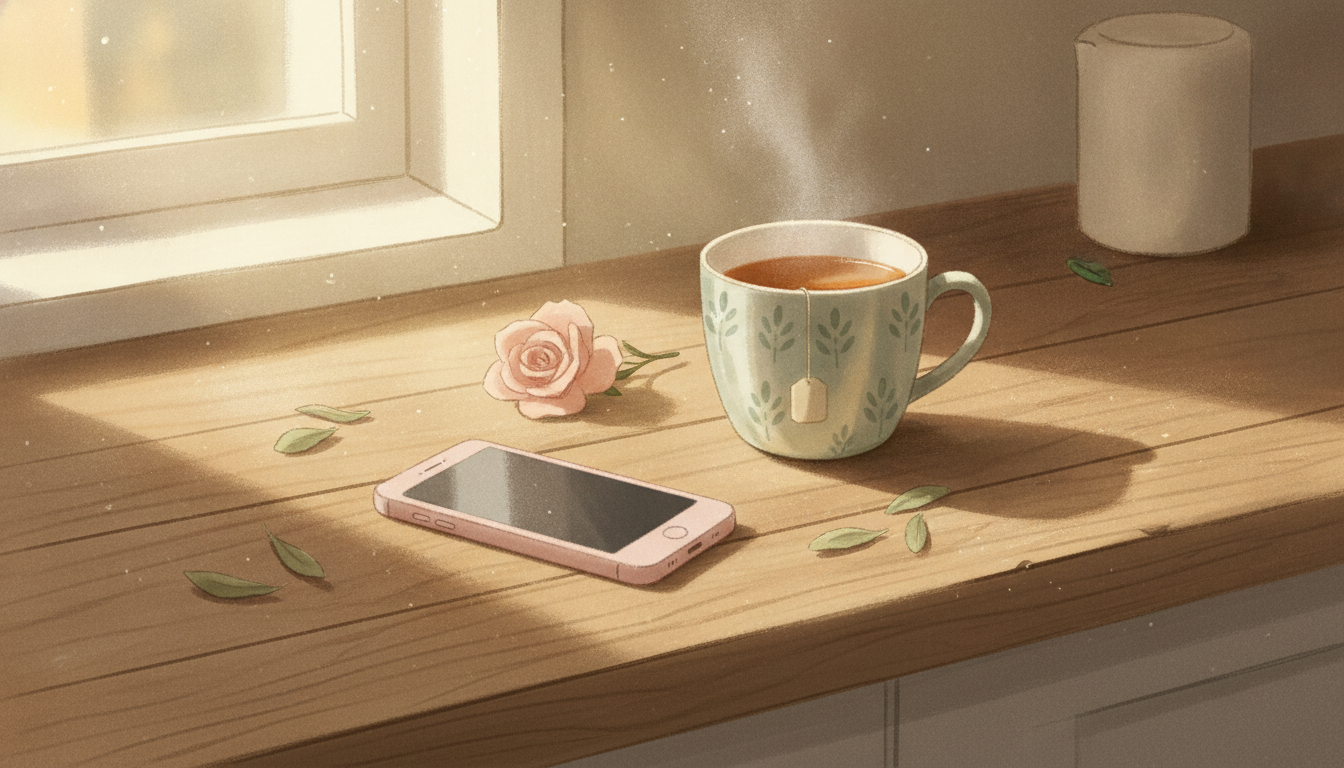
A stranger's highlight reel can ruin your whole afternoon.
You opened the app for thirty seconds — to check one message, to see if the group chat had moved on without you. And then there she was: someone you went to school with once, or a name you half-recognize from a comment thread, standing in a kitchen you will never enter, holding a life that looks finished in a way yours never does.
The renovation. The engagement. The body that looks rested. The caption that sounds like she has figured out something you are still circling.
You put the phone down. You made more tea. You told yourself you weren't jealous — just tired, just having a hard week. But the ache stayed, low and familiar, like a song you didn't choose that keeps playing in another room.
The comparison that doesn't need a relationship
Comparison isn't always about envy in the loud sense. Sometimes it's quieter than that.
You might not want her kitchen. You might not want her partner or her job or her morning routine. What you want is the feeling her photo seems to hold — that life is moving forward, that someone is keeping track, that you are not falling behind in a race nobody officially entered you in.
Strangers are especially good at this. You don't know their arguments, their debt, their 3 a.m. thoughts. You only see the frame they chose. And your mind fills the rest with coherence — a story where everything fits, where the hard parts have been edited out, where someone like you would finally feel okay.
You aren't comparing yourself to a person. You're comparing yourself to a feeling you think their life contains — and that feeling has a history older than this afternoon.
What your body is measuring
The scroll ends, but your body keeps reacting.
Your chest might tighten. Your jaw might set. You might feel suddenly behind on everything — not because anything changed in your actual life, but because a stranger's curated moment landed on an old measuring stick you didn't know you were still carrying.
For some of us, that stick was installed early. Be further along. Be more settled. Be the one who figured it out before the room started wondering. Comparison isn't vanity. It's a body looking for evidence that it belongs in the timeline everyone else seems to be following.
Even when you know, intellectually, that timelines are fiction. Even when you've read about algorithms and highlight reels. The knowing and the feeling arrive on different trains.
When strangers feel like verdicts
You might notice that certain posts hit harder than others.
Not the obviously glamorous ones — sometimes those feel distant, like a movie. It's the ordinary ones that undo you. The person who looks like they're managing. The friend-of-a-friend whose life resembles yours on paper but appears softer, fuller, more held.
That sting isn't really about them. It's about what their image confirms: Other people are doing this. Other people look at ease. What if I'm the one who can't get there?
You might carry that question through the rest of the day — into dinner, into a conversation with someone you love, into the moment you lie down and replay not what you saw but what it made you feel about yourself.

The hunger underneath the scroll
Underneath comparison there is often a simpler hunger: to know you are not wrong for being where you are.
Not ahead. Not impressive. Just not wrong. Just not failing at something invisible that everyone else seems to understand.
Social media didn't invent this hunger. It just made it constant — a stream of partial lives arriving in your pocket, each one offering a new standard before you've finished digesting the last.
You might close the app and feel ashamed for caring. You might tell yourself to be grateful, to focus on your own path, to stop looking. And then tomorrow you'll look again — not because you're weak, but because the hunger is still there, and the screen is the nearest place that seems to answer it.
The ache after scrolling isn't shallow. Some part of you is still looking for a sign that your life counts — and that longing is older than this afternoon.
Holding envy and clarity at the same time
You can know that comparison lies and still feel its weight in your body. Both are true.
You can be genuinely happy for someone and still feel the pinch when their good news arrives in your feed. Both are true.
You can want less of what they have and still want the feeling of being enough. That isn't hypocrisy. It's being human in a world that constantly shows you curated versions of other people's lives and asks you to measure yours against them without a ruler.
The stranger in the kitchen isn't your enemy. She isn't evidence that you're failing. She's a mirror that caught the light at the wrong angle — and showed you a place inside that still wants to be seen as okay.
Coming back to your own afternoon
Comparison loosens its grip not when you finally feel enough, but when you return to something real enough to hold.
The tea going cold on your counter. The text you still haven't answered. The person in the next room who doesn't know you spent twenty minutes measuring your life against a stranger's. The small, unphotographed parts of your day that never make it into anyone's highlight reel — and are still yours.
You don't have to stop noticing what others have. You might always notice. What changes, slowly, is whether their image gets the final word about your worth.
Your life doesn't become real when it looks good from the outside. It was real before you opened the app — in the tea, in the tiredness, in the afternoon you almost forgot you were living.
The phone is still on the counter, screen dark now. The tea has gone cold. Outside the window, your afternoon continues — unposted, uncurated, quietly yours. Somewhere in you, the measuring stick loosens its grip, just a little, when you remember that no stranger's kitchen was ever the place you were supposed to arrive.
Related book
Who You Think You Are
Keep reading
- What it means to feel less alone — even by one personYou don't need a crowd. You need one person who stays when things aren't pretty.
- Why the people who get you don't always get you right awayReal belonging takes time. The instant click is rare. The slow build is where trust lives.
- The exhaustion of performing connection without feeling itYou showed up. You smiled. You asked questions. And you drove home feeling emptier than before.