Why deep reading feels impossible now
You love books. You buy them. You just can't seem to stay with them anymore — what changed between you and the page.
By Trupti Gavit
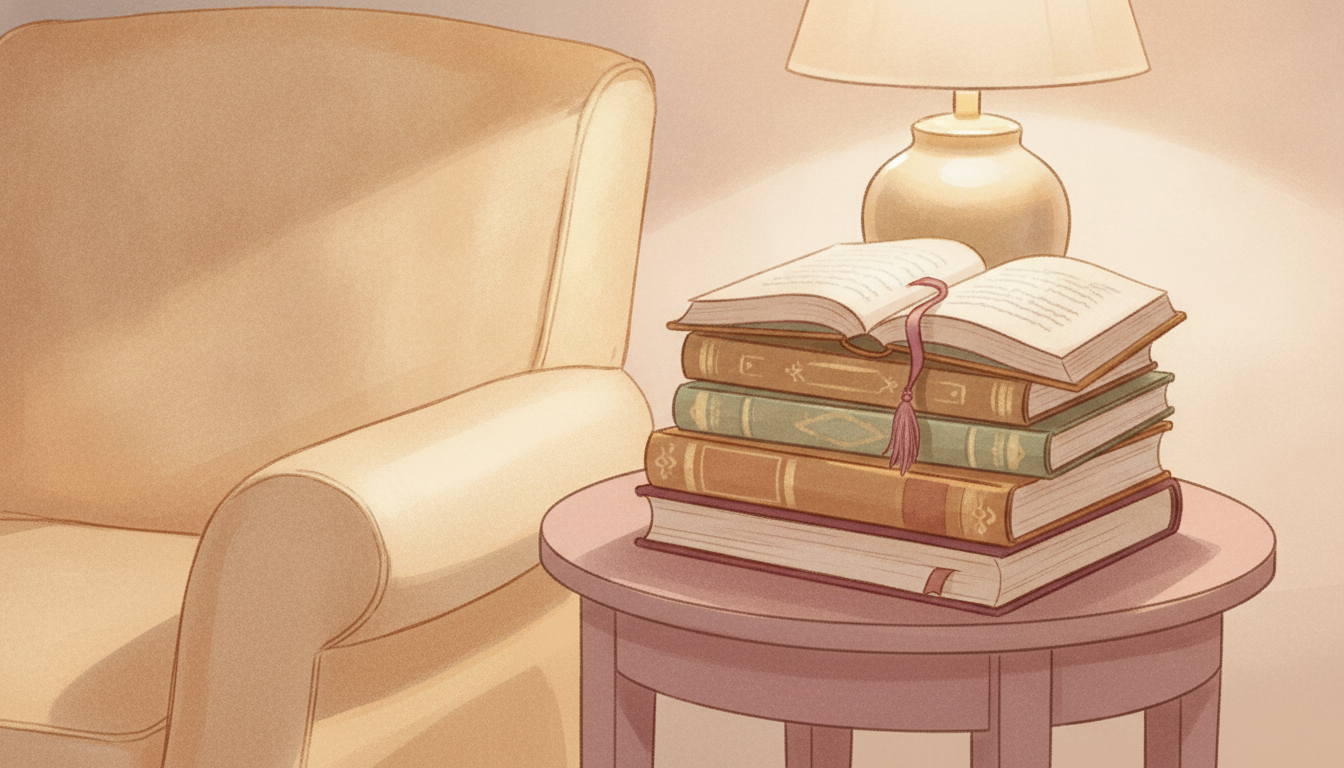
You love books. You buy them. You just can't seem to stay with them anymore.
The stack beside your bed keeps growing — spines uncracked, bookmarks placed optimistically on page twelve, novels you were sure would carry you the way books used to carry you, back when a rainy afternoon and a chair were enough and the world didn't follow you into every room.
You still want to read. You feel the want clearly — in bookstores, in recommendations from friends, in the quiet ache of seeing someone absorbed in a novel on the train while you scroll something you'll forget by the next stop. The love didn't leave. The staying did.
And somewhere in the gap between wanting and staying, a small grief lives — not loud, not dramatic, just present, like a bookmark holding a place you haven't returned to in weeks.
When the page stopped holding you
Deep reading asks for a particular kind of presence. Not just eyes moving across lines — but a willingness to stay when nothing urgent is happening. To trust that the world won't collapse in the time it takes to finish a chapter. To let one voice — the author's, the character's — hold your inner room without competition.
That trust is harder now.
Not because you've become less curious or less capable of loving language. Because the conditions changed. Your phone learned to interrupt. Your inbox learned to refresh. Your days learned to fragment — messages between tasks, tasks between meals, the constant low hum of something else waiting, always waiting, in your pocket or your mind or both.
Reading deeply in those conditions is like trying to hear a whisper in a room where every device is playing its own sound. Possible, sometimes. Exhausting, always. And when you're already tired, the whisper loses to the noise more often than it used to.
You didn't fall out of love with books. You fell into a life that rarely lets love stay with one thing long enough to deepen.
What your body does on the page
Watch yourself read now — really watch — and you might notice a pattern.
You settle into the chair. You open the book. You read a paragraph, maybe two. Something in the prose asks you to slow down, and slowing down feels unfamiliar — almost suspicious, as if stillness might cost you something. Your eyes drift to the phone on the armrest. Not because you're looking for anything specific. Because your body has learned that stillness is when something important might arrive, and missing it has had consequences before.
You return to the page. You read the same paragraph again because the meaning didn't land the first time. You feel the faint shame of that — I used to absorb this easily — and the shame itself pulls you away, because now you're not just reading, you're monitoring yourself failing at reading.
Your body isn't being difficult. It's being honest about what your days have trained it to expect: interruption, pivot, partial attention, the readiness to leave before you've fully arrived.

Some of the difficulty is physical tiredness — eyes that screen time has made impatient, a mind that wants the pace of a feed instead of the pace of a sentence built carefully over pages. Some is emotional — the book asks you to feel something, and feeling requires a spaciousness your days rarely leave intact.
Deep reading isn't only a cognitive act. It's a bodily one. And a body that spends its daylight braced for the next interruption doesn't always know how to soften into a chair and a story.
The stack that witnesses
The unread books aren't evidence of failure. They're evidence of hope — repeated, gentle, persistent hope that you'll return to the person who could stay.
Each purchase was a small act of faith. I still want this. I still believe this matters to me. Maybe this week, maybe this one, I'll find the door back in.
The stack can become a source of shame if you let it — a monument to what you're not doing, a list of ways you're falling short of the reader you used to be. But it can also be something softer: a record of what you still reach for, even when reaching and staying have become different skills.
You can love books and not finish them. You can buy another novel and mean it sincerely. You can have a bedside stack that's more aspiration than accomplishment — and still be someone for whom reading matters, deeply, even now.
The distance between loving books and staying with them isn't a measure of who you are. It's a measure of how much the world has learned to pull you away from the page.
Holding two truths
You can miss the reader you were — and also recognize that reader lived in different conditions, and conditions change.
You can want depth back in your life — and also understand why your hand reaches for the phone before you've finished the first page, without treating that reach as moral failure.
You can feel grief about the stack — and also feel tenderness toward a mind that still buys books, still opens them, still tries, even when trying looks like three pages and a long pause and a bookmark that hasn't moved.
Both truths belong. Neither requires you to choose between loving books and acknowledging how hard staying has become.
What returning might look like
Returning to deep reading isn't about forcing yourself through a chapter while your body screams for movement. It isn't about deleting apps or declaring that you've failed as a reader and must now become someone else.
Sometimes returning looks like one page — read slowly, without the phone in the room, stopped before the restlessness wins. Not as defeat. As a conversation with a capacity that's out of practice.
Sometimes it looks like audiobooks — because your eyes are tired but your ears still want the story, and ears count as reading too. Sometimes it looks like rereading something familiar — old sentences in a voice you already trust, less demanding than a new world that asks you to build it from scratch.
Sometimes it looks like admitting that tonight isn't a reading night — and that the admission isn't giving up on books forever. It's telling the truth about what your body has left to give today.
Over weeks, not days, something can soften. Two pages become five. A chapter gets finished on a Sunday when the house is quiet and you forgot to check your phone for an hour. Not because you became a different person. Because you stopped treating your inability to stay as evidence that the love is gone — and started treating it as information about what your days have been asking of you.
The lamp is on. The book is closed on page forty-seven — farther than last week, not as far as you imagined when you bought it. Outside, the evening continues without needing your reply. Inside, someone who loves books is learning again that love and staying are related but not the same — and that the distance between them can narrow, slowly, one page at a time, in a chair that still knows how to hold you when you let it.
Related book
The Loop You're Stuck In
Keep reading
- What it means to feel less alone — even by one personYou don't need a crowd. You need one person who stays when things aren't pretty.
- Why the people who get you don't always get you right awayReal belonging takes time. The instant click is rare. The slow build is where trust lives.
- The exhaustion of performing connection without feeling itYou showed up. You smiled. You asked questions. And you drove home feeling emptier than before.