How a simple evening routine tells your body the day is done
The same three things every night — a signal that it's safe to let go. What a small closing ritual offers a body that doesn't always know when to stop.
By Trupti Gavit
The laptop is still open. The day is technically over — dinner cleared, messages answered, the last task checked off with the quiet satisfaction of someone who got through it.
And still, your body hasn't received the memo.
Your shoulders sit where they've been since nine in the morning. Your mind loops on tomorrow's list. You tell yourself you'll rest after one more thing, and the one more thing becomes three, and by the time you finally close the screen, rest doesn't arrive. Only a different kind of tired — the kind that comes from stopping without landing.
The same three things every night — a signal that it's safe to let go.
When the day doesn't know how to end
Modern life rarely offers a clear closing bell.
You can work from the couch. You can answer messages from bed. The boundary between done and not-done became porous somewhere in the last decade — and your body, which once learned that dark meant safe, now learns that dark might still mean available.
Without a signal, the body stays mobilized. Not in dramatic high alert — just in low-grade readiness. Shoulders up. Jaw set. Mind scanning for what was missed, what arrives next, what still needs a response before sleep will feel permitted.
You might notice this as difficulty falling asleep even when you're exhausted. As scrolling that isn't pleasure — just delay. As lying down while still mentally at the desk, replaying conversations, rehearsing tomorrow, treating rest like something that only arrives after every open loop is closed.
Your body isn't refusing rest. It's waiting for a sign that the day is actually over — and for many of us, that sign stopped arriving somewhere along the way.
What a closing ritual actually does
A ritual doesn't need to be elaborate. It doesn't need candles and incense and an hour of silence — though it can, if that's yours.
What it needs is repetition. The same sequence, most nights, in roughly the same order — so your body starts to recognize it the way it recognizes the kettle in the morning or the key in the door.
Three things might be enough.
Wash your face. The same soap, the same temperature, the same slow motion — not because your skin requires it twice, but because the water says day finished. Lay out tomorrow's clothes, or don't — but close the closet door. Make tea, or pour water, or stand at the window for two minutes without a screen.
None of this changes what happened today. It doesn't resolve the hard email or soften the conversation that went wrong. What it offers is punctuation — a mark that says the chapter closed, even if tomorrow's page is already waiting.
The difference between collapsing and closing
Collapse is what happens when you finally stop because you can't continue. Closing is what happens when you choose a threshold and cross it.
They can look similar from the outside — same couch, same late hour, same body sinking into cushions. But they feel different inside.
Collapse leaves you wired. You stopped, but you didn't arrive anywhere. Closing leaves you softer — not necessarily calm, not necessarily free of worry, but somewhere that knows the day is done even if tomorrow isn't ready.

You might already have fragments of a closing ritual without naming them. The show you watch most nights. The face cream you apply in the bathroom. The way you set the alarm and plug in the phone on the left side of the bed.
The question isn't whether you have one. It's whether the sequence tells your body what you mean it to tell — safe to let go — or whether it keeps the day alive in a different form, one more episode, one more scroll, one more check of something that will still be there in the morning.
Rest isn't the absence of activity. It's the presence of a signal — the same one, repeated, until your body believes the day has actually ended.
When evenings aren't yours
Not everyone gets a quiet hour before bed. A shift ends at midnight. A child needs you until they sleep. Caregiving doesn't pause for candles and closing sequences.
If that's your life, the ritual shrinks — but it can still exist.
The same song in the car on the drive home. The same deep breath before opening the door. The same thirty seconds in the bathroom with the door closed, hand on chest, whispering nothing in particular — just I'm here, and the day is done enough for now.
Small signals still count. The body learns from fragments when it can't learn from stretches.
When you forget, and when you return
Some nights the ritual won't happen. You'll fall asleep on the couch. You'll bring the laptop to bed. You'll collapse instead of close, and wake at three with your jaw still tight, your mind already in tomorrow.
Those nights belong to the story too. They don't erase the pattern — they just remind you what the pattern was offering.
When you're ready — not from shame, but from the simple observation that you feel better on the nights you close than the nights you collapse — you return to the three things. Same order. Same slowness. Same permission to let the list wait until morning.
Over weeks, not days, something in the tone can shift. The body stops expecting the day to continue indefinitely. The hands stop reaching for the screen as reflex. Sleep arrives a little closer to the bed than the couch.
What you're not trying to do
This isn't about perfect evenings. It's not about becoming someone who never works late or never scrolls or never brings worry to bed.
It's about giving your body one reliable sequence that means done — so done doesn't have to mean collapsed, and rest doesn't have to wait until every loop is closed.
You might choose foolishly simple things. A particular mug. A particular drawer where the phone sleeps. A particular window you look out of while the sky goes dark.
The simplicity is the point. Your body doesn't need complexity. It needs consistency — the same gentle closing, night after night, until letting go stops feeling like abandonment and starts feeling like arrival.
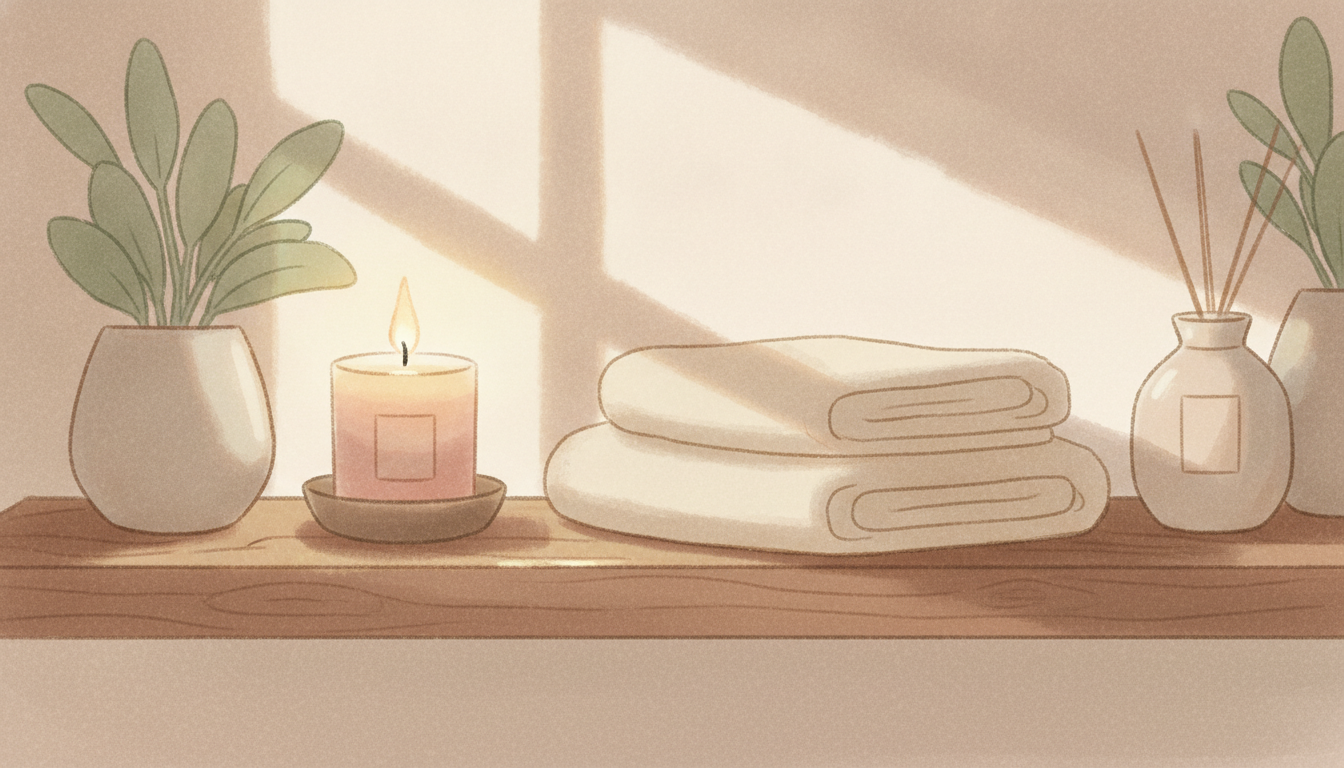
The candle burns low on the shelf. The towel is folded. The book on the bedside table is closed, glasses resting on the cover like a bookmark made of light. Outside, the street goes quiet in the particular way it does after nine — fewer cars, a neighbor's porch light clicking off. Your body doesn't have to believe it yet. Only to receive the signal, one more time, that the day is done enough for now.
Related book
The Loop You're Stuck In
Keep reading
- What it means to feel less alone — even by one personYou don't need a crowd. You need one person who stays when things aren't pretty.
- Why the people who get you don't always get you right awayReal belonging takes time. The instant click is rare. The slow build is where trust lives.
- The exhaustion of performing connection without feeling itYou showed up. You smiled. You asked questions. And you drove home feeling emptier than before.