The evening wind-down that doesn't involve a screen
Your body wants to close the day. The phone keeps it open. What a screenless wind-down might offer — not as a rule, but as a small closing the body can recognize.
By Trupti Gavit
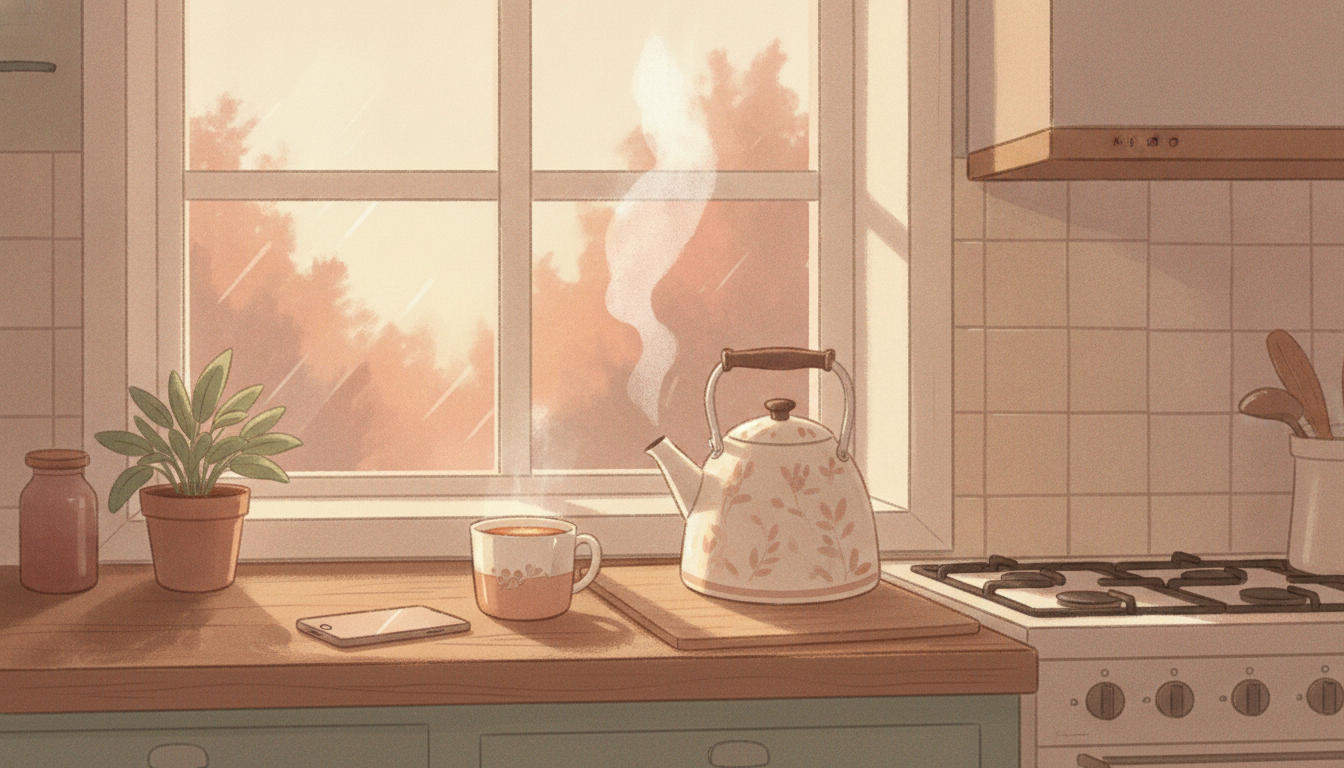
Your body wants to close the day. The phone keeps it open.
The light in the room has gone amber. The dishes are done — or done enough. Tomorrow exists, but it hasn't arrived yet. Something in you is ready to soften, to let the weight of the hours settle somewhere lower than your shoulders.
And then the screen lights up. Not because you decided to stay in the day. Because the day learned to live in your pocket, and your hand knows where to find it before your mind has finished the sentence I'm done for tonight.
The scroll isn't pleasure exactly. It's continuation — one more thread, one more message, one more piece of the world that refuses to go quiet when your body is asking for quiet. You look up an hour later and the room feels the same, but you feel farther from sleep, farther from yourself, like you closed your eyes without ever crossing the threshold into evening.
What a screenless wind-down actually is
This isn't about becoming someone who never looks at a phone after six. It's not a purity test or a new standard to fail at.
A screenless wind-down is simply a sequence — small, repeatable, yours — that tells your body the day is finished. Not collapsed. Finished. The same way a closed book tells your eyes that reading time ended, even if the story continues tomorrow.
It might be ten minutes. It might be twenty. It doesn't need to be impressive. Warm water on your face. The same song while you tidy the counter. Tea in the mug you only use at night. Standing at the window while the street goes quiet, hands empty, nothing glowing in them.
The absence of the screen isn't the point. The presence of something else is — something slow enough for your body to recognize, familiar enough to trust.
Your body doesn't need a perfect evening. It needs a signal — repeated, gentle, screenless — that says the day can rest now.
Why screens keep the day alive
A screen doesn't just show you things. It keeps you available.
Available to messages that can wait. Available to news that will still be news in the morning. Available to the small dopamine of refresh — the sense that something might have changed in the thirty seconds since you last looked.
Your body reads availability as unfinished business. Shoulders stay slightly raised. Breath stays slightly shallow. The mind keeps one foot in tomorrow, one foot in the feed, neither fully in the room where you're sitting.
You might tell yourself you're winding down. But wind-down and input aren't the same thing. Input keeps the day open — new information, new faces, new reasons to react. Wind-down lets the day settle. Lets your name stop being a person who responds and become, briefly, a person who exists in a quiet room.
That's a different kind of tired than exhaustion. It's the tired that comes after landing — not after stopping because you couldn't continue, but after choosing a place to arrive.
Small sequences that close without glowing
You don't need to invent something elaborate. Look for what already slows you — and remove the screen from it, or place the screen somewhere else while it happens.
Wash your face with the phone in another room. Read three pages of a paper book, or none — just hold it. Stretch on the floor without a video telling you how. Write one line in a notebook about the day: not a gratitude list, not a productivity review, just today had this texture.
Lay out clothes for tomorrow, or don't. Fold a blanket. Water a plant. Sit on the couch with your hands in your lap and notice the particular quality of light at this hour — the way it thins, the way the room becomes more honest when nothing is competing for your attention.
None of this is magic. Some nights you'll still reach for the phone afterward. Some nights the sequence will feel pointless and you'll skip it. The sequence isn't a contract. It's an offering — to your body, to the part of you that keeps working long after the day should have ended.

When the phone is also your comfort
For some of us, the evening phone isn't laziness or poor discipline. It's the place where we find company when the apartment is quiet. Where we check that the people we love are okay. Where we decompress from a day that asked too much.
Removing the screen isn't about shaming that need. It's about noticing whether the phone is closing the day or extending it — whether you're arriving somewhere or just moving through more input until sleep takes you without permission.
You might keep the phone in your wind-down and still close the day. A voice note to someone you miss. A photo sent without expectation of reply. Five minutes, timed, then the phone sleeps in the drawer while you do something with your hands.
The question isn't whether the phone belongs in your evening at all. It's whether your body knows, most nights, that the day ended — or whether it keeps waiting for a signal that never comes because the glow never fully goes dark.
A screenless wind-down isn't about giving up comfort. It's about offering your body a closing that comfort alone can't always provide.
When evenings aren't quiet
Not everyone gets a soft hour before bed. A child needs you until they sleep. A shift ends at midnight. Caregiving doesn't pause for tea and window-gazing.
If that's your life, the wind-down shrinks — but it can still exist without a screen.
The same deep breath in the car before you walk inside. The same thirty seconds in the bathroom with the door closed, hand on chest, no scrolling. The same podcast turned off two blocks from home so silence can arrive before you open the door.
Small closings still count. The body learns from fragments when it can't learn from stretches. A screenless minute is still a minute where the day didn't ask for more from you.
Holding two truths
You can scroll most evenings and still want something slower — without making either choice a verdict on who you are.
You can build a small screenless sequence and still pick up the phone afterward — and the sequence can matter even when the phone comes later.
Neither truth cancels the other. Both can live in the same week, the same tired body, the same wish for an evening that actually feels like evening.
The kettle has gone quiet. The phone is face-down on the counter, dark, patient. Your hands are empty — not because you've solved evening, not because you've become someone who never scrolls, but because tonight you offered your body one small closing it could recognize. The light thins toward night. The room holds you without asking for anything back. You don't have to believe the day is over yet. Only to let the signal arrive, one more time, and see what your body does with it.
Related book
The Loop You're Stuck In
Keep reading
- What it means to feel less alone — even by one personYou don't need a crowd. You need one person who stays when things aren't pretty.
- Why the people who get you don't always get you right awayReal belonging takes time. The instant click is rare. The slow build is where trust lives.
- The exhaustion of performing connection without feeling itYou showed up. You smiled. You asked questions. And you drove home feeling emptier than before.