The guilt of wanting less screen time while working on screens
Your job lives online. Your peace lives offline. And there's no manual for the in-between — only the quiet tension of wanting something you can't simply remove.
By Trupti Gavit
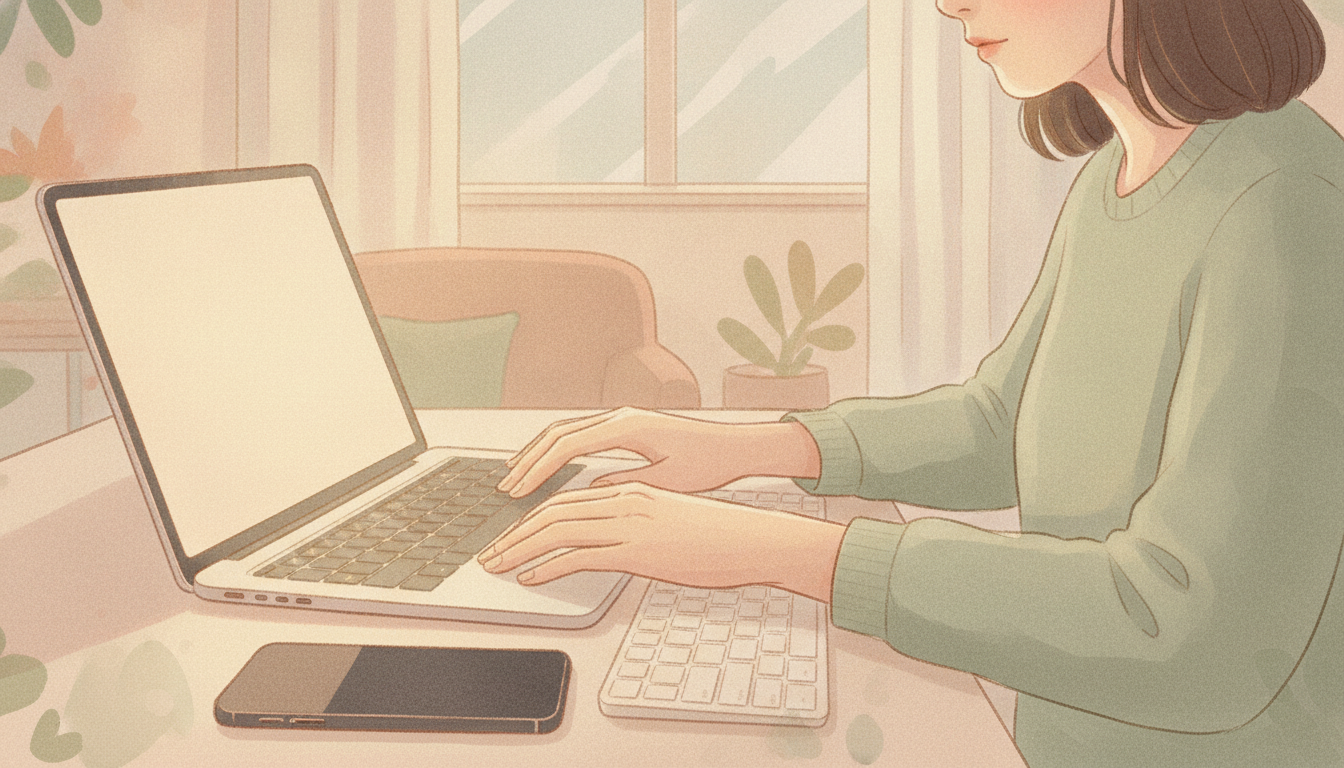
Your job lives online. Your peace lives offline. And there's no manual for the in-between.
You read an article about spending less time on screens. You close it — on a screen — and feel the familiar twist of guilt. Not the sharp kind. The slow kind, the kind that sits in your chest like a weight you can't set down because your hands are full.
Your work email is on the same device as your family photos. Your calendar and your scrolling live in the same glowing rectangle. You spend eight hours a day — sometimes more — looking at a screen because that's where your livelihood is, and then you feel bad for looking at a screen in the evening because that's where your exhaustion is.
The guilt doesn't come with instructions. It just arrives, quietly accusing, asking you to be someone whose life can be cleanly divided into good screens and bad screens — when your actual life doesn't work that way at all.
When the tool and the drain share an address
For a lot of people now, the screen isn't a leisure device attached to a separate life. It's the desk. The meeting room. The file cabinet. The place where colleagues ask questions and clients send revisions and the day announces what it needs from you.
You can't simply remove the screen from your life without removing the work — and the work matters. It pays the rent. It uses your skills. It connects you to people and projects that mean something to you, even on the hard days.
So the screen becomes complicated in a way that articles about "digital wellness" don't always acknowledge. The same light that drains you at 9pm kept you employed at 2pm. The same device that holds your evening scroll also held the presentation you spent three weeks on.
The guilt often treats all screen time as one category — as if the hour of email and the hour of mindless scrolling are the same hour, morally identical, equally optional. But you know they aren't. One was required. One was what your tired body reached for when the required part finally stopped.
Wanting less screen time while your work lives on a screen isn't hypocrisy. It's two honest needs sharing the same glowing rectangle.
The guilt that doesn't know where to land
Guilt needs a target. It wants to say: You should have done differently. But differently how?
You can't quit the laptop and keep the job. You can't answer the guilt by becoming someone who doesn't need screens — not in a world where screens are how most work gets done. So the guilt lands on you instead: on your willpower, your discipline, your character. As if the problem is that you aren't trying hard enough to be a person whose life fits neatly into the advice.
That landing place is exhausting. It turns a structural tension — work and rest competing for the same tool — into a personal failing. You end up feeling bad about feeling bad, screen after screen, evening after evening, without any clearer path than try harder, which you've already been trying.

What you might actually want
Under the guilt, there's often something simpler and more human: you want your evenings back. You want your eyes to stop aching. You want to sit with someone you love and not feel half-present. You want a meal, a walk, a chapter of a book — something that doesn't require a charging cable.
That wanting is reasonable. It isn't naive. It isn't a rejection of the life you've built on screens. It's a person noticing that the tool that carries your work also carries your fatigue, and the fatigue has started to outlast the workday.
Sometimes what you want isn't less screen time in absolute terms. It's boundaries that the guilt doesn't know how to draw — a way to close the work tab and mean it, a way to be offline without feeling like you're falling behind, a way to scroll in the evening without the scroll feeling like evidence that you've failed at something unnamed.
The guilt says you should want less screen. What you might actually want is more of your life that isn't asking anything from a glowing rectangle.
Holding the contradiction without resolving it
You can love your work — or at least value it, need it, be good at it — and still feel the cost of where it lives. You can be grateful for the flexibility of remote work, the laptop on the kitchen table, the ability to send one more email at 7pm when it matters — and still mourn the way the kitchen table never fully stops being a desk.
These contradictions don't need to be solved tonight. They need to be seen — held without the pressure to pick a side. The side that says screens are ruining everything. The side that says screens are how you survive. Both are too simple for the life you're actually living.
Some days you'll close the laptop at five and keep it closed. Some days you'll answer one more message at nine because the message matters and so does the person who sent it. Some days you'll scroll for forty minutes after a long day and feel the guilt arrive like clockwork — and the scroll will have been the only thing that felt easy, and the guilt won't make that untrue.
Gentleness toward a split life
The in-between — work on screens, peace offline, guilt in the middle — might be where you live for a long time. Not because you're failing to escape it, but because the world built work this way and you're living inside what was built.
Gentleness here looks like naming the guilt without obeying it. Like recognizing that wanting rest from screens after a day on screens is a coherent wish, not a character flaw. Like letting one evening be offline without treating it as a promise about every evening that follows.
You don't need a manual. You need room to be a person whose needs don't fit cleanly into categories — required screen, optional screen, good screen, bad screen — because your life has never sorted itself that neatly.
Your peace lives offline and your work lives online. The guilt lives in the gap between them — and you can live there too, without treating the gap as something you were supposed to close by now.
Holding two truths
You can spend your working hours on screens because your livelihood requires it — and still want evenings that don't look like the afternoon continued.
You can feel guilty about how much you scroll after work — and still understand that scrolling is sometimes what a tired body reaches for when the laptop finally closes and no one is asking for anything except rest that doesn't know its own shape yet.
Neither truth cancels the other. Both belong to the same week, the same job, the same person trying to live well inside a world that put work and leisure in the same device and called it convenience.
The laptop is closed for tonight — or open still, one tab lingering, one message you might send before sleep. The guilt is here too, familiar as the glow itself, asking you to be simpler than you are. Your job lives online. Your peace lives offline. You live in the in-between, tired and trying, not failing at a manual that was never written for a life like yours. Outside the window, the dark has its own kind of screen — wide, silent, asking nothing. The night is long enough to hold the contradiction without demanding you resolve it before morning.
Related book
The Loop You're Stuck In
Keep reading
- What it means to feel less alone — even by one personYou don't need a crowd. You need one person who stays when things aren't pretty.
- Why the people who get you don't always get you right awayReal belonging takes time. The instant click is rare. The slow build is where trust lives.
- The exhaustion of performing connection without feeling itYou showed up. You smiled. You asked questions. And you drove home feeling emptier than before.