Why you feel guilty about nice things
You bought the candle, lit it, and still felt a small ache — like pleasure needed a reason first.
By Trupti Gavit
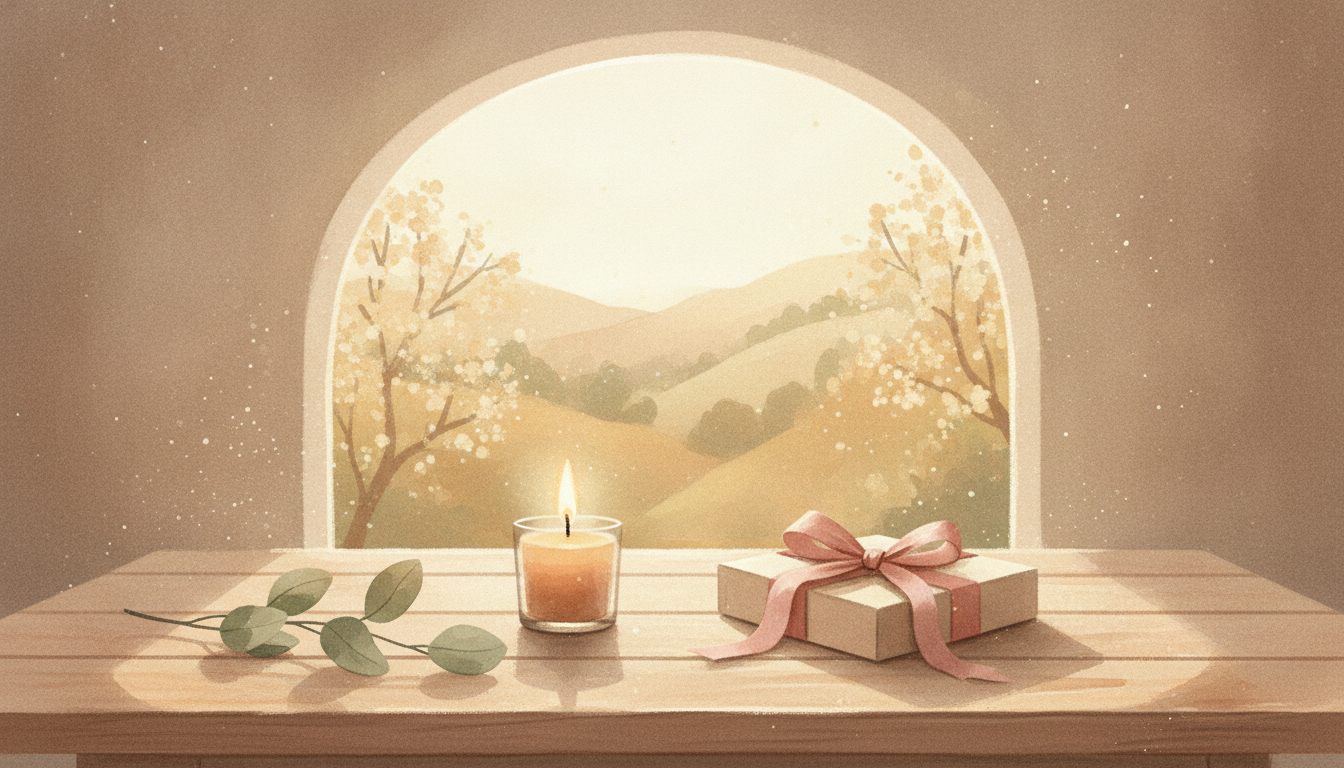
The candle is lit. The kitchen smells like fig and something faintly sweet. You bought it on a Wednesday — not because you needed it, exactly, but because the afternoon had been long and the light was gray and you wanted one small thing in the room to feel warm.
You paid for it. It was yours. You carried the bag home and put it on the counter and felt, for a moment, quietly pleased.
Then you sat down with your tea and the pleasure thinned. Something in you started keeping score. That was too much. Someone else needed that money more. What if you regret this by Friday?
You bought it. You enjoy it. And something still whispers it wasn't meant for you.
When enjoyment arrives with a receipt
The guilt doesn't always show up at the register. Sometimes it waits until you're alone with the thing — when there's no one to perform gratitude for, no occasion to point to, no clear reason why this purchase was necessary.
You might notice it with small things first. The nicer soap. The book you didn't borrow from the library. The lunch that cost a little more because you were tired and wanted something that tasted like care.
Each one arrives with a quiet audit. Was this responsible? Was this earned? Could that amount have gone somewhere safer — savings, a bill, someone else's need?
The candle burns. The room is softer. And part of you is still standing in the aisle, wondering if you had the right.
Pleasure without justification can feel like a mistake your body hasn't learned to trust yet.
The old math of who gets nice things
For a lot of us, nice things came with conditions we never wrote down.
Maybe money was tight and every purchase was weighed against what might be needed tomorrow. Maybe someone in your house got praised for going without, and you learned that wanting more than enough was a kind of greed. Maybe you watched an adult hide a new coat in the closet, or apologize for a small treat, and your body filed that away: good people don't take up too much space with their comfort.
None of that makes you wrong for wanting warmth, beauty, ease. It makes you someone whose body learned that safety and scarcity often wore the same face.
So when you buy something purely because it would feel good — not because it was on sale, not because it replaced something worn out, not because someone else suggested it — your system doesn't always know what to do with that. Enjoyment without a defense feels exposed. Like you're standing in a room without a reason to be there.
The voice that arrives after
The guilt rarely sounds like drama. It sounds practical.
You should save more. Other people have less. This won't matter in a year.
Sometimes it's true. Sometimes you are watching your account and choosing carefully. The trouble isn't the caution itself. It's that the caution doesn't always turn off when the numbers say you're fine.
You might be able to afford the candle and still feel like you're stealing from a future version of yourself who will need that twelve dollars more than you do now. You might have worked hard for what you have and still treat a small pleasure like evidence that you're becoming someone careless.

That voice isn't always cruel. Sometimes it learned to protect you — to keep you small enough that no one could accuse you of taking too much, hungry enough that you'd never forget what it felt like to go without.
Your past self wasn't foolish for learning that. They were living in a world where comfort often had to be justified, where wanting visibly could cost something.
What the guilt is really asking
Underneath the arithmetic, there's usually a softer question: Can I have this without suffering for it later?
Not a moral question. A body question. Your body wants to know whether pleasure is safe — whether enjoying something now means punishment later, whether comfort is a loan you will have to repay with worry.
When you feel guilty about nice things, you're often not arguing about the object. You're negotiating with an old belief that good people defer their own warmth, that joy must be rationed, that wanting more than the minimum is somehow dangerous.
The guilt isn't proof you shouldn't have bought it. It's proof your body is still learning that comfort can exist without a cost coming due.
You can hold both truths: the purchase was fine, and the ache after it is real. You can enjoy the candle and still feel the old math running. Neither cancels the other.
When nice things stop feeling like a test
Some people learn to hide their pleasures — buying the nicer thing in a plain bag, using the good dishes only when guests come, saving the soft sweater for someday instead of Tuesday.
Others swing the other way and spend quickly, then punish themselves afterward, as if the regret could balance the books.
Neither pattern is about the thing itself. Both are about what your body learned about taking up room.
Slowly — not through force, not through affirmations shouted at the mirror — something can shift when you stop treating every nice thing like a trial. When you let yourself have the candle and notice the room getting softer without immediately searching for what you did wrong.
That shift doesn't require becoming someone who spends without thought. It might look like pausing after a purchase and asking, gently: What am I afraid will happen if I let myself enjoy this?
Sometimes the answer is money running out. Sometimes it's being seen as selfish. Sometimes it's the old fear that if you relax, you'll stop being careful — and careful was how you survived.
Living with the whisper
The whisper may not disappear the first time you light the candle anyway. It might sit in the corner of the room for a while, keeping its own quiet ledger.
You don't have to win an argument with it. You don't have to prove you are good enough for nice things, as if goodness were a currency that unlocked soap and books and fig-scented evenings.
You can notice the whisper. Name it without obeying it. Let the candle burn while part of you still wonders if you should have bought the cheaper one.
Enjoyment and guilt can share the same room. You don't have to evict one to allow the other.
Over time, your body collects new evidence. You bought the thing. The world didn't collapse. The account still holds. The pleasure was real, even if it was brief. Small repetitions — not grand declarations — teach a body that was trained in scarcity that warmth can sometimes be simply warmth.
The candle burns down to a shallow pool of wax. The kitchen holds the last of the fig scent. Outside, ordinary evening. Inside, a room that is slightly warmer than it was before you struck the match — and a body still learning, slowly, that nice things can belong to you too.
Related book
Why Money Hits So Deep
Keep reading
- What it means to feel less alone — even by one personYou don't need a crowd. You need one person who stays when things aren't pretty.
- Why the people who get you don't always get you right awayReal belonging takes time. The instant click is rare. The slow build is where trust lives.
- The exhaustion of performing connection without feeling itYou showed up. You smiled. You asked questions. And you drove home feeling emptier than before.