What it means to hold space for yourself
You've held so much for others. Now the room is just for you. What it looks like to stay present with yourself the way you've learned to stay present with everyone else.
By Trupti Gavit
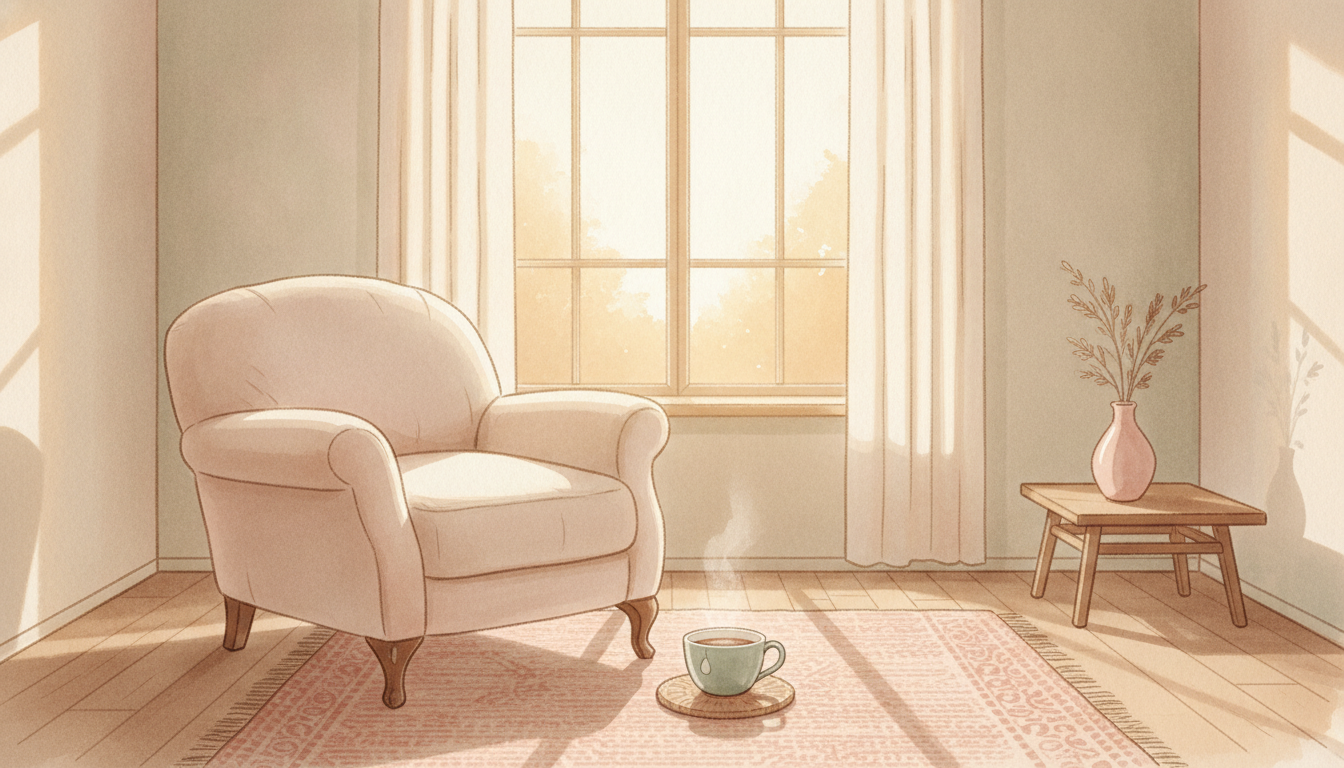
You've held so much for others. Now the room is just for you.
You know how to hold space — or something close to it. You listen when someone is falling apart. You don't rush them to the other side of their feeling. You stay when staying is uncomfortable. You ask the gentle question instead of offering the quick answer. You make room for someone's grief, someone's confusion, someone's long silence without filling it.
You've done this for friends. For partners. For family. For colleagues who needed someone steady in the room.
But when the feeling is yours — when you're the one with the tight chest, the looping thought, the afternoon that suddenly feels too heavy — you might notice how quickly you leave. Not physically. Internally. You analyze instead of feel. You scroll instead of stay. You make a plan, solve a problem, call it strength, call it coping, call it anything except what it is: refusing to be in the room with yourself.
Holding space for yourself is what happens when the feeling is yours — the tight chest, the looping thought, the afternoon that suddenly feels too heavy — and instead of leaving internally, you stay.
Not perfectly. Not without fumbling. But with the same quiet patience you'd offer someone you love.
What staying looks like
Staying isn't solving. It isn't cheering someone up. It isn't finding the silver lining or the lesson or the reason this pain is secretly good for them.
It's presence without agenda. Letting something be true without immediately trying to make it untrue. Creating room for a person to be exactly where they are — messy, uncertain, not ready, not over it yet.
When you stay with someone else, you might sit on the couch while they cry. You might say that sounds so hard instead of but at least. You might let the silence be long without breaking it because you trust that they're still in there, still processing, still moving at their own pace.
Holding space is staying without rushing — letting a feeling exist without demanding it become something else.
When the feeling is yours, the same rules apply. The sadness doesn't have to leave on schedule. The anger doesn't have to become gratitude. It's been long enough and other people have it worse and I've already talked about this once can all arrive — and the feeling can still be there.
You stay. In the feeling. In the room of your own body. With the same gentleness you'd extend outward — except the person needing it is you.
Why it's harder to turn inward
Turning that presence toward yourself can feel strange. Almost embarrassing.
You might think: I shouldn't need this. I should be able to handle my own feelings. Other people have real problems.
Or the old training might arrive — the version that said your feelings were too much, that staying with them was indulgent, that the strong thing was to move on quickly and not bother anyone, including yourself.
If you spent years being the steady one, the listener, the person who didn't fall apart, staying with your own feeling can feel like breaking a rule you didn't know you were following. Like admitting you need the same tenderness you've been giving away.
That's not weakness. That's honesty. And it might be the beginning of a different kind of fullness — not the kind where you have more to give, but the kind where you're no longer giving from empty.
What it looks like in a small moment
Holding space for yourself doesn't require a ritual or a special hour.
It might look like noticing you're anxious and, instead of immediately googling symptoms or making a list, sitting down for two minutes and saying — quietly, without performance — something in me is scared right now.
It might look like letting yourself cry in the car before going inside, without narrating why you shouldn't. It might look like not talking yourself out of the hurt because the hurt isn't rational and doesn't need to be. It might look like placing a hand on your chest the way you'd reach for a friend's shoulder — awkward, tender, present.
It might look like doing nothing at all except refusing to leave. Not rushing the feeling. Not fleeing it. Just staying in the room while it moves through at its own speed.

You've already learned how to stay with someone in pain. The same staying can turn toward the person who never leaves the room — you.
When staying feels unbearable
Some feelings are large. Some nights are long. Some grief doesn't soften on command, and staying with it feels like drowning in a room with no door.
Some days, staying alone isn't the whole story. A text that says I'm not okay, a call, a therapist, a friend who knows how to listen — staying isn't the same as isolating. It's the opposite of abandoning yourself, which sometimes means asking someone else to sit in the room with you.
And some days, you won't be able to stay. You'll scroll, you'll numb, you'll leave yourself for a while because leaving was what you learned when staying hurt too much. That's human. That's not failure. You can come back. You can try again tomorrow, or tonight, or in five minutes.
The coming back matters. Not dramatically — not a revelation, not a clean turn. Just the small choice to re-enter the room with yourself after you've gone. I'm here again. That counts. Especially if no one ever modeled it for you.
Not perfection. Direction — slightly more often, slightly longer, turning toward yourself instead of away.
The room that stays open
There's a particular loneliness in being the person everyone comes to — and having nowhere to go with your own heaviness.
Holding space for yourself is building that place. Not a physical room, necessarily, though it can be. An internal room where your feelings don't have to be useful, resolved, or smaller than they are. Where you can be tired of your own pain and still be gentle with it. Where you can hold two truths — I wish this were different and this is where I am right now — without making one of them wrong.
The room you've kept open for others can belong to you too. Same rules. Same patience. Same room to be exactly where you are.
The tea on the floor has gone cold. The chair is still facing the window, though the light outside has turned from gold to deep blue. No one else is coming into this room tonight — and that's the point. The space is yours. The feeling can stay as long as it needs. And you can stay with it, imperfectly, quietly, learning what it means to be held by the person who was always supposed to be in the room: you.
Related book
The Feelings Nobody Teaches
Keep reading
- What it means to feel less alone — even by one personYou don't need a crowd. You need one person who stays when things aren't pretty.
- Why the people who get you don't always get you right awayReal belonging takes time. The instant click is rare. The slow build is where trust lives.
- The exhaustion of performing connection without feeling itYou showed up. You smiled. You asked questions. And you drove home feeling emptier than before.