The kind of loneliness nobody talks about
You have people. You have plans. And you're still quietly starving for something you can't name — a loneliness that doesn't look like loneliness from the outside.
By Trupti Gavit
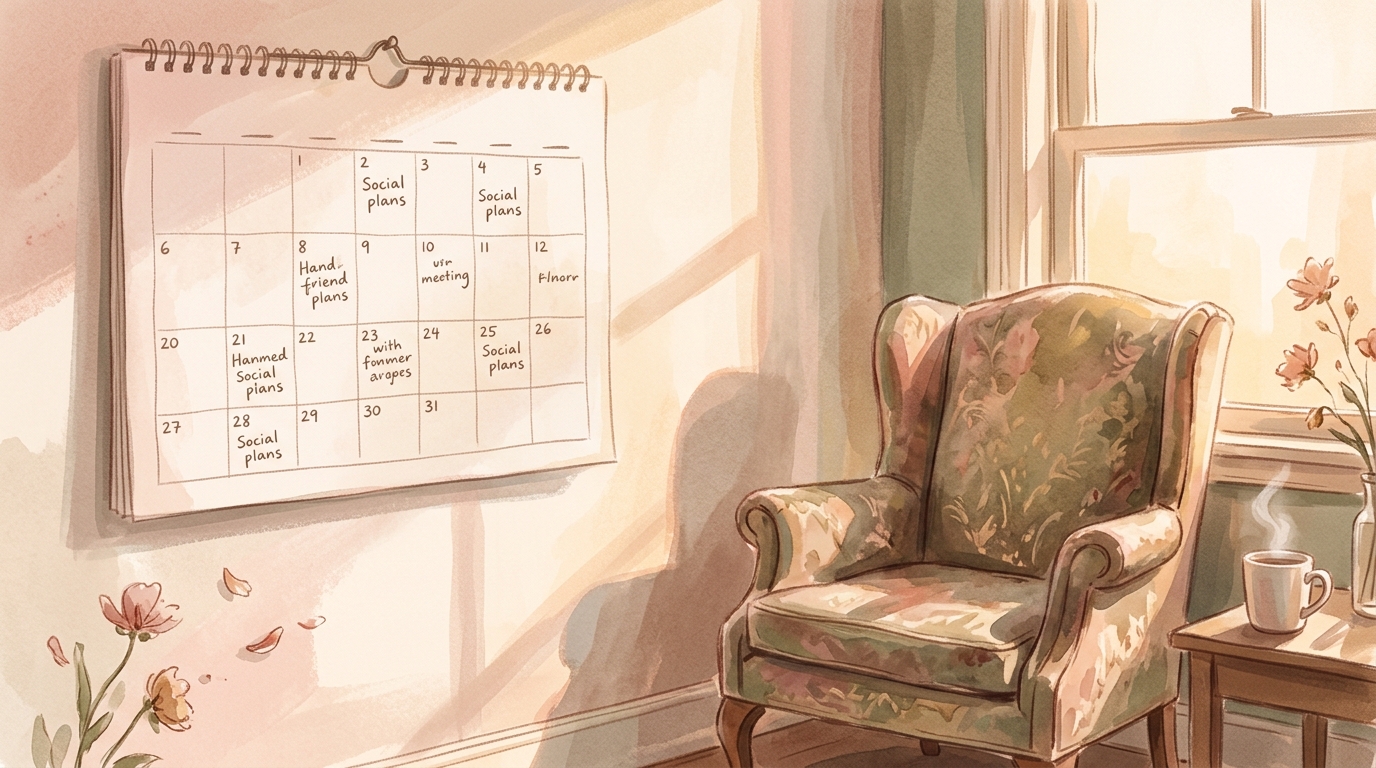
You have people. You have plans. And you're still quietly starving for something you can't name.
Your week looks full from the outside. Coffee on Tuesday. A friend's birthday dinner. Messages that ping through the day. Someone who would answer if you called at midnight. By any reasonable measure, you're connected — not isolated, not forgotten, not alone in the way loneliness is usually pictured.
And yet.
There's a hunger that doesn't match the calendar. It isn't dramatic. It doesn't send you crying into the night or searching for new friends. It sits underneath the ordinary texture of your days — a sense that something essential is missing, and you can't quite say what, and saying so feels like complaining about a life that looks, from every angle, like it should be enough.
This is the loneliness nobody talks about. The one that doesn't look like loneliness. The one that makes you wonder if the problem is you — if you're ungrateful, too needy, expecting something no one else seems to be missing.
When the hunger has no name
Some loneliness is clear. You moved to a new city. A friendship ended. Someone you loved is gone. The ache has a shape you can point to, a story you can tell, a reason people understand when you say I'm lonely.
This other kind arrives without a headline.
You have people who care. You have a life that functions. You might even have love — real love, the kind that shows up. And still, in quiet moments, something in you reaches for a connection that isn't there, or isn't there in the way you need, and you can't name what you're reaching for because the words haven't been given to you.
So you assume you must be wrong. That everyone feels this and handles it better. That wanting more — or wanting different — means you don't appreciate what you have.
Some loneliness doesn't look like emptiness. It looks like a full life with a quiet hole in the center — and no language for what the hole is shaped like.
The loneliness of almost
Sometimes the hunger is for depth in a life that stays at the surface.
You're seen, but not in the places that matter most. You're loved, but not in the way that lets you stop performing fine. You're busy, but the busyness doesn't fill the particular space where being known was supposed to live.
Almost is a lonely word. Almost known. Almost met. Almost close enough to rest. You can spend years in almost — surrounded by warmth that never quite lands, included in plans that leave you unchanged, sharing meals with people you love while some part of you stays folded away.
From the outside, almost looks like enough. From the inside, it can feel like slow starvation — not because the people around you are failing, but because something in the connection isn't reaching the place that needs reaching, and you don't know how to ask for it without sounding ungrateful or unclear.
When you can't explain it to yourself
The unnamed quality makes this loneliness especially isolating.
You can't call a friend and say I'm lonely when you just saw them on Saturday. You can't post about it without feeling absurd. You can't even admit it fully to yourself without a voice rising up to list all the reasons you shouldn't feel this way — the people who love you, the plans on the calendar, the evidence that your life is not, by any external measure, empty.
So the hunger stays private. It becomes something you carry while smiling, while showing up, while doing everything a connected person does. And the gap between how your life looks and how it feels grows quietly wider, until you start to wonder whether you're the only one who feels full and starving at the same time.
You're not. Many people live here — in the unnamed middle, hungry for something they can't articulate, ashamed of the hunger because the life looks like it should suffice.

What the unnamed hunger might be asking for
You don't have to name it perfectly for it to matter.
Sometimes the hunger is for one person who knows you without needing you to be easier. Sometimes it's for a friendship where repair doesn't require you to pretend you weren't hurt. Sometimes it's for a conversation that stays with something tender instead of moving past it. Sometimes it's simply wanting more depth without that want being a rejection of what you already have.
Sometimes it's for yourself — for the part of you that learned to stay manageable, to keep the heavy things folded, to show up as someone the room can hold. The loneliness might be that part, tired of waiting to be spoken to.
Naming it imperfectly still counts. I feel lonely and I don't know exactly why is a true sentence. Something is missing and I can't describe it yet is also true. You don't need the perfect word before the hunger becomes real enough to respect.
You don't have to name the hunger perfectly to let it matter. Unnamed longing is still longing — and still worth listening to, gently, without a verdict.
When gratitude and hunger coexist
You can be grateful for your people — genuinely, fully — and still feel the unnamed hunger.
Gratitude doesn't cancel ache. A full calendar doesn't mean the ache is wrong. Love in your life doesn't mean every part of you has been met. Those truths can sit together without one canceling the other.
This isn't about rejecting what you have. It's about noticing that having people and being known aren't always the same thing — and that the gap between them can feel like loneliness even when no one would look at your life and call it lonely.
You might never find the perfect word for what you're missing. You might find it slowly — in a conversation that lands differently, in a friendship that goes deeper than you expected, in a moment where you say something true and the room doesn't flinch.
Or you might carry the unnamed hunger for a long time, and learn to hold it without turning it into a verdict on who you are — without turning it into a demand that your current life transform overnight.
Holding two truths
You can love your people and your plans — and still feel quietly starving for something you can't name.
You can not know what the hunger is for — and still let it matter, still listen when it stirs, still refuse to shame yourself for feeling lonely in a life that looks full.
Neither truth cancels the other. Both can live in the same week, the same heart, the same you who shows up and still goes home with something unfinished.
The calendar still shows the plans. The messages still wait on your phone. Nothing about your outer life has changed tonight — and still, the hunger sits with you, unnamed, not demanding resolution. The chair by the window is empty. The light is going soft. You don't have to fill the hole before you sleep. You don't have to explain it to anyone. Only to let it be real — this quiet starvation in a life that looks, from every angle, like it should be enough. The enough and the hunger, both true, both yours, both welcome to stay until something in you knows what it's asking for.
Related book
Why Love Is So Complicated
Keep reading
- What it means to feel less alone — even by one personYou don't need a crowd. You need one person who stays when things aren't pretty.
- Why the people who get you don't always get you right awayReal belonging takes time. The instant click is rare. The slow build is where trust lives.
- The exhaustion of performing connection without feeling itYou showed up. You smiled. You asked questions. And you drove home feeling emptier than before.