Why money is harder to talk about than sex
We share beds but not bank accounts — and the silence costs more than we admit. What makes money the last taboo between people who've told each other everything else.
By Trupti Gavit
You know their childhood stories. You know what keeps them awake at three in the morning. You've talked about desire, disappointment, the things their parents never said out loud.
But when the subject turns to money — what you earn, what you owe, what you spent last week without mentioning — something in the room changes. A glance toward the phone. A joke that lands too quickly. A shift into practical voice, as if the number were weather and not a map of who you are when nobody is watching.
We share beds but not bank accounts — and the silence costs more than we admit.
What we learn to say out loud
Sex became something people discuss — carefully, imperfectly, but openly. Podcasts, books, therapy rooms, late-night conversations between friends. There's language for it now. Awkward language, sometimes, but language.
Money stayed in the drawer.
Maybe you grew up watching adults whisper about bills, or fight about them, or pretend they didn't exist until the envelope arrived. Maybe you learned that asking how much someone makes was rude in the same way asking how much they weigh was rude — not because the question was cruel, but because the answer felt like exposure.
So you learned to perform stability. To nod when friends suggest a restaurant you can't comfortably afford. To say "I'm fine" when someone asks about work, while calculating whether fine means employed or secure or just getting by until the next month turns.
Money silence isn't privacy. It's often the last place where we still believe our worth might be measured — and found wanting.
Why the number feels like a verdict
When you talk about desire, you're naming something human — shared, complicated, rarely simple.
When you talk about money, you're naming something that got tangled, early, with survival. With whether there was enough. With who had power in the room. With whether love came with conditions you could meet.
The number on a screen isn't neutral. It carries the echo of every month that was too tight, every gift that came with strings, every time you watched someone you loved shrink when the topic came up at the table.
Your partner has their own echo. Different details, same weight underneath: If you see how I really manage this, will you still respect me? If I earn more, will I become the one who holds everything? If we merge our lives, do I lose the part of me that survived by staying careful?
These aren't math questions. They're closeness questions wearing numbers — and closeness, for some bodies, still feels safer when certain doors stay closed.
The intimacy we already have
You might have shared things with this person that would make your younger self blush. Bodies, fears, old shame, the particular way you shut down when you're overwhelmed.
And still — the banking app stays face-down. The salary stays approximate. The purchase you made on impulse stays unmentioned until the statement arrives and you have to explain something that already feels like a confession.

There's a particular loneliness in that gap. You can feel fully known in one register and entirely alone in another. You can sleep beside someone for years and not know what money means to them — not the amount, but the story. What enough looks like. What spending feels like. What asking for help would cost them in pride, or memory, or old family rules still running quietly in the background.
What the silence protects — and what it costs
Money silence often starts as protection.
Protection from judgment. From becoming the person who earns less, or spends more, or doesn't know the thing everyone else seems to know. From repeating a dynamic you watched as a child — the one where money was how love got measured, or withheld, or fought over until the room couldn't hold anything softer.
So you stay quiet. You handle it alone. You treat the account like a private weather system — yours to monitor, yours to worry about, yours to hide when the forecast looks bad.
But silence has its own cost. Decisions get made in separate rooms. Resentment grows in the space where conversation might have lived. One person feels controlled; the other feels unseen. Both might be right — and both might be responding to old weather, not this month, not this partner, not this life you're trying to build together.
Two people can love each other deeply and still flinch at sharing a balance — not because the love isn't real, but because money asks something tender of love: honesty about fear without making each other the cause of it.
A different kind of undressing
Talking about money isn't harder because you're bad at intimacy. It's harder because money was never taught as intimacy — it was taught as status, or secrecy, or survival, or shame with a password.
Starting doesn't require a grand disclosure. It might look like one sentence over tea: When money comes up, I go quiet because I learned to handle it alone. It might look like asking what safety means to each of you — not what the account should look like, but what the number represents when it rises or falls.
You don't have to merge every instinct to share a life. One of you might need more visibility. One might need more autonomy. Both needs can live in the same relationship if they're spoken instead of performed through tension, through jokes that deflect, through nights where you lie awake doing math while the other person sleeps, believing you're protecting them by carrying it alone.
When the door opens even an inch
You won't rewrite your money stories in one conversation. They were written over years — in kitchens where voices rose, in months when a good stretch didn't guarantee the next one, in moments when provision and love got tangled until you couldn't tell which you were asking for.
What you can do is let the subject exist in the room before it hijacks the evening. Before a small purchase becomes a stand-in for everything unsaid. Before silence hardens into the story that you're alone in this, even beside someone who would stay if they knew.
The last taboo isn't the number. It's the fear underneath it — and fear softens when it's met with presence, not a spreadsheet.
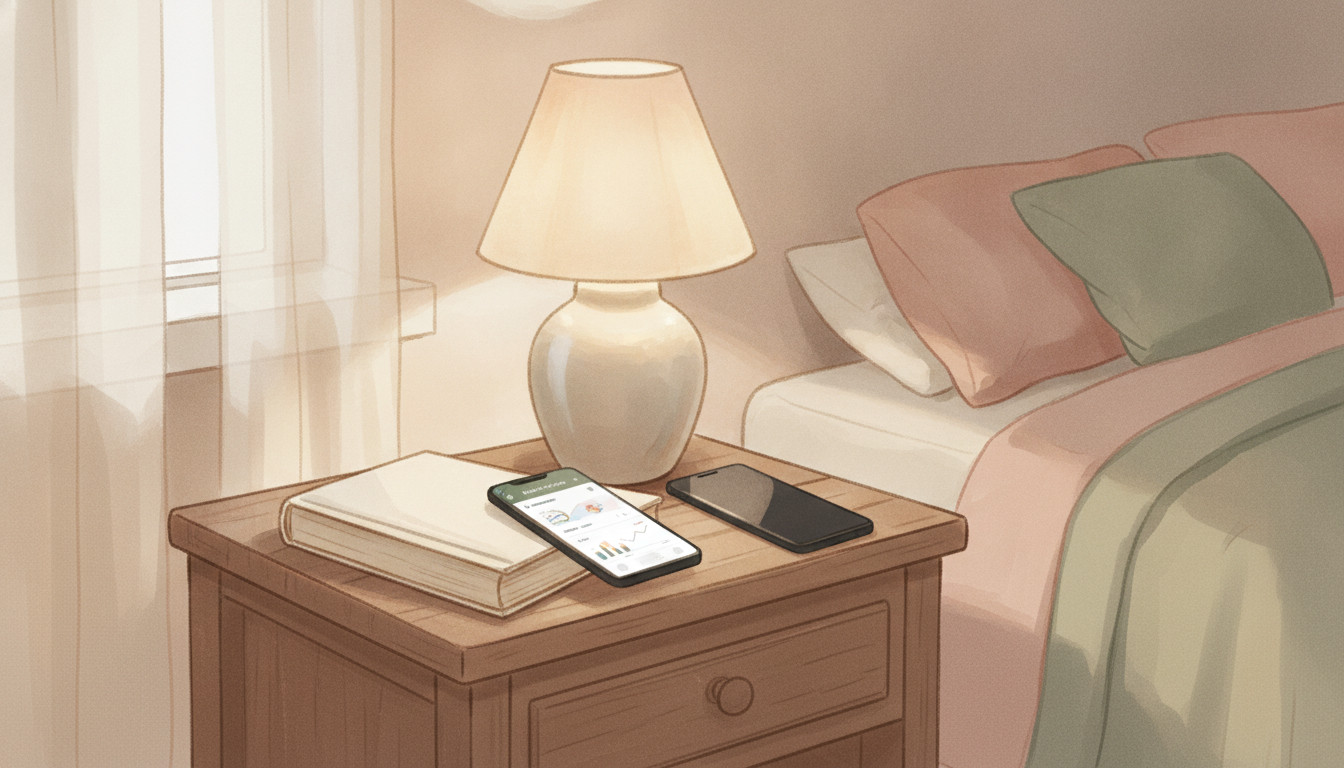
The lamp is still on. The phone is face-down on the nightstand, screen dark, holding whatever number waits inside it. Outside, ordinary night — a car passing, the slow quiet settling over the street. You don't have to open every drawer tonight. Only to stay in the room long enough for money to become two people again, not a verdict waiting in the dark.
Related book
Why Money Hits So Deep
Keep reading
- What it means to feel less alone — even by one personYou don't need a crowd. You need one person who stays when things aren't pretty.
- Why the people who get you don't always get you right awayReal belonging takes time. The instant click is rare. The slow build is where trust lives.
- The exhaustion of performing connection without feeling itYou showed up. You smiled. You asked questions. And you drove home feeling emptier than before.