Why notifications feel urgent even when they're not
Every ping arrives the same way — as if everything is equally important. It isn't. Why your body treats a coupon and a crisis with the same small jolt, and what happens when you notice.
By Trupti Gavit
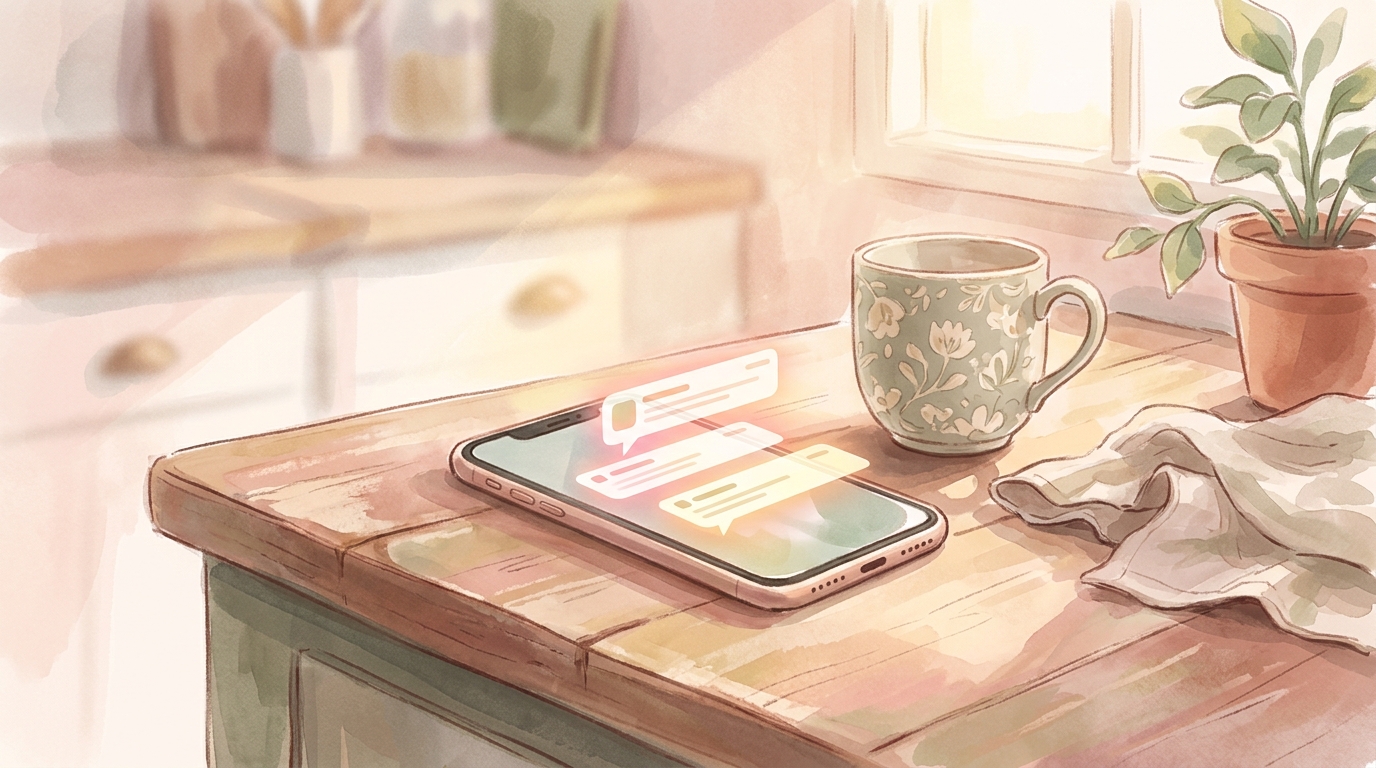
Every ping arrives the same way — as if everything is equally important. It isn't.
The delivery app says your order is five stops away. A group chat erupts over something you don't care about. A news alert uses the same tone for a sale and a storm warning. Your calendar reminds you about a dentist appointment you already wrote on the fridge. Each one lands with the same small jolt — the sound, the vibration, the banner sliding down — and for a second your body treats them all like the same kind of arrival.
You look. You might not even decide to look. Your hand is already moving before you've weighed whether this one matters.
The same doorbell for every visitor
Notifications are designed to interrupt. That's their job. They don't wait for a good moment. They don't ask whether you're in the middle of a thought, a conversation, a breath.
What they share isn't content — it's delivery. The same chime for your mother and for a brand you've never heard of. The same red badge whether someone sent you a photo of their dog or a headline designed to make you afraid. Your body learns one lesson from all of them: something is here. Something needs you. Look now.
That lesson made sense once. Sudden sounds meant something changed in the environment — someone at the door, something falling, news that couldn't wait. The body still reads sudden alerts that way. It doesn't sort them by category before reacting. It just turns toward the noise.
Your body can't tell a coupon from a crisis until after you've already looked. By then, the jolt has already happened.
What the jolt costs
You might not notice the cost because the interruptions are small. A second here, a glance there. But they add up into a texture — a day that never quite settles.
You sit down to write an email and a ping arrives. You read it — nothing urgent — and return to the email. But the thread of the sentence you were forming has frayed. You start again. Another ping. Another small departure. By evening you feel scattered without knowing why, as if your attention was borrowed all day and never quite returned.
The tiredness isn't always from what the notifications said. Sometimes it's from the constant readiness — the low hum of something might arrive, the subtle leaning toward the phone even when it's face-down on the table. Your body stays slightly oriented toward interruption, and that orientation takes something out of you even when nothing important comes.
The false emergencies
Some notifications borrow urgency on purpose.
Limited time. Last chance. Breaking. You won't believe. The language is built to compress your decision window — to make you feel that looking now matters more than whatever you were doing before the banner appeared.
Your body responds before your mind evaluates. Heart rate lifts slightly. Shoulders tighten. You feel the pull to resolve the open loop — read it, dismiss it, act on it — even when the content, once seen, is obviously forgettable.
You close the app and the urgency evaporates. But your body doesn't always forget as quickly as your mind does. The residue lingers — a faint agitation, a sense that you should be doing something, even when nothing real is asking.

When everything feels equally loud
The problem isn't any single notification. It's the flattening — the way a hundred small arrivals each claim the same level of importance.
A message from someone you love sits in the same tray as a reminder to rate an app. A weather warning competes with a photo tag. Your body can't prioritize what your phone won't prioritize. So it treats the stream as one continuous demand — and you live inside that demand even when most of what's arriving doesn't need you at all.
You might mute some apps and leave others on. You might turn off sounds but keep badges. Each adjustment helps a little. But the habit of readiness can outlast the settings — the reflex to check, the sense that you're behind on something you can't name.
Urgency isn't always about what's true. Sometimes it's about what arrived loudest — and loudest isn't the same as important.
Holding two truths
You can need your phone for real reasons — work, family, safety — and still feel worn down by notifications that aren't any of those things.
You can turn most of them off and still feel the pull to check, as if something important might be hiding in the silence.
Neither truth cancels the other. Both belong in a life that runs partly through a screen and partly through rooms where the only sounds are ordinary.
After the jolt
You won't always catch the moment before you look. That's fine. The noticing can happen afterward too.
The ping arrives. You look. You read. And then — sometimes, in the pause before you move on — a quiet distinction appears: the jolt was real, and the thing itself might have been fine to meet ten minutes later, or never.
Not as a rule. Not as a tally. Just the body reacting, the banner loud, the coupon or thread or headline already fading while your shoulders are still lifted.
Some days you'll change a setting based on what you notice. Some days you won't. The difference isn't about becoming someone who never responds. It's about how slowly the body learns that not every arrival is an emergency — even when every arrival sounds like one.
Calm isn't the absence of pings. Sometimes it's the small space between the jolt and the turn — when your hand hasn't moved yet, and the afternoon is still yours.
The phone is on the counter. The last ping glows and fades. You haven't looked yet — or you have, and the thing was nothing. Either way, the afternoon continues: light on the floor, a cup cooling, the room holding its ordinary pace. Somewhere in you, the jolt loosens when you remember that not every sound is a summons. The phone will ping again. You will look again. And between those two truths, a little more room to decide which arrivals get to rearrange your day.
Related book
The Loop You're Stuck In
Keep reading
- What it means to feel less alone — even by one personYou don't need a crowd. You need one person who stays when things aren't pretty.
- Why the people who get you don't always get you right awayReal belonging takes time. The instant click is rare. The slow build is where trust lives.
- The exhaustion of performing connection without feeling itYou showed up. You smiled. You asked questions. And you drove home feeling emptier than before.