The discomfort of doing one thing at a time
Single-tasking shouldn't feel this hard — but your brain has been trained otherwise. The restlessness of staying with one task is a message, not a failure.
By Trupti Gavit
Single-tasking shouldn't feel this hard — but your brain has been trained otherwise.
You sat down to write one email. Just the email. The document is closed, the phone is face-down, the tab count is mercifully low. You type a sentence. You read it back. And then — before you've finished the thought — your mind is already somewhere else. The grocery list. The reply you owe from yesterday. A half-remembered headline. The vague sense that you should be doing something more important than this, even though this is exactly what you chose.
Your fingers hover over the keyboard. Not because you don't know what to write. Because staying here, in this one task, with nothing else competing for your attention, feels almost unbearable. Like sitting in a quiet room when you're used to noise.
The discomfort isn't a sign that single-tasking is wrong for you. It's a sign of how rarely your days have asked you to do it.
The itch to leave
When you commit to one thing, something in you protests.
Not loudly. More like a low restlessness — a pull toward the next tab, the next task, the next small hit of new. Your body has learned that switching is survival. That being available in many directions at once is how you stay responsive, included, ahead of whatever might arrive.
Single-tasking asks the opposite. It asks you to trust that this one thing is enough for now. That the world won't collapse while you finish a paragraph. That the unread messages can wait eleven more minutes.
For a mind trained on switching, that trust feels naive. Even reckless. The itch to leave isn't weakness. It's memory — your body remembering what it learned when pausing meant falling behind.
Staying with one thing feels uncomfortable not because you're bad at focus, but because your days rarely let you practice it.
You might notice the protest in small ways. Shoulders creeping up. Breath getting shallow. The urge to "just quickly check" something — anything — before returning to the task. Each of these is your body reaching for the familiar rhythm of many things at once, because many things at once is what it knows.
What one thing actually asks of you
Doing one thing at a time isn't about perfection. It's about presence — and presence, for many of us, has become unfamiliar enough to feel like a strain.
The email asks you to find the right words without the relief of switching away when they don't come easily. The report asks you to sit with a problem long enough for a solution to form, instead of opening a new document the moment this one gets hard. The conversation asks you to listen without rehearsing your response or glancing at your phone.
Each of these is a small act of tolerance — for slowness, for difficulty, for the moment when nothing new is happening and you have to stay anyway.
That tolerance isn't infinite. Some days you won't have it. Some days the discomfort of one thing will be louder than the value of finishing it, and you'll switch — not as failure, but as honesty about what you have left to give.

The guilt of slowness
Part of the discomfort is cultural. We live in a world that rewards speed, responsiveness, the appearance of handling many things at once. Doing one thing slowly can feel like falling behind — even when that one thing is the thing that matters most.
You might finish the email and feel less accomplished than if you'd also answered three texts, started a load of laundry, and half-read an article in the same twenty minutes. The math of productivity says you did less. Your body might say something different — if you let it.
Single-tasking doesn't always feel productive while you're doing it. It often feels like you're missing something. Like everyone else is moving faster. Like the day is slipping away while you stay with one paragraph, one problem, one person.
That feeling is real. It doesn't mean you're wrong to stay.
Slowness isn't laziness when the world trained you to move fast. Sometimes one thing whole is the slowest-feeling way through an afternoon — and still the one that leaves something behind.
When the discomfort softens
The restlessness doesn't always stay at full volume. Sometimes, if you stay long enough — not heroically, just honestly — something settles.
Not a dramatic breakthrough. More like a quieting. The itch softens. The email gets finished. The paragraph lands. Your shoulders drop a centimeter you didn't know they'd risen. You look up and realize fifteen minutes passed without your hand reaching for the phone.
These moments are easy to miss because they don't announce themselves. They arrive quietly, in the middle of ordinary work, when you stopped pushing against the discomfort long enough to move through it.
They can't be forced. They arrive when the conditions allow — one task chosen, one stretch of time protected imperfectly, the itch felt without immediately scratching it by switching away.
Two things can be true
You can find single-tasking uncomfortable — and still want more of it in your days.
You can switch away sometimes — and not treat every switch as evidence that something is wrong with you.
You can miss the feeling of handling many things at once — and also recognize that the emptiness afterward is your body telling you something about the cost.
Neither truth has to win. Both can sit in the same afternoon.
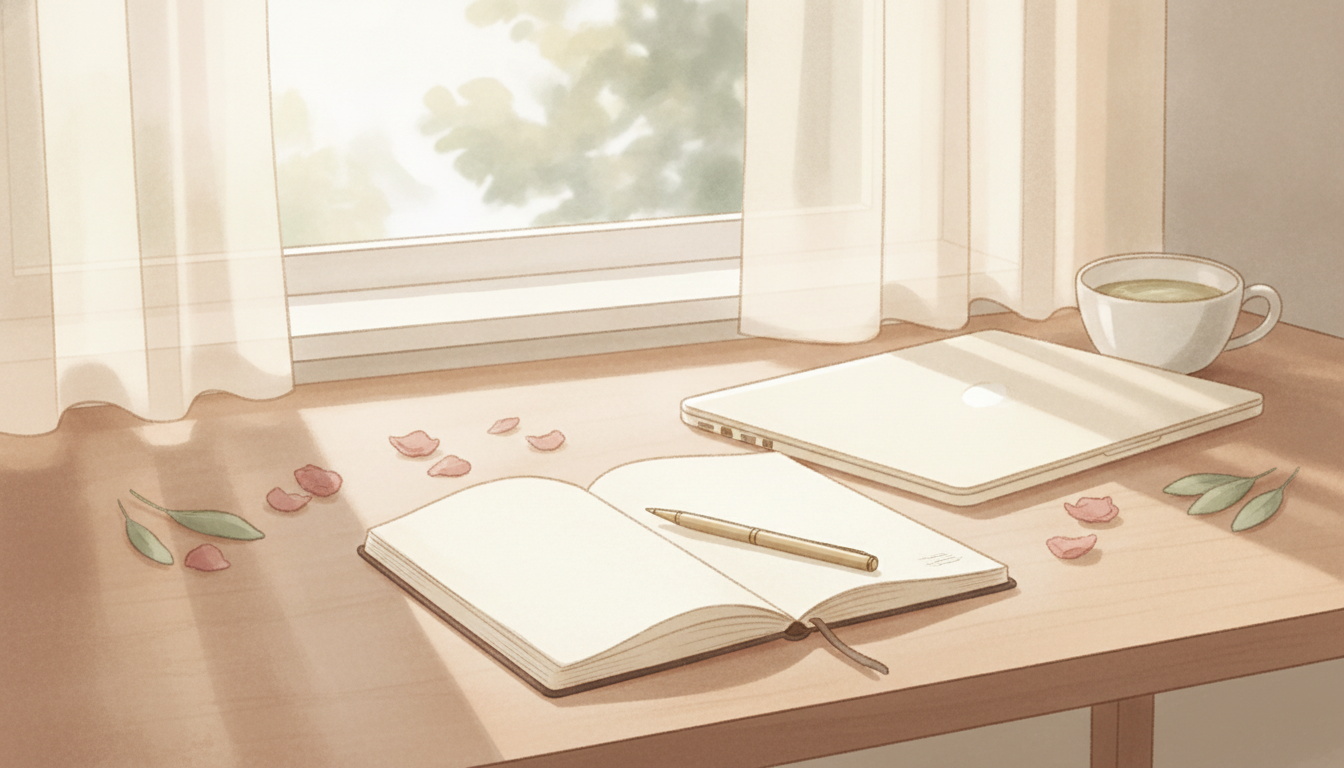
The email is sent. The desk has only one thing on it now — a closed laptop, a cooling mug, the late-morning light moving slowly across the wood. Your mind offers the list of everything else waiting. You let the list wait a little longer. One thing is done. The discomfort came, and you stayed anyway — not perfectly, not every time, but enough for this moment to feel whole. The next task can come when you're ready. For now, the quiet is yours.
Related book
The Loop You're Stuck In
Keep reading
- What it means to feel less alone — even by one personYou don't need a crowd. You need one person who stays when things aren't pretty.
- Why the people who get you don't always get you right awayReal belonging takes time. The instant click is rare. The slow build is where trust lives.
- The exhaustion of performing connection without feeling itYou showed up. You smiled. You asked questions. And you drove home feeling emptier than before.