Why rest feels like falling behind
You stop moving and the guilt arrives before the stillness does. When pausing feels like losing ground — and what it means to stop without abandoning the life you're building.
By Trupti Gavit
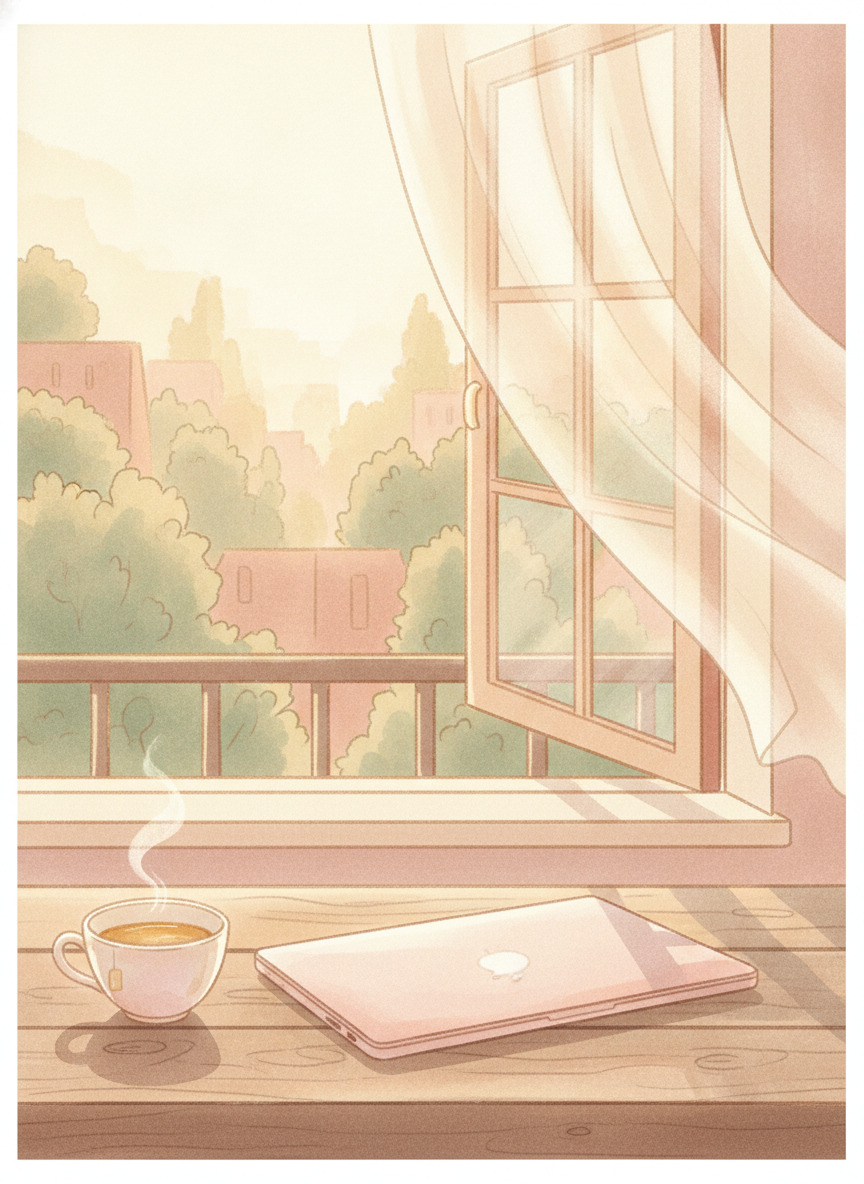
You stop moving and the guilt arrives before the stillness does.
You close the laptop. You sit on the couch. You cancel the evening thing because your body is asking for something your calendar didn't plan for — and within minutes, the list starts. What you could be doing. What will pile up. What everyone else is probably accomplishing while you're here, still, doing nothing that counts.
The stillness hasn't landed yet. The guilt is already seated.
You might call it rest. Your body might call it something else — relief, exhaustion, the honest report that you've been carrying too much for too long. But the culture around you, and maybe the voice inside you, has other names for it. Falling behind. Wasting time. Letting yourself down.
When stopping felt like risk
Rest doesn't feel neutral for everyone. For some of us, stillness arrived with conditions — or with consequences.
Maybe you learned that love looked like usefulness. That your value in the room was tied to what you produced, what you handled, what you kept moving. Maybe stillness in your childhood home meant criticism, or the quiet before someone needed something from you, or the dangerous pause before tension returned.
Maybe you built an identity around being the one who keeps going — the reliable one, the one who doesn't stop, the one who can be counted on when others can't. Rest, in that story, isn't neutral. It's a threat to the version of you that stayed safe by staying busy.
So when you stop now, guilt isn't irrational. It's pattern memory — your body responding to an old equation where motion equaled safety and stillness equaled something you couldn't afford.
Rest can feel like falling behind not because you're lazy, but because you learned that stopping had a cost — and your body hasn't forgotten.
The math that never balances
There's a particular exhaustion that comes from treating rest as something you have to justify.
You work hard, so you rest — but the rest comes with a ledger. Hours owed. Productivity deferred. A mental tally of what you're not doing while your eyes are closed, while your hands are still, while you're simply sitting in a chair looking out the window.
You might rest and call it lazy before your body has finished receiving the pause. You might take a day off and feel the hours like debt. You might lie down and immediately start planning when you'll get up and make up for lost time — as if rest were theft from the life you're trying to build.
The culture around you often agrees. Productivity as virtue. Stillness as something you apologize for. The visible motion of other people's lives — their posts, their progress, their apparent endless forward movement — as evidence that your pause is a mistake.
But rest isn't the opposite of a meaningful life. It's part of how a meaningful life stays possible — not as reward for suffering, but as part of how sustainable living works.
What falling behind actually means
Falling behind implies a race — a single track, a shared starting line, a finish you're supposed to be approaching at a certain pace.
But most lives don't work that way. The person who looks ahead on the outside might be exhausted on the inside. The progress you can't see from here might be costing them something they won't say out loud. The pace you're comparing yourself to might not even be pointed in the direction you actually want to go.

When you rest, you're not necessarily losing ground. You might be preserving it — keeping enough clarity, enough energy, enough presence to continue toward what matters without collapsing mid-path.
Your body knows this, even when your mind argues. The guilt speaks in old language. The tiredness speaks in present tense.
A life with direction in it still needs rooms where nothing is being achieved — where your worth isn't being measured by output, even by you.
When busyness keeps feeling safer
Rest can feel unsafe if you've used motion to outrun feeling. The moment you stop, everything you've been carrying arrives at once — grief, fear, the question you've been too tired to ask. Busyness can feel safer because it has structure. A next task. A reason to keep moving.
For some people, stillness arrives in small doses at first. Five minutes before the guilt catches up. One evening protected. One honest cancellation without the long explanation — just the stop itself.
Rest doesn't always feel peaceful immediately. Twenty minutes on the couch can pass before anything like stillness arrives — restless, guilty, still a body asking for something true.
Holding ambition and pause in the same life
You might want a lot from your life — a project, a change, a direction that matters to you. That wanting is real. It doesn't disappear when you rest.
You can want the promotion and want a nap. You can care deeply about your craft and still close the notebook when your eyes burn. You can be building something meaningful and still need a Tuesday where nothing is measured and no one is impressed.
Rest doesn't cancel ambition. It sits beside it — on different days, in different hours, sometimes in the same afternoon.
Drive and rest can both speak in the same life. One voice calling toward the project, the promotion, the craft. Another asking for a nap, a closed notebook, a Tuesday where nothing is measured and no one is impressed. Sometimes it's calling. Sometimes it's compulsion. Sometimes it's exhaustion. Sometimes it's the old guilt dressed as responsibility.
The knowing isn't always immediate. The listening itself is something — a small trust in your body, in your wanting, in the possibility that a full life has rhythm rather than a single sustained note.
You can be someone who reaches and someone who stops. Both belong in the same life — and neither one has to apologize for the other.
The laptop stays closed. The tea has gone lukewarm. Outside the window, the light is going soft — the kind that makes edges blur and urgency feel slightly farther away. The page can wait. The wanting can wait too, for just a little while, while you sit in the room as you are — tired and directed, still and reaching, both at once.
Related book
The Loop You're Stuck In
Keep reading
- What it means to feel less alone — even by one personYou don't need a crowd. You need one person who stays when things aren't pretty.
- Why the people who get you don't always get you right awayReal belonging takes time. The instant click is rare. The slow build is where trust lives.
- The exhaustion of performing connection without feeling itYou showed up. You smiled. You asked questions. And you drove home feeling emptier than before.