How one small room change can shift your mood
Move one thing, add one light — your environment talks to your body all day. What a single small shift in your space can do, without turning your home into a project.
By Trupti Gavit
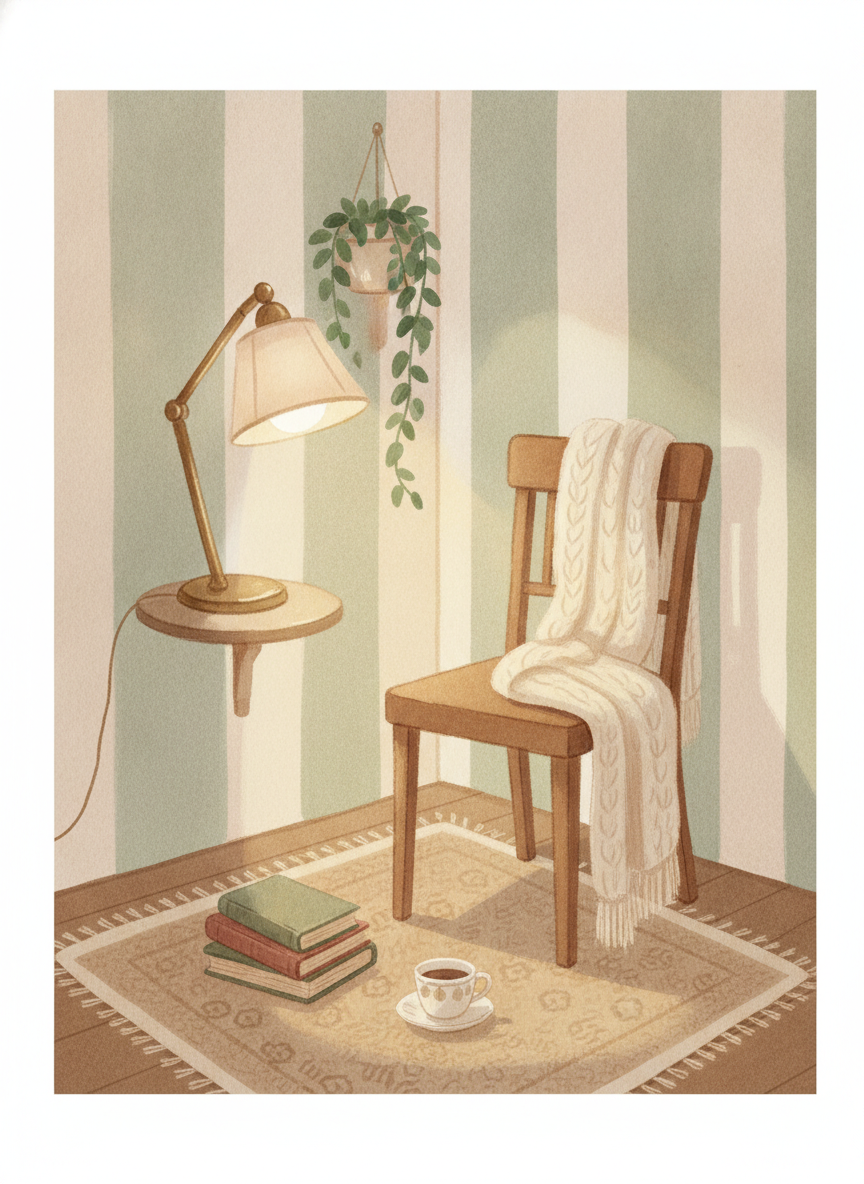
Move one thing, add one light — your environment talks to your body all day.
You didn't renovate. You didn't buy anything expensive. You moved the chair so it faces the window instead of the wall. You plugged in a lamp in the corner that had been living off overhead light for years. You cleared one surface — not the whole room, just the table beside the couch where mail and chargers had been accumulating like sediment.
Nothing dramatic happened. No one visited and gasped. You didn't post about it.
But when you sat down that evening, something was slightly different. Your shoulders didn't climb the way they sometimes do in that room. The space felt less like a place you passed through and more like a place that noticed you back.
The room you live in is always speaking
Your body reads rooms the way it reads weather — not consciously, not in words, but in posture, breath, the small tightening or loosening that happens before you've formed a thought about why.
Harsh overhead light says stay alert. Clutter at eye level says there's more to manage. A chair facing a blank wall says sit and endure. A warm lamp in a corner says you can land here.
None of this is mystical. It's just signal — the same way a cold draft makes you pull your sleeves down without deciding to. Your home sends signals all day, especially in the rooms where you rest, work, and transition between versions of yourself.
Most of us stop hearing those signals because the room has looked the same for years. The dim corner became normal. The pile on the desk became furniture. We adapted to an environment that was quietly asking more of our bodies than we realized.
You don't have to love interior design for your room to affect you. You only have to notice what your body does when you walk in — and what one small shift might change.
Why one change can matter more than a whole overhaul
Grand makeovers are satisfying on television. In real life, they often collapse under their own ambition — another project, another thing unfinished, another standard you can't maintain on a tired Tuesday.
One change is different. It doesn't ask you to become a different kind of person. It asks you to adjust one signal.
Move the reading chair toward the window so morning light reaches you before your phone does. Put the thing you use every day where your hand actually finds it, instead of where it "should" go. Add a lamp where you've been squinting. Take one object off a surface that's been visually loud for months.
Your body responds to these quickly — sometimes before your mind approves of the change. You might feel silly for caring about a lamp. And still your chest might drop a fraction when you sit in its light.

When the room holds an old mood
Sometimes a space isn't neutral. It's layered with memory — the couch where you took hard calls, the corner where you cried and then cleaned up before anyone saw, the desk that became a symbol of every unfinished thing you couldn't face.
You don't have to burn it all down and start over. But you might notice that certain arrangements keep you in an old posture — literally and otherwise. The body that learned to brace in a room may keep bracing there, even when the reason is gone.
Changing one element interrupts that loop gently. Not erasing history — just offering your body a slightly different coordinate. This corner can be different now. This chair can face something softer.
It might feel strange at first. Good change sometimes does. Your body may need a few days to believe the room isn't asking what it used to ask.
A room can hold an old mood in its layout. Moving one thing doesn't erase what happened — it just gives your body a new place to sit inside the same walls.
What to change when everything feels like too much
If choosing feels impossible, make the decision smaller.
Don't ask how should this room be. Ask where do I sit when I'm tired, and what's one thing that would make that spot kinder.
Maybe it's light. Maybe it's removing one visual demand — the stack, the cord jungle, the chair that was never comfortable but came with the apartment. Maybe it's orienting something toward the door so you don't sit with your back to the room without meaning to.
You don't need permission from a magazine. You don't need a cohesive aesthetic. You need one signal that says rest is allowed here — or focus is possible here — or simply this is yours.
The change that no one else will notice
That's fine. This wasn't for them.
They won't know you moved the plant because the old spot blocked the only morning light. They won't know the lamp exists because overhead light made your eyes ache by nine p.m. They won't know you cleared the table because looking at the pile made your jaw tight before you'd named why.
Your body will know. That's enough.
Over days, the room becomes a slightly different conversation partner — less demanding, less dim, less stuck in a layout you inherited from a version of your life that needed different things. You might still have hard days in it. The lamp won't solve grief or exhaustion or the email that ruins your evening.
But it might give you one corner where your shoulders remember how to come down. One surface that doesn't ask you to manage it the moment you walk past. One small sign — felt, not argued — that your environment can change when you do, even a little.
The lamp is still on in the corner. The chair still faces the window, though the light outside has gone from gold to blue. The room hasn't become a sanctuary — it was never supposed to. It only needed one small adjustment, one signal that landed where your body could hear it. And for tonight, that might be enough.
Related book
The Loop You're Stuck In
Keep reading
- What it means to feel less alone — even by one personYou don't need a crowd. You need one person who stays when things aren't pretty.
- Why the people who get you don't always get you right awayReal belonging takes time. The instant click is rare. The slow build is where trust lives.
- The exhaustion of performing connection without feeling itYou showed up. You smiled. You asked questions. And you drove home feeling emptier than before.