How to stay connected when you're both struggling
Two tired people trying not to become two distant people. When you and your partner are both depleted, and closeness asks for something neither of you has much of.
By Trupti Gavit
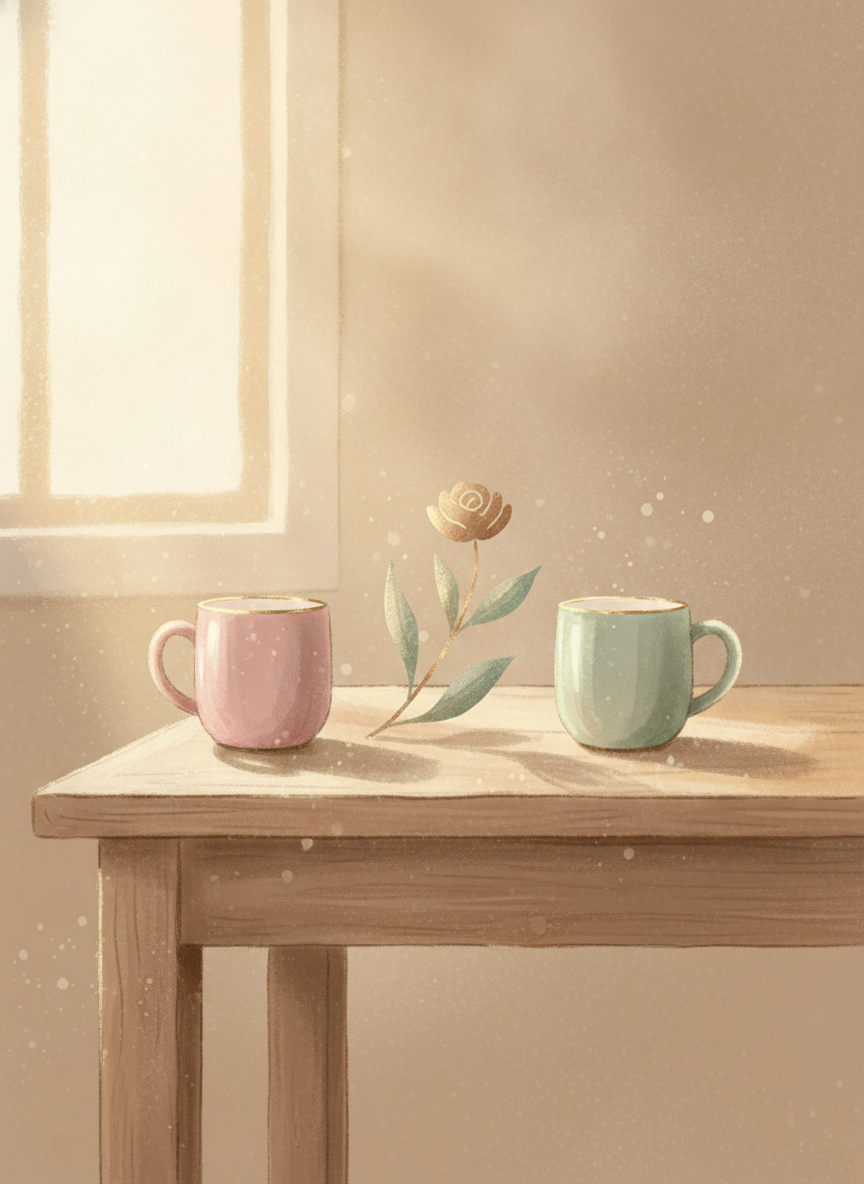
Two tired people trying not to become two distant people.
You're both depleted. Work has been relentless, or health has been uncertain, or the season itself has been heavy — and the person you usually turn to is running on the same empty tank. You pass each other in the kitchen. You sleep in the same bed but feel miles apart. You want closeness and you also want silence, and those two wants keep colliding.
Neither of you is wrong. Neither of you is failing the relationship. You're two humans in a hard stretch, trying to stay near each other when staying near takes energy neither of you has much of right now.
The distance isn't always dramatic. It's often quiet — fewer conversations, shorter replies, the slow drift from we're in this together to we're both just getting through.
When both people are empty
There's a particular loneliness in struggling alongside someone who's struggling too.
You can't be the strong one because they're not the strong one either. You can't lean because they're already leaning as far as they can. You might look at each other with love and still feel unable to reach — not from lack of caring, but from lack of capacity.
In easier seasons, one of you carries and the other rests, and then you switch. That's how partnership often works — not perfectly, but with enough give that both people get tended eventually.
In hard seasons, the give runs out on both sides at once. And the relationship, which usually runs on mutual tending, has to find another way to stay alive — a way that doesn't require either of you to be full when you're not.
When both people are depleted, closeness can't depend on someone having extra to give. It has to find a smaller language — one that doesn't require energy you don't have.
The drift you might not notice until it's wide
Distance in a relationship often starts quietly.
A conversation that doesn't happen because both of you are too tired to start it. A touch that doesn't land because one of you is already asleep. A resentment that builds slowly — not because anyone did something wrong, but because unmet need, on both sides, has nowhere to go.
You might start living parallel lives under the same roof. Same schedule, same bed, same group chat — but less overlap in the places that matter. Less how are you really. Less sitting together without phones. Less of the small ordinary intimacy that keeps two people feeling like partners instead of roommates managing a shared calendar.
Neither of you chose this. It crept in — the way distance does when both people are surviving and neither has enough left to tend the space between them.
What your body does when you're both braced
When you're depleted, your body often pulls inward.
You might be irritable over small things — not because the things matter, but because your capacity is so thin that everything feels like too much. You might read your partner's tiredness as rejection — they're quiet, so they must be angry; they're distant, so they must not care. They might be reading your silence the same way.
Two braced bodies in the same house can feel like opposition even when neither person is fighting. You're both protecting what little you have left. You're both waiting for the other to reach first — not from pettiness, but from the same exhaustion that makes reaching feel impossible.

Your body might need rest more than it needs resolution. Your partner's might too. The relationship might need something humbler than a long talk — something that doesn't ask either of you to perform being okay when you're not.
Small threads that hold when rope runs out
When both people are struggling, connection can't depend on grand gestures.
It might look like sitting in the same room without talking — not as avoidance, but as presence. It might look like one sentence: I'm tired too. It might look like making tea for two without asking whether anyone wants it, the way you used to when things were lighter.
It might look like lowering the bar — not on the relationship, but on what closeness requires right now. You don't need a date night when you can barely finish the week. You might need five minutes on the couch, shoulders touching, neither of you performing energy you don't have.
You might need to say the true thing without making it a project: We're both running on empty and I don't want us to drift. Not as an accusation. Not as the opening to a long conversation you can't sustain tonight. Just as a naming — so the distance becomes visible before it becomes permanent.
Staying connected when you're both struggling isn't about having more to give. It's about finding the smallest true gesture that says I'm still here.
When one of you has to reach first
In hard seasons, someone usually has to move first — not because they're wrong, not because they're stronger, but because waiting for the perfect moment often means waiting past the moment when a small reach was still possible.
That reach doesn't have to be eloquent. It can be a hand on a shoulder. A text that says Thinking of you. A question that asks for almost nothing: Do you want to sit together for a minute?
The other person might not meet you fully. They might be too tired to talk, too depleted to engage. That isn't rejection — it's capacity. You can reach and still let them receive in whatever way they can, without needing the response to match the effort you made.
And sometimes they will meet you — with relief, with gratitude, with the quiet recognition that they were waiting too and didn't know how to start.
Holding two truths about a hard season
You can love your partner and feel lonely beside them. Both can be true.
You can know this season will pass and still feel desperate for it to pass faster. You can be committed to the relationship and need something from it that neither of you can offer right now — presence, tenderness, the feeling of being chosen when you're both too tired to choose each other actively.
Hard seasons don't mean the relationship is wrong. They mean the relationship is being asked to hold something heavier than usual — with less resource than usual. That ask is real. The strain is real. And the strain doesn't have to become the whole story.
Two tired people can still be two people who choose each other — not with grand gestures, but with small returns, again and again, until the season loosens its grip.
What becomes possible when the season shifts
You won't be this depleted forever. Seasons turn — not always on your timeline, not always as quickly as you need, but they turn.
When they do, you might look back at this stretch and see what held: not the perfect conversations, not the nights when you both had energy to tend each other fully, but the small threads. The tea made without asking. The sentence that named the drift before it widened. The five minutes on the couch when neither of you had more to give and you gave that anyway.
Those threads matter. They're how relationships survive the stretches when both people are empty — not by pretending the emptiness isn't there, but by staying near it together, in whatever way capacity allows.
The mugs are still on the table — one at each end, the space between them wide but not endless. Morning light moves slowly across the wood. Someone could slide one closer. Someone could say one true sentence. Someone could sit down in the chair across and simply stay, empty and present, until the season turns and there's more to give. Two tired people. Still choosing, in the smallest ways, not to become two distant ones.
Related book
Why Love Is So Complicated
Keep reading
- What it means to feel less alone — even by one personYou don't need a crowd. You need one person who stays when things aren't pretty.
- Why the people who get you don't always get you right awayReal belonging takes time. The instant click is rare. The slow build is where trust lives.
- The exhaustion of performing connection without feeling itYou showed up. You smiled. You asked questions. And you drove home feeling emptier than before.