What happens when you stop listening to music on every walk
The first five minutes are unbearable. Then you start hearing things you forgot existed — what changes when a walk has no soundtrack.
By Trupti Gavit
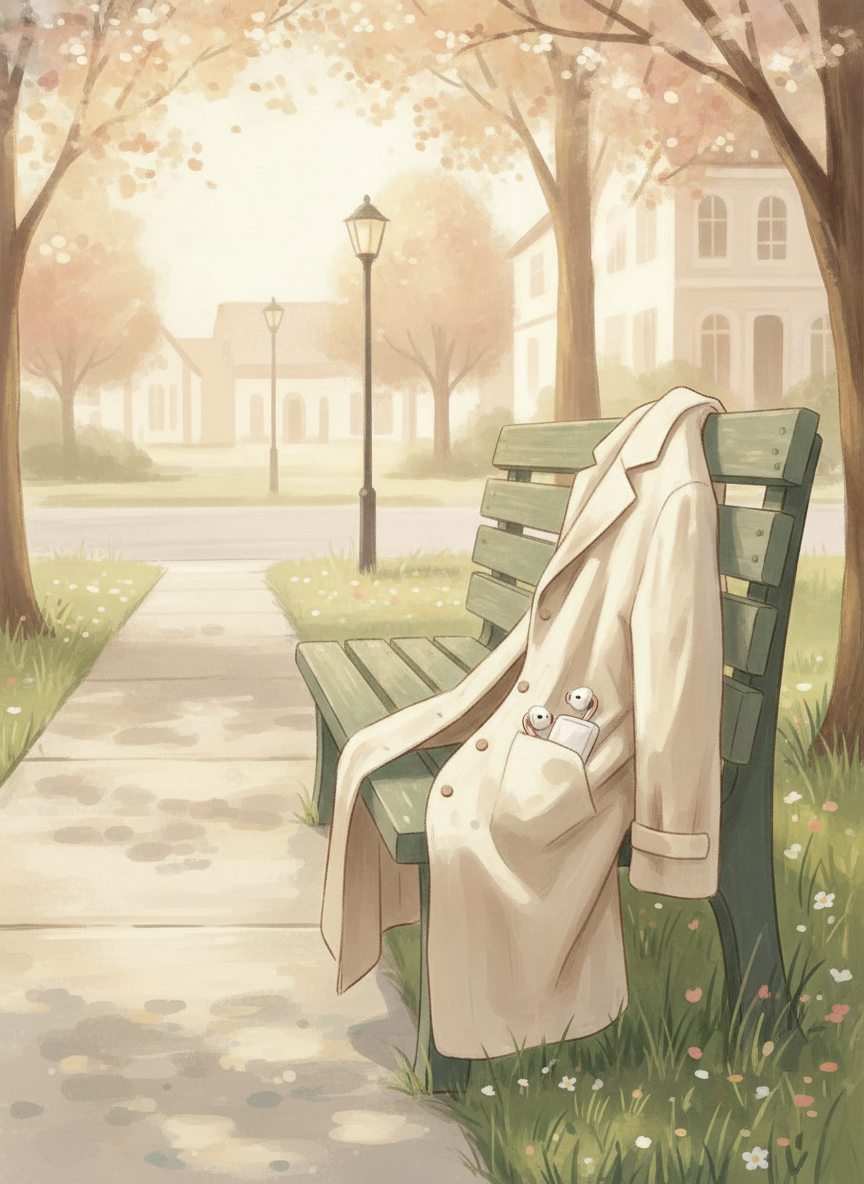
The first five minutes are unbearable. Then you start hearing things you forgot existed.
You leave the house and reach for your ears out of habit — the way you reach for your keys, your phone, the small rituals that tell your body the walk has begun. The playlist is already queued. The same one, or a new one, or a podcast that fills the space between your front door and wherever you're going.
But today the earbuds stay in the pocket. You told yourself you'd try it — just once, just this walk — and now the first block feels impossibly long.
Your own footsteps are too loud. The traffic is abrasive. Your thoughts arrive without buffer, immediate and unedited, and there's nothing between you and whatever you've been avoiding all week. You consider turning back for the headphones. You keep walking anyway.
What the music was holding
Music on walks isn't a flaw. For many of us, it's how a walk becomes possible at all — a container for movement when the inside of our head is too loud, or too empty, or carrying something we don't want to feel yet.
A playlist can soften the edges of a hard day. A podcast can make exercise feel productive. A familiar album can turn the same route into something that belongs to you — a private room you carry through public space, where no one asks anything and nothing needs answering.
There's dignity in that. In choosing what enters your ears when the world already asks so much of your attention.
But music also fills every gap. The space between thoughts. The pause at a crosswalk. The moment when your body might otherwise notice the tightness in your chest, or the bird in the tree, or the fact that you've been holding your breath since you left the house.
When every walk has a soundtrack, you rarely find out what the walk itself sounds like — what the particular street sounds like on a Tuesday when the air is damp and someone's sprinkler is clicking in a yard you've passed a hundred times without hearing it.
Music can carry you through a walk. Silence lets the walk carry you — and that isn't always comfortable at first.
The unbearable five minutes
The discomfort of a walk without a soundtrack is real. Not dramatic — just persistent, like wearing shoes that still feel stiff on your feet.
Your mind offers the list. Everything unresolved. Everything waiting. Everything you said wrong yesterday and might need to say differently tomorrow. Without music, there's no rhythm to move with — only your own pace, your own breath, your own thoughts arriving in whatever order they choose.
Your body might read the quiet as danger at first — too exposed, too unoccupied, too much room for feeling to find you. Some of us learned that empty space is where hard things live, and filling the space is how we stay ahead of them.
The five minutes aren't a test you pass or fail. They're an adjustment — the body recalibrating to a pace it forgot it knew.

Then, somewhere between the third block and the fifth, something loosens without announcement.
What you start to hear
Not enlightenment. Not a revelation. Just — other sounds.
The specific squeak of a gate you've passed a hundred times. A dog two yards over. Wind moving differently through leaves on this side of the street. Your own breathing, which has slowed without your permission. Footsteps on pavement — yours and someone else's, approaching and passing.
You notice the light — how it falls on the fence today, lower than last week, warmer than you expected for this hour. You notice your shoulders, which have dropped half an inch without being told to. You notice a thought arrive, stay for a block, and leave — the way thoughts do when they're not competing with lyrics.
None of this is profound. That's what makes it matter.
The world has been making these sounds every walk you've ever taken. The music wasn't wrong for covering them. But without it, you remember that the walk was always more than transit between two points. It was always a conversation with a place — one you couldn't fully hear over the volume of everything else you chose to play.
Silence on a walk doesn't empty your mind. It lets the world back in — a little at a time, on its own terms.
Holding both ways of walking
You don't have to choose silence forever. Some days the playlist is exactly what you need — a hard morning, a long loop, a body that wants movement without the weight of its own company.
Other days, silence might offer something music can't: the chance to hear yourself think without performing the thinking for anyone, including yourself. To grieve quietly between two intersections. To make a decision somewhere between the oak tree and the corner store, without narrating it to a podcast host.
Both ways of walking are real. Neither is more pure.
The question isn't whether you should always walk in silence. It's whether you've forgotten what your own footsteps sound like — and whether you want to remember, even if the remembering is uncomfortable for the first five minutes.
A walk without music isn't emptier. It's fuller in a different direction — outward instead of inward, toward a world that was always speaking softly beside you.
What stays when the walk ends
You might unlock the door feeling only slightly different. Less compressed, maybe. More aware of something you couldn't name when you left — a conversation you need to have, a tightness that loosened somewhere around the fourth block, a small detail about the day you would have missed entirely with volume in your ears.
The walk doesn't have to produce insight. It doesn't have to solve anything. Sometimes it just moves what you've been carrying from your chest into your legs and back again, rearranged by motion, softened by the ordinary sounds of a street you thought you already knew.
You might notice, later, that the silence didn't take anything from you. It gave the walk back — not as exercise, not as transit, but as a few minutes when you and the world shared the same air without anything layered between.
The earbuds are still in the coat pocket. The street is the same street. But something in the air has changed — or maybe something in you has turned its volume down enough to hear the air itself. Tomorrow you might choose the playlist again. Today, your feet made their own quiet rhythm, and the world answered back.
Related book
The Loop You're Stuck In
Keep reading
- What it means to feel less alone — even by one personYou don't need a crowd. You need one person who stays when things aren't pretty.
- Why the people who get you don't always get you right awayReal belonging takes time. The instant click is rare. The slow build is where trust lives.
- The exhaustion of performing connection without feeling itYou showed up. You smiled. You asked questions. And you drove home feeling emptier than before.