The quiet cost of tab-switching all day
You didn't do anything wrong — your attention just never landed anywhere long enough to rest. The invisible tiredness of living across a dozen open windows.
By Trupti Gavit
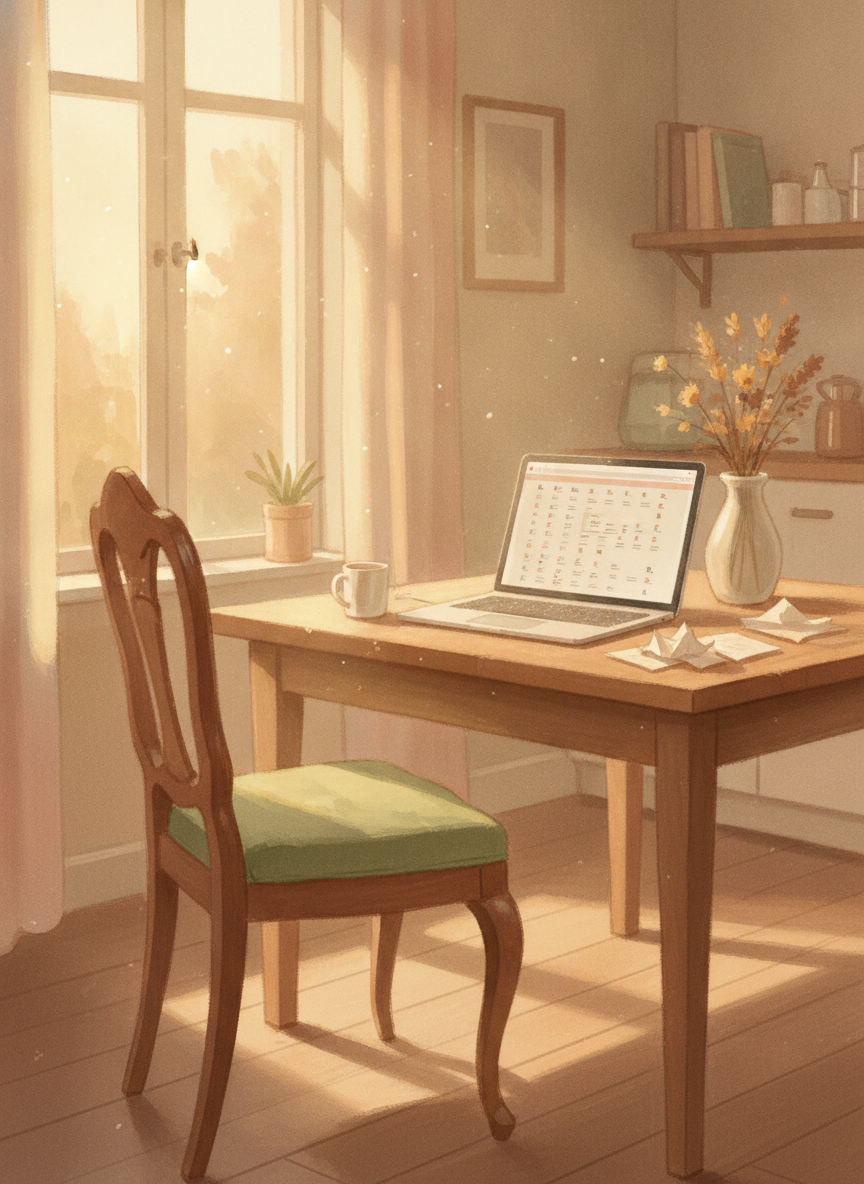
You didn't do anything wrong — your attention just never landed anywhere long enough to rest.
The day started with good intentions. One document open. One email to answer. Then the calendar reminder, then the link someone sent, then the article you opened to read one paragraph and never closed. By afternoon your screen looks like a city seen from above — dozens of small windows, each one holding a piece of something unfinished, each one quietly asking to be returned to.
You did return. Again and again. You touched everything. You kept moving. And now it's evening and your body feels like you ran all day without arriving anywhere.
This isn't about discipline or willpower. It's about what happens when your mind lives in the space between things — always leaving, always arriving, never quite staying long enough for anything to feel complete.
The rhythm of almost
Tab-switching has its own tempo. Click. Scan. Decide. Click again.
It feels efficient from the inside — like you're covering ground, staying responsive, not letting anything fall through. Each switch offers a small reset: fresh context, new problem, different kind of effort. Your brain gets the sensation of starting without the weight of finishing.
But finishing and touching aren't the same thing. And your body knows the difference even when your mind is convinced it had a productive day.
You might have written three sentences of the report, read half a thread, updated one cell in a spreadsheet, replied to two messages, started a search you abandoned midway, and opened a recipe you'll never cook tonight. Every task received a visit. None received a home.
Being everywhere at once is a kind of nowhere. Your attention moves so fast it never gets to sit down.
What your body pays for the in-between
The cost doesn't always show up as obvious stress. Sometimes it arrives as a flat tiredness at four o'clock — not sleepy tired, but depleted, as if something essential leaked out in small amounts all day long.
Your shoulders stay slightly raised. Your jaw holds a quiet tension you notice only when you finally close the laptop. Your breath stays shallow, adapted to a pace that never asks you to settle into one rhythm for more than a few minutes.
Each switch asks your body to reorient — who am I being right now, what does this window need from me, what was I doing before, what comes next. That reorientation is work. Invisible work. The kind that doesn't appear on any list and doesn't bring rest because you can't point to what you finished.
Reading one document for twenty minutes asks your body to trust stillness. Living across twelve tabs asks it to stay ready to pivot — and pivoting, hour after hour, wears on you in a quiet, cumulative way.

Some of the tiredness is cognitive. Some is emotional — the low hum of incompleteness, every open tab a small not yet, still need to, come back to this. That hum follows you into the evening and makes the couch feel less like rest and more like another place you're not fully arriving at.
Why the tabs stay open
Closing a tab can feel like closing a door on something unresolved. What if you forget? What if it was important? What if the answer you needed was one more click away?
Open tabs become external memory — a way of holding obligations outside your head so your mind doesn't have to carry them alone. Reasonable, in a life with too many inputs and too few containers for all the threads you're expected to hold.
There's also something safer about almost. Almost finishing the email means you haven't sent something you might regret. Almost reading the article means you haven't committed to an opinion. Almost starting the project means you haven't faced whether it will turn out the way you hoped.
Staying in motion between tabs can protect you from the vulnerability of landing — of being fully in one thing long enough for it to matter.
And still — you might notice, at the end of a tab-switching day, that you can't remember what any of it felt like. The details blur. The conversations blend. The afternoon becomes a texture instead of a sequence, and your body reports a tiredness that doesn't match any single effort you can name.
Open tabs aren't laziness. They're often a way of staying reachable — to other people, to possibility, to the version of yourself that keeps all the plates spinning.
Holding two truths
You can need the responsiveness that tab-switching offers — and also feel the cost of never landing anywhere.
You can be grateful for a job that asks you to juggle — and also mourn the days when your mind had room for one thread at a time.
You can close tabs tonight and open just as many tomorrow — and still notice, without judgment, what the in-between took from you.
Neither truth cancels the other. Both belong in a life that asks more of your attention than any one window can hold.
What landing might look like
Landing doesn't mean one tab forever, or a digital purge, or pretending your life can be simplified into a single focus. Some days the tabs are what the day requires — too many people waiting, too many threads that genuinely can't wait until tomorrow.
But sometimes there's a sliver of choice — and on those days, landing might look like choosing one window and staying with it for fifteen minutes before allowing yourself to switch. It might look like closing three tabs you've been avoiding and noticing whether the sky falls (it usually doesn't). It might look like writing down what's open instead of keeping it open — moving the obligation from screen to paper so your eyes can rest on one thing.
It might look like ending the workday with two tabs instead of twenty — not as achievement, but as a small signal to your body that the day can end even when everything isn't done.
Attention that lands — even briefly, even imperfectly — gives your body something tab-switching never can: the feeling of having been somewhere.
Over time, not through force but through small repetitions, you might notice the difference. One hour with one document and a body that feels different afterward — less wrung out, more present, as if some part of you finally got to sit down.
The screen goes dark. The room is quiet. Outside, the evening doesn't need your reply. Inside, a mind that spent the day moving between windows is learning — slowly, without punishment — that landing somewhere, even for a little while, is a kind of rest the in-between never offered. Tomorrow the tabs will open again. Tonight, something in you gets to stay still.
Related book
The Loop You're Stuck In
Keep reading
- What it means to feel less alone — even by one personYou don't need a crowd. You need one person who stays when things aren't pretty.
- Why the people who get you don't always get you right awayReal belonging takes time. The instant click is rare. The slow build is where trust lives.
- The exhaustion of performing connection without feeling itYou showed up. You smiled. You asked questions. And you drove home feeling emptier than before.