How trust is built in tiny moments, not grand gestures
It's not the big promises — it's whether they showed up when they said they would. What trust actually looks like in the quiet margins of an ordinary week.
By Trupti Gavit
They said they'd call at seven. Your phone stayed on the table — not because you were keeping score, but because you'd stopped expecting people to mean what they said about small things.
Seven came. The phone rang. Not a grand apology for almost forgetting. Not a dramatic story about why they might be late. Just: I'm calling like I said I would.
You noticed your shoulders drop a fraction. Not because the call changed your life. Because something in you had been keeping a small ledger — not consciously, not cruelly, just the way bodies keep records — and this was a mark on the right side.
It's not the big promises — it's whether they showed up when they said they would.
The promises we stop believing
Trust gets talked about like a cathedral — something built from vows, from years, from the large declarations people make when love feels solid and the future looks clear.
But most of us don't live in cathedrals. We live in Tuesdays.
We live in the text that said on my way and then silence for forty minutes. In the plan that got cancelled twice with good reasons that still left you holding the empty evening. In the person who said they'd handle it and then forgot, leaving you to discover the undone thing at the worst possible moment.
Grand gestures still happen. Flowers after a fight. A trip planned as apology. A speech about how much you mean to them.
And those can matter. But they don't overwrite the smaller pattern — what happens when the stakes are low, when nobody is watching, when keeping your word would cost you a little convenience and breaking it would cost you nothing visible.
Trust isn't built in the moments that photograph well. It's built in the ones that seem too small to count — until they do.
What your body is actually tracking
You might not think you're keeping score. You might believe you're generous, forgiving, willing to give people room to be human.
And still — your body notices.
It notices whether the person who said they'd pick you up is actually in the car when they said they'd be there. Whether the friend who offered to listen was still listening ten minutes in, or had already drifted to their phone. Whether your partner remembered the thing you mentioned once, quietly, because it mattered to you even though it was small.
None of this makes you petty. It makes you a person whose body learned, somewhere along the way, that words and actions don't always match — and that matching, in small things, is one of the ways love becomes safe instead of merely declared.
When someone shows up consistently in the margins — on time, as promised, without needing praise for basic reliability — something in you stops bracing. Not all at once. Not permanently. But enough to lean slightly closer.
When grand gestures can't cover the gaps
There's a particular confusion that arrives when someone is capable of large love and small unreliability at the same time.
They plan the anniversary dinner. They say the beautiful thing at the right moment. They cry when you cry and mean it.
And they also forget the appointment. They also say they'll call and don't. They also leave you waiting in the parking lot while you tell yourself not to make it a whole story.

You might wonder if you're asking for too much. If expecting someone to mean what they say about small things is somehow less mature than accepting the grand gesture and letting the rest go.
But trust isn't a feeling you decide to have. It's something that accumulates — or erodes — in the quiet repetition of kept word and missed word, of showing up and not showing up, of whether the person you love is reliable when reliability wouldn't be noticed except by the part of you that needed it to be.
A body that learned to brace doesn't unlearn from one beautiful evening. It learns from a pattern — the same way it learned to brace in the first place.
The repair that lives in the small
Trust isn't only built by never missing. People miss. People forget. People say the wrong thing and leave too late and fail to call when they said they would.
What matters is what happens next — not the grand apology, but the smaller return.
The text that says I forgot — I'm sorry, calling now without making you responsible for their forgetfulness. The person who notices they left you waiting and names it simply, without defending why it wasn't that bad. The follow-through the next time — not perfectly, but visibly, as if your time and your word mattered enough to adjust for.
Repair in small moments teaches something grand gestures can't: that this person sees when they've missed you, and comes back without requiring you to pretend you didn't notice.
What you can offer, too
Trust is reciprocal — not as a transaction, but as a rhythm.
Trust runs both ways. The same body that notices when someone else forgets also knows when your own word has been soft in the small hours — when care was spoken but presence thinned in the unremarkable parts of the week.
Becoming trustworthy in small things isn't about perfection. It's about treating your own word — and theirs — with the same seriousness you'd give a promise made out loud in a room full of witnesses.
That might mean calling when you said you would, even when you're tired. It might mean saying no clearly instead of yes and then fading. It might mean the text that says running ten late before the ten minutes become forty.
Trust grows when both people treat the small promises as real — because for some part of each of you, they always were.
The ledger you don't have to keep out loud
You don't need to become someone who counts every missed call and holds it over the room. That isn't trust — it's surveillance dressed as standards.
But you also don't have to pretend the small misses don't land. Your body keeps its own record whether you approve of it or not.
Naming the pattern can matter — when it's pattern, not when it's a single human lapse. When you're late without telling me, I feel like I'm back in a room where my time didn't matter. That's not an accusation. It's a translation — fear into language, so the other person can meet you somewhere other than defense.
Some people will hear that and adjust. Some won't. Some will adjust for a while and drift back. Trust tells you which is which — not in one conversation, but across enough small Tuesdays to know whether the pattern is changing or merely pausing.
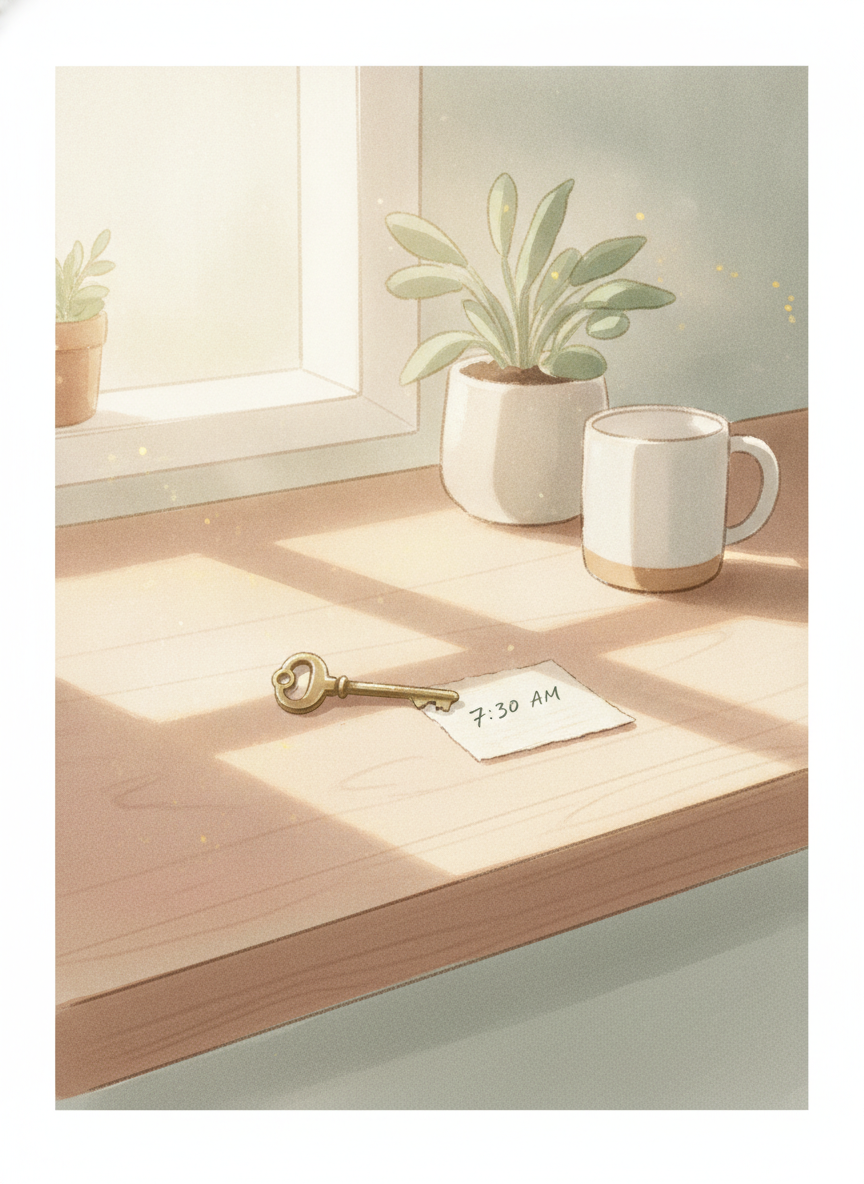
The key is still on the counter where they left it. The note with the time is slightly curled at the edge. Outside, afternoon light moves slowly across the kitchen wall. You don't have to trust everyone completely tonight — only to notice that trust, when it comes, often arrives quietly: a call at seven, a cup still warm, someone in the car when they said they'd be there.
Related book
Why Love Is So Complicated
Keep reading
- What it means to feel less alone — even by one personYou don't need a crowd. You need one person who stays when things aren't pretty.
- Why the people who get you don't always get you right awayReal belonging takes time. The instant click is rare. The slow build is where trust lives.
- The exhaustion of performing connection without feeling itYou showed up. You smiled. You asked questions. And you drove home feeling emptier than before.