What it looks like to trust yourself a little more
Not blind confidence — just learning to listen when something feels off. What self-trust looks like in small moments, before you can name what your body already knows.
By Trupti Gavit
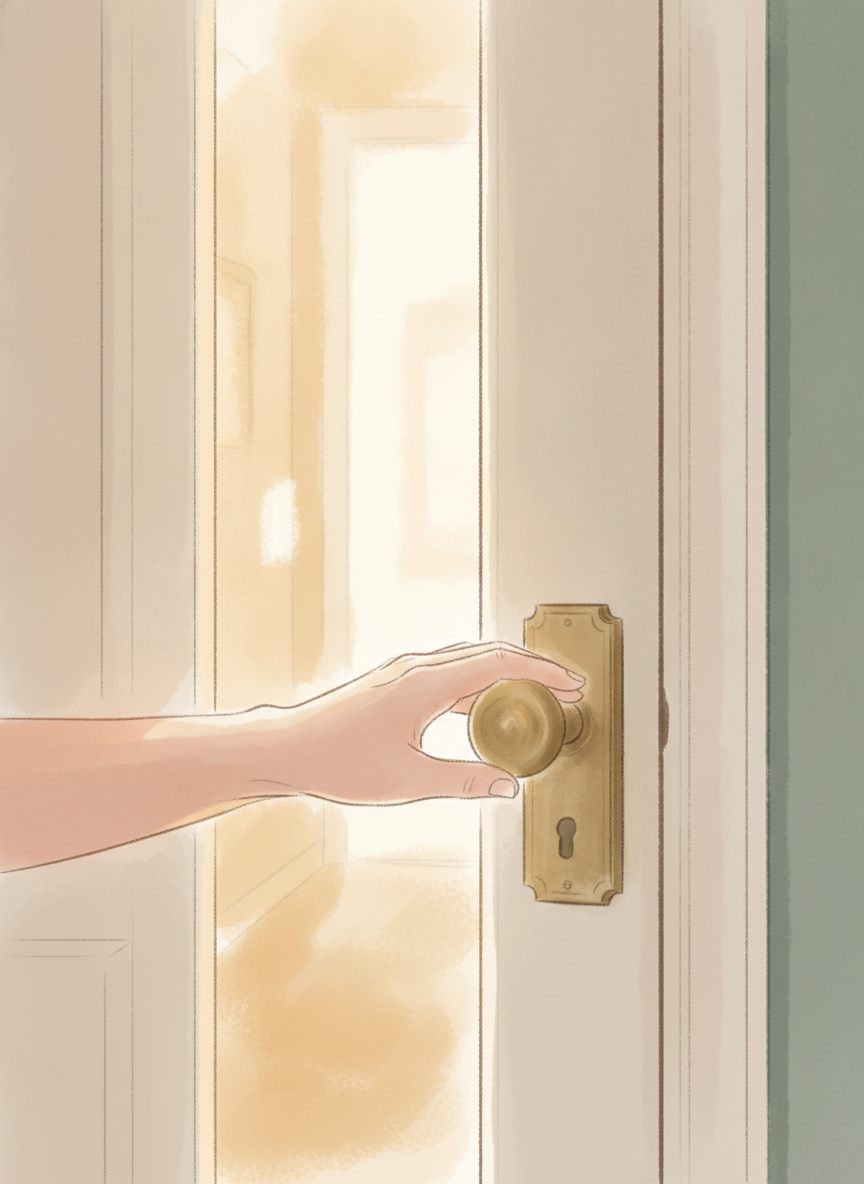
Not blind confidence — just learning to listen when something feels off.
You're about to say yes. The words are almost out — sure, I can do that, no problem — and something in your chest tightens, not dramatically, just enough to notice. A small no arriving before you've formed the reason.
Or you're in a conversation that looks fine, and your stomach has gone quiet and heavy. Someone is being charming. Everything they're saying makes sense. And still, some part of you is holding back, not from shyness, but from a caution you can't quite explain.
You override it, usually. You tell yourself you're being too sensitive, too suspicious, too much. You say yes anyway. You stay in the room. You talk yourself out of the feeling because the feeling doesn't come with evidence attached.
And sometimes you're right to override it — anxiety mimics intuition, old fears dress up as wisdom. But sometimes the feeling was information. Your body noticed something your mind hadn't caught up to yet. And you didn't listen.
Self-trust isn't about always being right. It's about taking your inner signals seriously enough to pause before you automatically dismiss them.
What self-trust actually looks like
It doesn't look like swagger. It doesn't look like never doubting yourself or always knowing the answer before you've lived into the question.
It looks smaller than that.
It looks like not filling every empty hour because you said you'd leave one blank. It looks like leaving the party when you're tired instead of when it's polite. It looks like sending the email tomorrow because tonight your judgment feels thin. It looks like choosing the option that makes your shoulders drop, even when you can't explain why to anyone else.
It looks like the moment you don't talk yourself out of the hesitation — not by obeying it blindly, but by letting it exist long enough to hear what it's saying.
Self-trust isn't certainty. It's a slightly longer pause between the feeling and the override — enough space to ask, quietly, what do you know that I don't yet?
When you learned not to listen
Many of us were taught that our inner signals couldn't be trusted.
Your caution was called overreacting. Your no was called selfish. Your discomfort was called ungrateful, or dramatic, or a problem with your attitude. You learned to scan the room first — what do they need, what do they expect, what version of me keeps this calm — and treat your own readings as secondary, if you noticed them at all.
Over time, that becomes a habit. You stop checking in with yourself because checking in was never rewarded. You become reliable for everyone else's preferences and vague about your own. You can articulate what you should want. You're less sure what you actually feel.
Rebuilding trust isn't about becoming someone new. It's about returning to a signal that was always there — buried under years of being told it was wrong.
The feeling that arrives before the reason
Emotions and body sensations often arrive with their reasons trailing behind.
You feel the dread before you remember why this person makes you uneasy. You feel the relief before you understand that the plan was wrong for you. You feel the quiet yes in your chest before you've built the logical case for saying it out loud.
That lag isn't a flaw. It's how bodies work — reading the whole room, the whole pattern, the whole history of similar moments, and sending up a flare before your conscious mind has assembled the file.

You don't have to act on every flare. But you can stop treating every flare as a character flaw. You can let the feeling sit beside the logic instead of beneath it, waiting its turn to speak.
Your body often finishes its reading before your mind arrives. Self-trust is learning to respect that gap instead of rushing to close it.
When doubt and intuition sound the same
This is the hard part. Fear and wisdom can feel identical from the inside — same tight chest, same urge to leave, same voice saying something is wrong.
You won't always know which is which in the moment. That's okay.
Self-trust includes doubt. It includes checking — is this old fear, or new information? Am I avoiding something hard, or protecting something true? It includes the willingness to be wrong sometimes, and to adjust, without using one wrong call as reason to never listen again.
What erodes self-trust faster than occasional mistakes is the automatic override — the reflexive dismissal, the immediate translation of every inner signal into I'm being too much. That reflex doesn't protect you from error. It protects you from ever gathering evidence that you might know something useful about your own life.
Small ways trust accumulates
Trust is built in repetition, the way trust is always built.
You notice you're thirsty and drink water before you're distracted. You feel tired and go to bed instead of scrolling until midnight. You feel a small no and say let me think about it instead of yes. You feel drawn toward something and let yourself follow it for ten minutes without requiring a five-year plan.
None of these are dramatic. No one applauds you for them. But your body learns — slowly, in margins — that when it sends a signal, someone listens. That someone is you.
Over time, the inner negotiation gets quieter. Not because you never doubt yourself, but because there's a record of kept attention. Of pauses honored. Of feelings allowed to exist without immediate trial and verdict.
What changes when you believe you might know something
You won't become fearless. You won't stop second-guessing in hard moments. You won't always trust the feeling and be right.
But you might stop abandoning yourself so quickly. You might leave the conversation when your body says not this, even if you can't name why yet. You might stay in the conversation when your body says stay, even if your mind has a list of reasons to go. You might make one decision this week based on what feels true before you can defend it — and notice what happens.
That noticing is the practice. Not perfection. Not blind faith in every impulse. Just a slightly more faithful relationship with the part of you that reads the room before you do.
Your hand is still on the door handle. The hallway beyond is soft with light — not threatening, not certain, just there. You don't have to walk through tonight. You don't have to turn away either. You only have to stay long enough to hear what you already know, in the language your body speaks before words arrive — and to trust, a little more than last time, that the listening counts.
Related book
The Feeling Has a Reason
Keep reading
- What it means to feel less alone — even by one personYou don't need a crowd. You need one person who stays when things aren't pretty.
- Why the people who get you don't always get you right awayReal belonging takes time. The instant click is rare. The slow build is where trust lives.
- The exhaustion of performing connection without feeling itYou showed up. You smiled. You asked questions. And you drove home feeling emptier than before.