What twenty minutes of focus actually feels like in a distracted world
It's uncomfortable at first. Then something inside quiets down. Twenty minutes of one thing is longer than it sounds — and more possible than you might think.
By Trupti Gavit
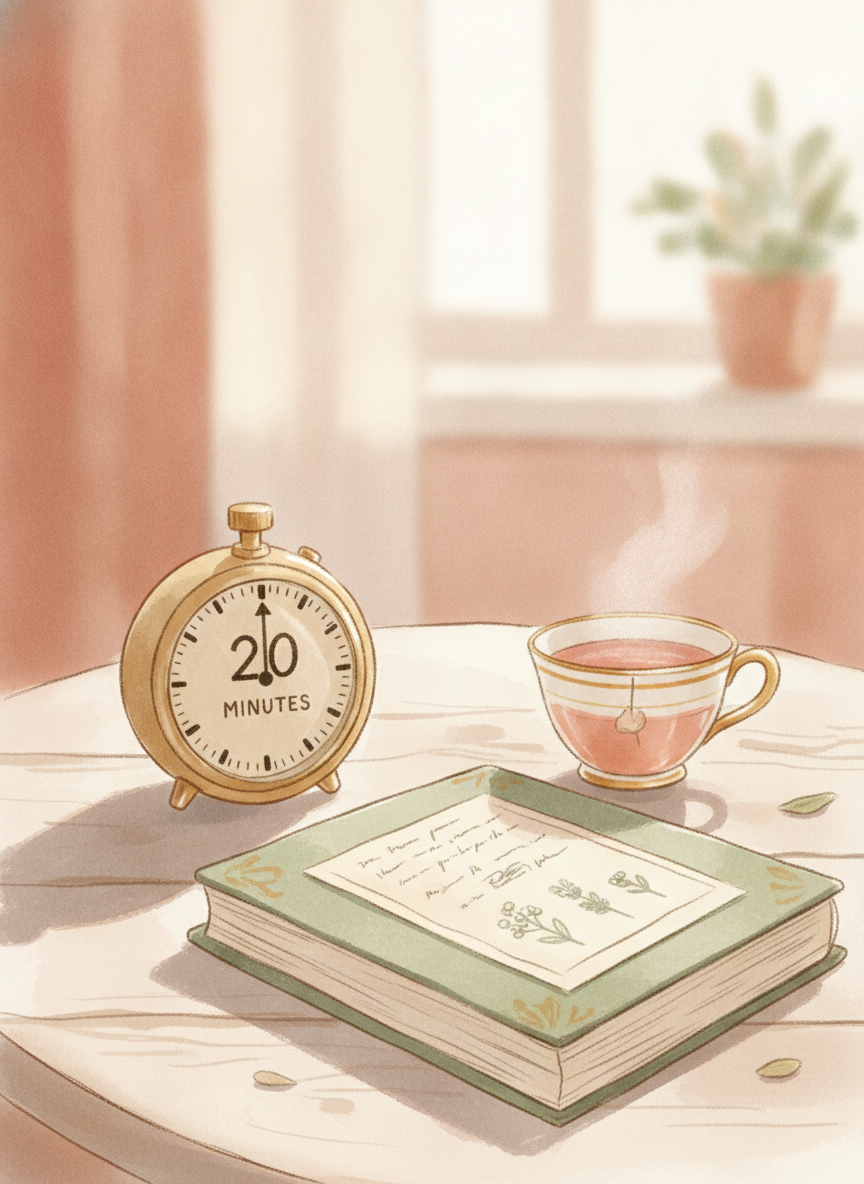
It's uncomfortable at first. Then something inside quiets down.
You set a timer for twenty minutes. Twenty minutes — not an hour, not a morning, just a modest stretch of time that should be manageable. You put the phone in another room. You open the book, or the document, or the blank page. You begin.
By minute three, you're already negotiating. Maybe fifteen would be enough. Maybe I should check if anyone needs me. Maybe this isn't the right task for right now. Your body is restless. Your mind offers a hundred reasons to stop. The twenty minutes feel longer than they have any right to feel.
And then — not always, not every time, but sometimes — something changes.
The first ten minutes are the hardest
The beginning of focused time has a particular texture. Restless. Skeptical. Convinced that something else needs you more urgently than whatever you're doing.
Your body interprets the stillness as waiting — and waiting, for a body trained on interruption, can feel like danger. What if someone needs you? What if you're missing something important? What if the discomfort means you chose the wrong task, the wrong time, the wrong version of yourself for this?
None of those questions need answers in the first ten minutes. They're just noise — the sound of a mind adjusting to a pace it doesn't visit often.
If you can stay through the noise — not heroically, just honestly — the noise often softens. Not because you argued with it. Because you outlasted it.
The discomfort at the start isn't a sign to stop. It's the sound of your attention remembering how to stay in one place.
Minute four feels like minute forty. Minute seven, if you reach it, feels like something is beginning to settle — not dramatically, but enough to notice. Your shoulders might drop. Your breath might deepen without you deciding to deepen it. The page in front of you might start to hold you, instead of you straining to hold it.
What quiet actually feels like
We talk about focus as if it's a destination — a state you arrive at when you've done everything right. But twenty minutes of focus doesn't usually feel like arrival. It feels like subtraction.
Something falls away. The low hum of readiness. The background scanning for what might need you next. The faint anxiety of being unreachable. One by one, these quiet down — not gone, just no longer in the foreground.
What's left is simpler. A sentence that makes sense. A paragraph that connects to the one before it. The small satisfaction of a line of thought that doesn't get interrupted mid-breath.

This quiet isn't empty. It's full — of the one thing you're with. A book that finally holds you. A letter that gets the words it needed. A problem that reveals its shape when you stop circling it and stay long enough to look.
You might not notice the quiet while you're inside it. You might only notice afterward — when the timer sounds and you look up, surprised that twenty minutes passed, surprised that they passed here, in this one place, with this one thing.
When twenty minutes isn't twenty minutes
Some days, twenty minutes is impossible. Not because you're failing — because the day is too loud, too full, too demanding of your attention in too many directions at once.
Some days, five minutes is the whole capacity you have — and five minutes of one thing is still different from five minutes of everything at once.
Some days, you set the timer and abandon it at minute two without shame, because a child needs you, or a call arrives, or your body simply says not today in a voice too clear to override.
These days aren't defeats. They're the context your life actually lives in. Twenty minutes of focus is a gift you can sometimes give yourself — not a standard you have to meet every day to count as someone who cares about presence.
Twenty minutes is long enough to remember what one thing feels like. It's short enough to be possible on an ordinary day.
The aftertaste of staying
When twenty minutes ends well — when you stayed, when the quiet came, when something got done or simply got attended to — there's an aftertaste.
Not euphoria. Not the high of accomplishment. Something quieter. A steadiness. A sense that you were somewhere for a while, fully, and the somewhere was real.
You might feel tired — but a different tired than the tired of a day spent switching. More like the tired of something completed, or at least deeply begun. Your body knows the difference, even if you can't always name it.
That aftertaste fades. The day continues. The phone returns to your pocket. The tabs multiply. But the memory of the twenty minutes stays — not as proof of anything, just as a reference point. This is what it felt like when I stayed. This is what quiet tastes like when I give it room.
What you might find inside the twenty minutes
You won't always find productivity inside focused time. Sometimes you'll find boredom. Sometimes grief. Sometimes a restlessness that never settles and the timer sounds before the quiet arrives.
All of that belongs. Twenty minutes isn't a promise of a particular outcome. It's a container — modest, bounded, possible — for whatever is true when you stop splitting your attention across everything at once.
Some of the truest things only show up when there's room for them. Not because you forced them. Because you stopped moving long enough for them to arrive on their own.
The timer has gone quiet. The book is still open, bookmark moved. Outside the window, the afternoon has shifted — the light lower, the shadows longer, twenty minutes of your life lived in one place instead of many. Your body feels the difference, even if your mind has already moved on to what's next. The quiet is fading. But it was here. And it will be here again — the next time you give it twenty minutes, and stay.
Related book
The Loop You're Stuck In
Keep reading
- What it means to feel less alone — even by one personYou don't need a crowd. You need one person who stays when things aren't pretty.
- Why the people who get you don't always get you right awayReal belonging takes time. The instant click is rare. The slow build is where trust lives.
- The exhaustion of performing connection without feeling itYou showed up. You smiled. You asked questions. And you drove home feeling emptier than before.