What it actually means to comfort yourself
Comfort isn't a scented candle or a long bath. It's what you learn to do when no one else is coming — quietly, imperfectly, in the middle of the night.
By Trupti Gavit
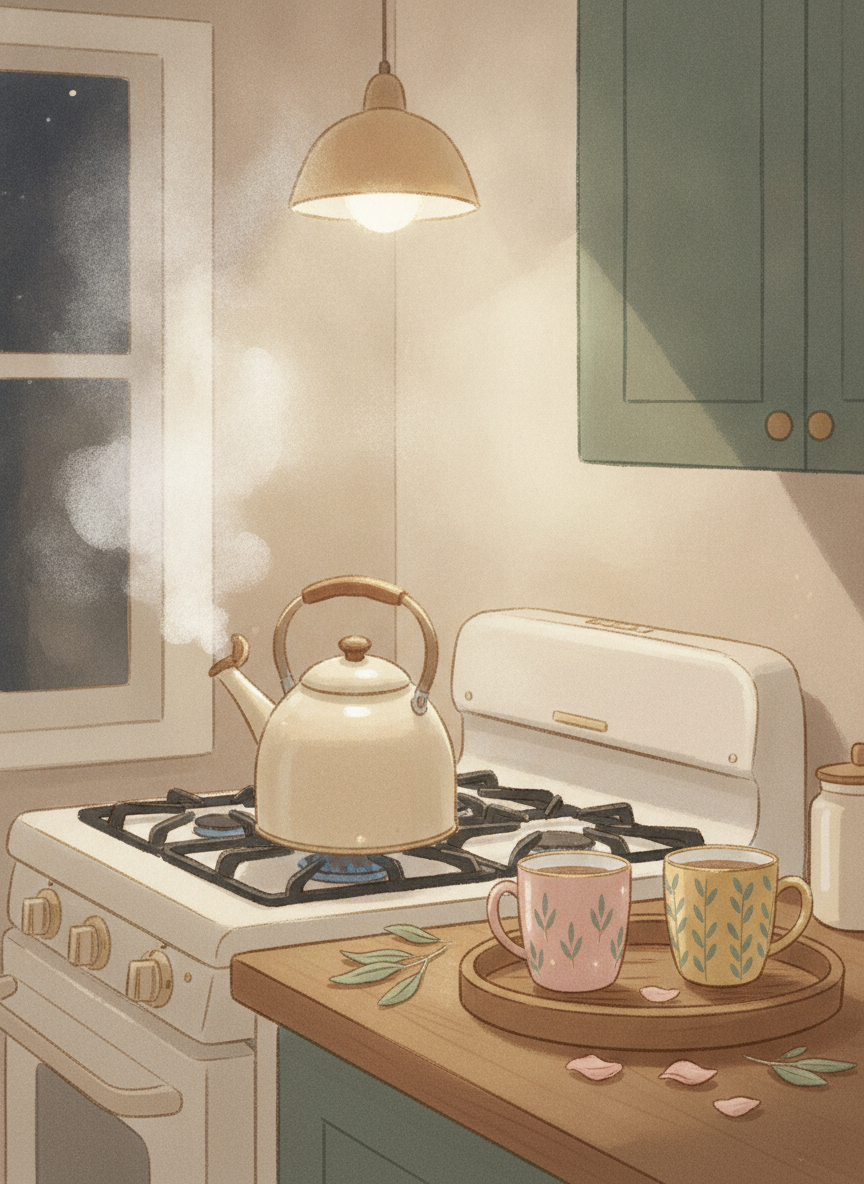
It's 2:14 a.m. and you're awake again.
Not because of a noise. Not because someone called. Because something in your chest is tight and your thoughts have started their slow loop — the conversation from Thursday, the thing you forgot to send, the feeling that you said too much or not enough.
You reach for your phone. Put it down. Pull the blanket up. Pull it down. The house is silent and you are very alone with whatever this is.
This is the hour when comfort matters. Not the kind in a magazine — the soft lighting, the bath, the playlist someone curated for "self-care Sundays." This is the other kind. The kind nobody taught you. The kind you had to invent in pieces, in the dark, when there was no one to call.
Comfort when no one is coming
For a long time, many of us learned that comfort came from outside.
A parent who noticed you were upset. A friend who showed up. A partner who held you while you cried. Someone else's hand on your back, someone else's voice saying it's okay, I've got you.
And when that was available — even inconsistently — it worked. Your body learned: distress is temporary. Someone will come. I don't have to carry this alone.
But plenty of us also learned the other version. That comfort was conditional. That big feelings were too much. That you should handle it yourself, stop crying, be strong, don't bother anyone.
So we grew up with a gap. The gap between needing comfort and knowing how to give it to ourselves when the person we needed wasn't there — or couldn't be there, or never learned how to be.
Self-comfort isn't a luxury skill. It's what you do at 2:14 a.m. when the house is quiet and your chest won't settle.
Comforting yourself isn't about becoming your own parent. It's about learning to stay with yourself when staying feels unbearable.
What comfort actually looks like
Real comfort is often smaller and less photogenic than we've been shown.
It's making tea at an hour when tea seems ridiculous, and making it anyway because the ritual of hot water and a warm mug gives your hands something to do while your mind is still spinning.
It's putting on the sweatshirt that smells like laundry and an old couch — not because it solves anything, but because your skin recognizes it as safe.
It's texting one person I'm having a hard night and not needing them to reply immediately. Just sending the signal that you exist, that you're not entirely alone, even if you're alone in the room.
It's turning on a show you've seen forty times — not for the plot, but because the voices are familiar and familiarity is a form of company.
It's crying in the shower where no one can hear you, and not apologizing to yourself afterward for needing to.
It's placing a hand on your own sternum — awkward, uncertain — and noticing that the touch is gentler than the thoughts running through your head.
None of this is glamorous. None of it posts well. All of it counts.
The difference between numbing and tending
There's a line, and it's not always obvious, between comforting yourself and disappearing from yourself.
Scrolling for two hours until your eyes burn — that's not comfort. That's leaving.
A third glass of wine to stop the feeling — that's not comfort either. That's postponement.
Comfort doesn't erase the feeling. It keeps you company while the feeling moves through. It says: I'm still here. You're still here. We can sit with this without making it worse.
Numbing says: Go away. I can't be with you right now.
Both are human. Both happen. The difference isn't moral — it's about what you need in the moment, and whether what you're doing leaves you more present or more gone.

If you grew up having to manage your own distress before you were ready, you might not know the difference yet. You might reach for the thing that makes the feeling stop because stopping was survival. That wasn't a mistake. That was what you had.
Learning to tend instead of numb is slow. It's a different language. And you don't have to speak it fluently at 2:14 a.m. on the first try.
You don't have to do comfort perfectly. You just have to do something that says: I'm not leaving myself alone in this.
What nobody showed you
A lot of us were never shown what self-comfort looks like.
We saw adults push through. We saw them pour another coffee, answer emails at midnight, call exhaustion "dedication." We saw tenderness directed everywhere except inward.
So when the hard night comes, we don't have a template. We have fragments. A song from childhood. A blanket we've had since college. A phrase a therapist said once that we repeat like a prayer.
We assemble comfort from scraps, the way you might assemble a meal from whatever's in the fridge. Not ideal. Not what you'd serve a guest. But enough to get through until morning.
There's grief in that — grief for the version of life where someone taught you this early, where a hard night meant being held instead of inventing holding from nothing.
That grief is real. And it doesn't mean you're failing at comfort now. It means you're learning something you should have been given, and you're learning it as an adult, which is harder than it looks from the outside.
The tenderness you're practicing
Comforting yourself is, at its core, a practice of tenderness toward a person you spend every second with — yourself.
It sounds simple. It isn't.
Tenderness toward yourself requires you to believe, even briefly, that your pain is worth staying for. That you are worth the tea, the blanket, the hand on your chest, the text that says I'm not okay tonight.
For people who learned that their needs were too much, that staying with their own feelings was dangerous or selfish, this is not a small thing. It's an act of relearning. Of saying: Maybe I am someone who gets comfort. Maybe I am someone who stays.
You won't believe that every time. Some nights you'll still reach for the phone, the wine, the scroll. Some nights you'll lie awake and nothing will help much. That's not failure. That's being human with a body that was wired before you had words for any of this.
Morning after a hard night
The morning after doesn't always feel like relief.
Sometimes it feels like exhaustion and residue — the thing you were carrying at 2:14 still there, just quieter, like a radio turned down but not off.
You might make coffee. You might shower. You might go through the day slightly removed from yourself, waiting for the feeling to fully pass.
And somewhere in that ordinary morning, you might notice: you got through the night. Not because someone rescued you. Because you found a way to stay — imperfect, improvised, but stay.
That's what comforting yourself means. Not becoming invulnerable. Not never needing anyone again. Just learning, slowly, that when the hard hour comes and no one is coming, you can still be there. Warm mug. Old sweatshirt. Hand on your own chest. The house quiet. You, still here.
The kettle goes quiet. Steam fades. Dawn isn't here yet, but the edge of the window is starting to change — a thin line of gray where night loosens its grip. You made it through this hour. The next one can wait.
Related book
The Feeling Has a Reason
Keep reading
- What it means to feel less alone — even by one personYou don't need a crowd. You need one person who stays when things aren't pretty.
- Why the people who get you don't always get you right awayReal belonging takes time. The instant click is rare. The slow build is where trust lives.
- The exhaustion of performing connection without feeling itYou showed up. You smiled. You asked questions. And you drove home feeling emptier than before.