When you're the one who needs space
Pulling away feels rude, but staying feels impossible — when you're the one who needs distance, and what it means to honor that without disappearing from the people you care about.
By Trupti Gavit
They texted twice. Your friend made plans for Saturday. Your partner sat closer on the couch and something in you wanted to move to the other end of the room.
Not because you don't love them. Not because something went wrong. Because your skin feels too thin for another hour of being reached for, and the idea of one more conversation makes you want to go quiet in a room where nobody can find you.
Pulling away feels rude. Staying feels impossible.
So you stay — a little longer, a little past what your body can hold — and then you disappear in ways that are harder to explain. Short replies. Cancelled plans. A warmth that arrives and then recedes before anyone can settle into it.
You're not trying to hurt anyone. You're trying to survive the afternoon.
When distance is a need, not a rejection
Needing space doesn't always mean something is wrong with the relationship.
Sometimes it means there isn't room left inside you. Too much noise, too much input, too many small requests landing on a body that's already carrying the week in its shoulders.
You might notice the urge to pull back after intensity — a long visit, a hard conversation, a stretch of being the person everyone turns to. Your body isn't saying I don't care about you. It's saying I need somewhere to put myself down.
That distinction matters, especially when you've been taught that good people stay available. That love means always being reachable. That stepping back is the same as stepping out.
Needing space isn't the opposite of caring. Sometimes it's the only way caring can continue without going dim.
The guilt of being the one who leaves
There's a particular shame in being the withdrawer.
When someone needs distance from you, it stings. You know this. So when you're the one closing the door — even gently — you might brace for the story that you're cold, flaky, selfish, not as invested as you should be.
You replay the last message you sent. You wonder if you should have stayed on the phone five more minutes. You make promises to yourself about next time — I'll be better, I'll show up, I'll push through — and then next time arrives and your body says the same quiet no.
You might cancel with something vague — something came up — when what came up was simply you, reaching the edge of what you can give. The vagueness isn't dishonesty. It's sometimes the only language available when the truth (I need to be alone) still sounds like rejection in your own mouth.
The guilt doesn't mean you're wrong to need room. It often means you learned that your availability was part of how you stayed safe in connection. That being needed felt like proof you belonged. That pulling back might cost you the relationship itself.
Your body is trying to protect something real. It's just using an old measure — disappear or be consumed — in rooms where a middle path might exist.
Stepping back without vanishing
You don't need a speech to honor your need for space. You need honesty that doesn't require you to perform warmth you don't have right now.
Sometimes a single line is enough — I care about you, I need a quiet day, I'll reach out tomorrow. Or I'm not upset, I'm just low on capacity tonight. Or I want to see you, I can't do it this weekend, can we look at the week after?
These aren't rejections. They're coordinates — a way of saying I'm still here while also saying not in this exact hour.

The people who can hold you well won't always need a long explanation. They'll hear the tone beneath the words. They'll understand that distance can be temporary without being a verdict on the bond.
And sometimes the other person needs more than you can give in that moment — more reassurance, more presence, more explanation than you have tonight. That doesn't mean your need was wrong. It might mean the relationship is still learning how to hold two people's rhythms at once.
A clear step back is often kinder than a blurry stay — half present, half gone, neither person sure where you are.
What your body is asking for when it pulls away
Before you judge the withdrawal, pause and listen.
Sometimes space is rest. Sometimes it's quiet after too much closeness too fast. Sometimes it's the only way your body knows how to come back to yourself after days of being arranged around other people's needs.
You might feel it as irritability at small sounds. As exhaustion that sleep doesn't touch. As a craving for a room with a door that closes, a walk alone, an hour where nobody asks you a question.
These aren't signs that you're failing at relationship. They're signals that you've held as much as you can for now.
Honoring them doesn't mean abandoning people. It means returning to them from a place that still has something to give — even if what you have today is smaller than what they hoped for.
Returning without performing recovery
The hard part isn't always leaving. It's coming back without pretending you never needed to go.
You might feel pressure to re-enter with extra warmth — a long text, an apology, proof that you're still the same easy person you were before you went quiet. That performance costs something too.
You can return simply. "I'm back. Thanks for giving me room." You can let the relationship find its rhythm again without overpaying for the distance you took.
Some people will meet you there. Some won't. Either way, you learn something about whether the connection has space for your actual shape — not just the version of you that's always available, always bright, always ready to be reached.
Coming back doesn't have to mean coming back as someone who will never need to leave again.
Over time, you might find that naming the need earlier — before the crash, before the vanishing — changes the whole texture of withdrawal. A quiet hour on Tuesday instead of three days of silence on the weekend. A walk alone before the dinner instead of leaving the table early without explanation.
Space becomes something you tend, not something you escape into after staying too long.
Needing space didn't mean you cared less. It meant your body reached its edge in a world that rarely taught anyone how to say not tonight without making it mean not ever.
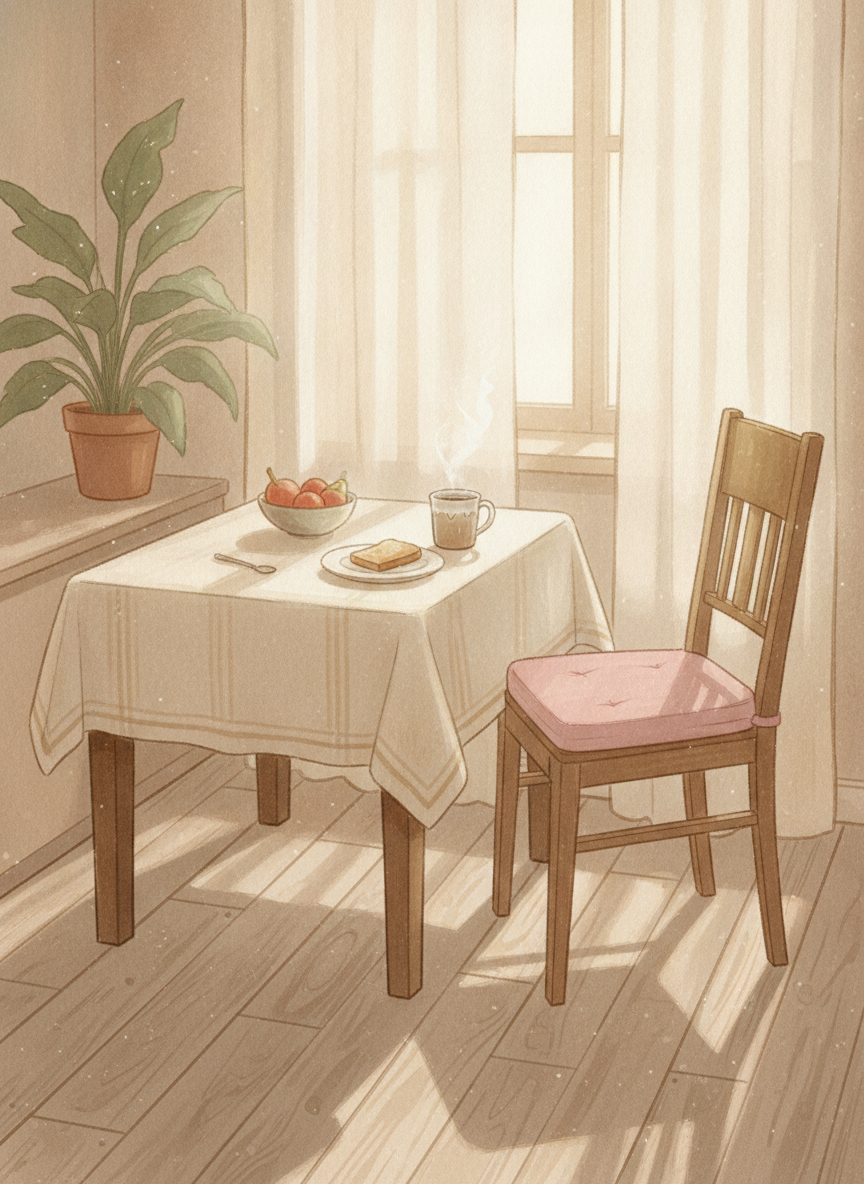
The chair is still pulled back from the table. The mug is cooling. Through the window, the afternoon goes on — and somewhere in the quiet you're making, you might find the shape of yourself again, small enough to carry back when you're ready.
Related book
The Feeling Has a Reason
Keep reading
- What it means to feel less alone — even by one personYou don't need a crowd. You need one person who stays when things aren't pretty.
- Why the people who get you don't always get you right awayReal belonging takes time. The instant click is rare. The slow build is where trust lives.
- The exhaustion of performing connection without feeling itYou showed up. You smiled. You asked questions. And you drove home feeling emptier than before.