Why asking for what you need feels impossible
You can advocate for everyone else — but your own needs feel like too much. When the sentence gets stuck, and what your body learned about needing before you had words for it.
By Trupti Gavit
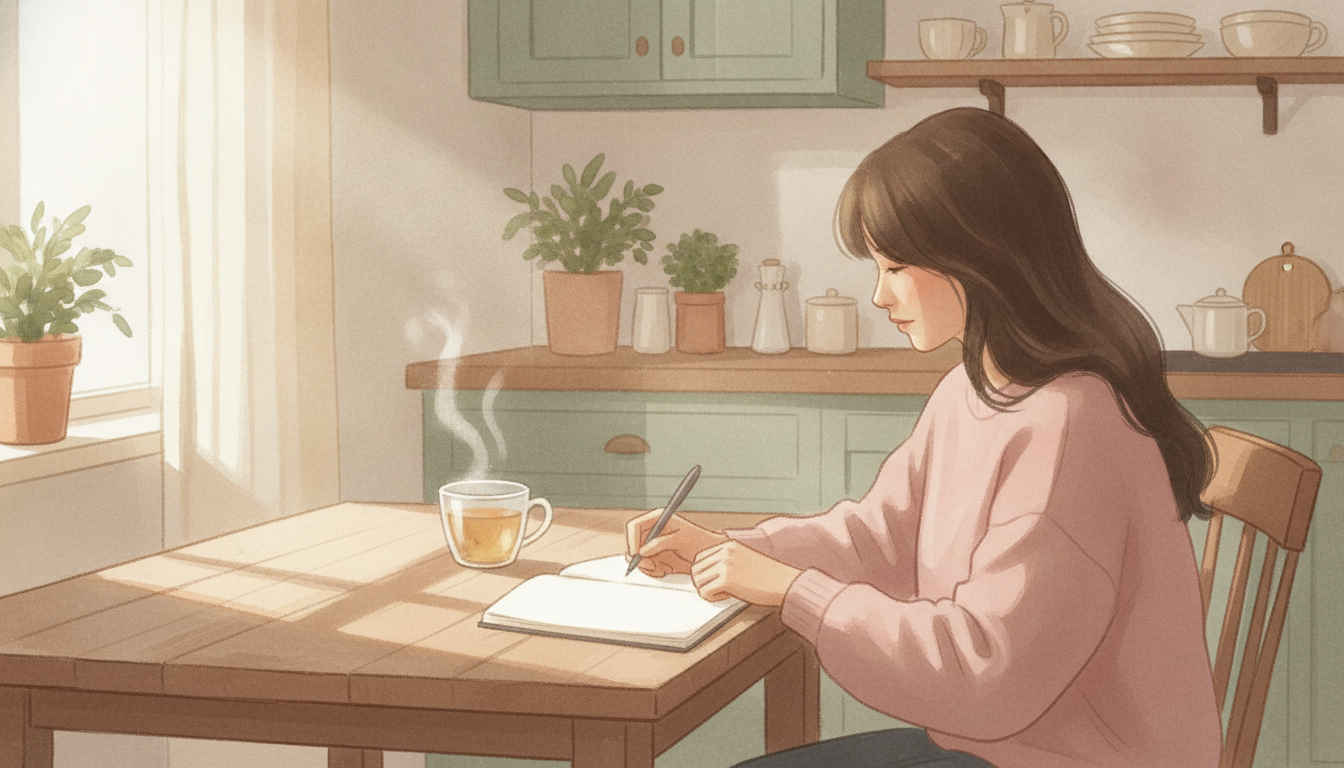
You can advocate for everyone else — but your own needs feel like too much.
Your friend is being treated unfairly at work and you know exactly what to say — the email you'd help her write, the boundary you'd name, the sentence that would make the situation clear. Your kid needs something at school and you show up, steady and articulate, asking for what they require without apologizing for it.
But when it's you — when you're the one who's exhausted, or hurt, or running on empty — the words don't come. Or they come wrapped in so many qualifiers that the need disappears inside them.
I don't want to be difficult, but...
It's probably nothing, but...
I hate to ask, but...
You rehearse the sentence in the shower. You draft the text and delete it. You tell yourself you'll bring it up later, when you're less tired, when you have better words, when you're sure you won't be too much.
Later keeps not arriving.
When need learned to be expensive
Most of us weren't taught that needing is neutral. We were taught, in ways spoken and unspoken, that need has a cost.
Need too much and someone gets tired. Need at the wrong time and the mood shifts. Need out loud and you become the problem that has to be managed.
So you learned to need quietly. To anticipate. To handle things yourself before anyone has to adjust. To become the person who notices what others need and meets it — partly out of love, partly because meeting your own need out loud still feels like standing in a spotlight where someone might eventually look away.
Asking for what you need isn't hard because you're bad at communication. It's hard because somewhere, your body learned that needing out loud had a price.
The advocate and the silence
You might be excellent at holding space for others and completely lost when the space needs to be yours.
This isn't hypocrisy. It's two different rooms.
In one room, you're safe to give — you control the tone, you can be generous without waiting for someone's face to change. In the other room, receiving still feels like taking up too much space. Like the need itself is an imposition. Like love is easier when you're the one providing it.
You might notice this in small moments. Someone asks what you want for dinner and you say Whatever's fine when something specific would actually help. Someone offers to help and you refuse before the offer fully lands. Someone says How are you? and you say Good because the true answer feels like it would require them to carry something they didn't sign up for.
What happens in the body before the words
The difficulty often shows up physically before you find language for it.
Your throat tightens. Your chest constricts. Your mind goes blank — not because you don't know what you need, but because your body is bracing for what might follow the asking.
Will they sigh? Will they seem burdened? Will you have to manage their reaction on top of managing your need? Will the need, once spoken, become evidence that you're too much?
These aren't irrational fears. They're pattern memory — your body responding to old rooms where need changed the temperature, where asking meant watching someone recalculate how much space you were allowed to take up.

The sentences that disappear
You might know exactly what you need and still be unable to say it cleanly.
I need help with the kids this weekend.
I'm not okay and I don't want to be alone tonight.
I need you to stop making that joke.
Each of these is a simple sentence. Each of them can feel impossible — not because you're weak, but because simple need, spoken plainly, was never modeled as safe.
So you add padding. You soften until the need is barely visible. You ask in ways that let the other person say no without you having to feel the full weight of being turned down. And when they say no — or when they say yes with a tiredness you can hear — you tell yourself you were right to hesitate.
You don't need perfect words to have a real need. The need exists before the sentence — and the sentence can be imperfect.
When the people now are not the people then
Some of the people in your life now might respond to your needs with warmth. They might say Of course without sighing. They might be glad you told them, glad to show up, glad you trusted them with something true.
Your body might not believe this yet.
It might take many small asks — met without punishment, without withdrawal, without the mood shifting — before your throat loosens enough to speak without the qualifiers. Before I need stops feeling like the opening to an apology.
That's slow. It happens in repetitions, not in one brave conversation.
What a small ask can look like
You don't have to start with the biggest need. You don't have to explain your whole history.
A small ask might sound like:
"Can you pick up dinner tonight? I'm wiped."
Or: "I need ten minutes alone before we talk about this."
Or: "I'm not great at asking for help — but I could use some today."
None of these are dramatic. All of them are real. And each one, if met with even partial warmth, teaches your body something the old rooms didn't: that need and love can coexist.
Holding strength and difficulty at the same time
You can be capable and still struggle to ask. Both are true.
You can love the people in your life and still find your own needs impossibly hard to voice. Both are true.
You can know, intellectually, that you're not too much, and still feel the brace arrive when you're about to say what you need. That brace isn't a character flaw. It's an echo of a time when needing out loud felt dangerous — and your body is still learning that this room might be different.
The need was always real. The difficulty was never proof that you wanted too much — only that asking once cost more than you had to spend.
The notebook is still open on the table. The tea has gone cold. The sentence you rehearsed in the shower is still there — simpler than you thought, harder than it should be, and yours.
Morning light moves across the kitchen. Somewhere in you, a small voice that learned to need quietly is testing whether this room might be safe enough to speak — not all at once, not perfectly, but in one honest sentence at a time.
Related book
It Started Before You Remember
Keep reading
- What it means to feel less alone — even by one personYou don't need a crowd. You need one person who stays when things aren't pretty.
- Why the people who get you don't always get you right awayReal belonging takes time. The instant click is rare. The slow build is where trust lives.
- The exhaustion of performing connection without feeling itYou showed up. You smiled. You asked questions. And you drove home feeling emptier than before.