When conflict felt like danger, not disagreement
Raised voices still make your body react like something bad is about to happen. When disagreement was never just disagreement.
By Trupti Gavit
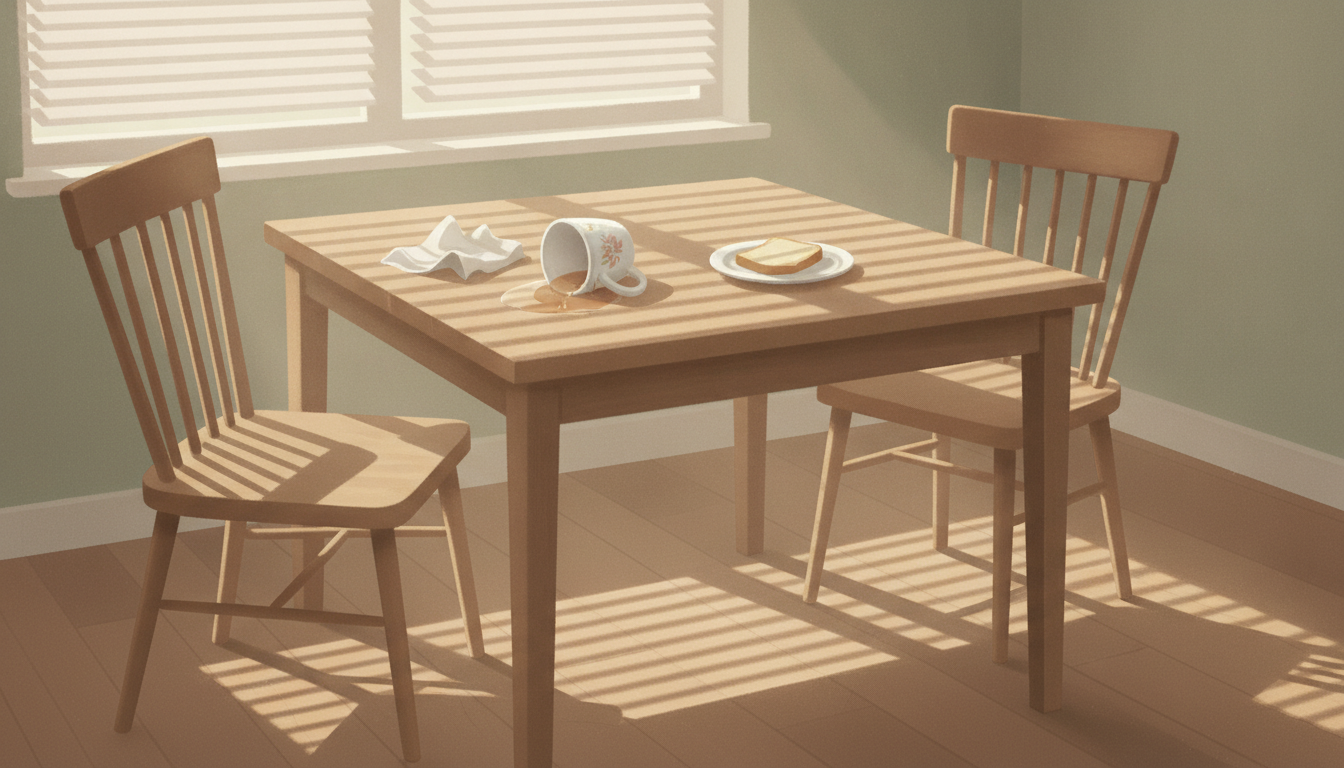
You're an adult now. You're in a different house, a different city, maybe a different life entirely. The argument happening near you might not even involve you — voices on the other side of a wall, a couple disagreeing in a restaurant, a colleague's tense phone call two desks away.
And your heart rate spikes anyway.
Your skin prickles. Your mind goes blank or floods. You feel the old urge to make yourself small, or smooth things over, or leave the room before the volume climbs one more degree. You know, logically, that this isn't your childhood kitchen. That no one is coming for you. That disagreement and catastrophe are not the same thing.
Raised voices still make your body react like something bad is about to happen.
Your body hasn't fully learned that yet.
When disagreement came with consequences
For some of us, conflict was never just two people seeing something differently.
It was the sound that preceded a door slamming. The tone that meant the evening was ruined. The silence afterward that felt worse than the shouting — the not knowing how long it would last, or what would be required of you to make it end, or whether you had done something to cause it simply by being present.
You might have been the child in the next room, listening. Or the one in the middle, caught between two people using you as ground to fight on. Or the one who learned to read the weather of a house — who could tell from footsteps whether today was a safe day or a holding-your-breath day.
Your body learned that raised voices weren't the whole storm. They were the part that told you the storm was coming.
We were simply living in the environments we had. Learning what we could, when we could. The alertness that formed wasn't a flaw — it was how a young body tried to stay ahead of what felt unpredictable.
That alertness saved you something, once. It helped you prepare, appease, disappear at the right moment. It made you good at reading people, good at de-escalating, good at knowing what not to say. Those skills have probably served you in adulthood, too.
They also come with a cost you might still be paying.

The adult who freezes, appeases, or disappears
The pattern doesn't always look the same now.
Some people go completely still when tension rises — face neutral, voice flat, present in body but gone somewhere inward. Some people apologize for things they didn't do, say yes when they mean no, agree too quickly just to lower the temperature in the room. Some people leave — physically or emotionally — the moment voices lift, because staying feels like standing in the path of something.
You might do all three, depending on the day.
And afterward, you might feel ashamed. Why did I shut down? Why couldn't I just say what I meant? Why do I still feel like a child when grown adults are having a normal disagreement?
But it isn't normal — not to your body. To your body, volume still maps onto danger. Tone still carries old data. The present-moment argument and the childhood one sit in the same folder, and your body opens it before you can explain that the years have changed.
You're not overreacting to the present. You're responding to a past where conflict rarely stayed contained.
The difference your mind knows but your body forgets
You can understand, clearly, that your partner raising their voice doesn't mean what your parent's voice meant. That your colleague's frustration isn't going to reshape your entire week. That two people disagreeing in a restaurant has nothing to do with you.
Understanding helps. It just doesn't always reach the part of you that flinches before the thought arrives.
That gap — between what you know and what your body does — can feel like failure. Like you should have moved past this by now. Like being an adult means conflict shouldn't still land in your chest like a warning siren.
But healing isn't the mind winning an argument with the body. It's the body slowly gathering new experiences that don't match the old file. One conversation where someone gets upset and then repairs. One disagreement that ends without punishment. One raised voice that rises and falls without taking the whole house with it.
Those moments are small. They're also how the body updates.
What you might need when conflict arrives
When your body reacts to tension, the first task usually isn't to solve the conflict. It's to come back to yourself.
That might mean feeling your feet on the floor. Naming, quietly, what's happening: My heart is racing. I'm remembering something old. It might mean asking for a pause — not to avoid the conversation, but because you can't speak honestly while your system is in alarm.
You might need to leave the room for five minutes and let that be okay. You might need to tell someone you trust: When voices get loud, I go somewhere else. It's not about you. It's about what loud used to mean.
None of that is dramatic. None of it requires the other person to be wrong. It's you learning to care for the part of you that still thinks danger is near when the volume changes.
Holding the child and the adult in the same room
You can know you're safe now and still feel the old fear. You can be proud of how far you've come and still notice your hands shaking when someone slams a cupboard door.
Both versions of you can be in the room — the one who has tools and language and boundaries, and the one who learned to survive by going very quiet and very still.
You don't have to exile the second one to prove you've grown. You might just have to keep meeting them with something the original conflict rarely offered: time, gentleness, and the slow proof that disagreement can end without someone being destroyed.
The flinch isn't weakness. It's memory — and memory can be given new chapters, one quiet moment at a time.
The kitchen is quiet now. The chairs are back at the table. Somewhere, a kettle starts to whistle — ordinary, domestic, unthreatening. You can stay in the room a little longer, if your body is ready. And if it isn't, the door is yours to walk through.
Related book
It Started Before You Remember
Keep reading
- What it means to feel less alone — even by one personYou don't need a crowd. You need one person who stays when things aren't pretty.
- Why the people who get you don't always get you right awayReal belonging takes time. The instant click is rare. The slow build is where trust lives.
- The exhaustion of performing connection without feeling itYou showed up. You smiled. You asked questions. And you drove home feeling emptier than before.