How growing up with money tightness still shows up
You're doing fine now but something still flinches at the price tag — when childhood scarcity lives in your body long after the numbers change.
By Trupti Gavit
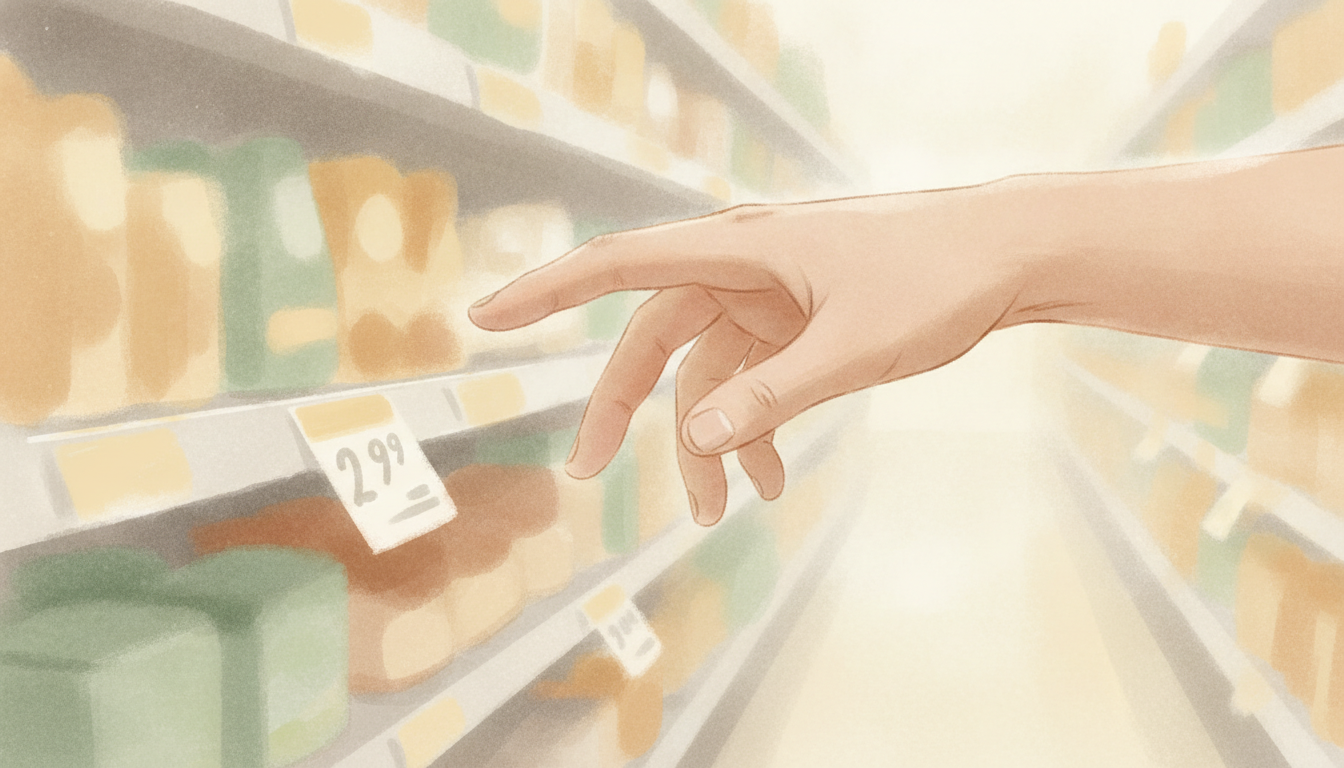
You're standing in the aisle with the nicer olive oil in your hand. Your account is fine. You've been fine for years. You know this logically — you've checked, you've budgeted, you could buy three bottles and still pay rent on the first.
Your thumb rubs the price sticker anyway.
Something in you flinches — not at the number itself, but at what numbers used to mean. The way a cart had to be put back item by item. The way your parent went quiet at the register. The way "we can't afford that" arrived in your body before you understood what afford meant.
You're doing fine now. And something still watches the price tag like it might bite.
When the present doesn't update the past
Scarcity in childhood doesn't always leave when income grows.
You might earn more than anyone in your family ever did and still feel a pinch in your chest when the bill arrives. You might have savings and still treat every small pleasure like it needs a defense. You might walk past the nicer olive oil, put it back, choose the cheaper one, and only later wonder who you were protecting — your current self or the child who learned that reaching for the good thing could make someone else's face fall.
This isn't ingratitude for what you've built. It's memory living in muscle. Your body learned that resources were unpredictable — that enough was temporary, that wanting visibly could cost more than money.
The flinch at the price tag isn't about today's balance. It's about every day the balance wasn't enough.
The habits that looked like responsibility
Money tightness teaches skills that don't always announce themselves as survival.
You might be excellent at comparison shopping — not because you enjoy it, but because your body still believes the wrong choice could mean going without. You might hoard pantry items, buy in bulk, feel a strange relief when something is on sale even when you don't need it. You might under-tip, over-tip, or agonize about both.
You might swing between strictness and sudden spending — a week of rice and lentils followed by a purchase that arrives with immediate regret, as if pleasure and panic can't occupy the same cart.
These patterns aren't moral failures. They're adaptations. Your younger self learned to read a room through its resources — to notice when the mood shifted because the bill was high, when love felt conditional on not asking for too much, when the safest move was to want less out loud.

The shame of having enough now
There's a particular loneliness in outgrowing scarcity while still feeling shaped by it.
Friends might say you're too careful or not careful enough. You might feel guilty for having what your family didn't — as if enjoying it betrays where you came from. You might send money home and resent the sending and love the sending in the same breath.
You might hide purchases — not because anyone is watching, but because visibility still feels risky. Because nice things once meant someone else went without. Because your body hasn't fully learned that your having enough doesn't take from anyone else now.
You might also notice the opposite impulse — giving generously, paying for others, treating the table — while quietly skipping what you wanted for yourself. Both moves come from the same old math: resources are scarce, and someone has to go without. You just never learned that the someone doesn't always have to be you.
Outgrowing scarcity in your bank account doesn't automatically outgrow it in your chest.
That gap — between what you know and what you feel — is exhausting in its own quiet way. You perform ease you don't fully inhabit. You make the responsible choice and mourn the choice you didn't let yourself make. Time passes, and the body doesn't always keep pace — as if enough in the account should automatically mean enough in the chest.
What the flinch is trying to protect
Before you argue with the flinch, consider what it saved you from once.
It kept you from asking for things that would have landed heavy in a house already carrying too much. It taught you to scan, to anticipate, to make do. It made you attentive in ways that still serve you — and costly in ways that don't.
Your body isn't turning against you for success. It's trying to make sure you never land where you landed before: surprised, exposed, without a cushion when the month turned.
Naming that doesn't erase the flinch. It might soften the shame around it — the story that you're irrational, ungrateful, stuck in a past you should have left.
Living with two truths about money
You can be financially stable and still carry childhood tightness. You can know you're safe and still put the olive oil back. You can be proud of what you've built and tender toward the part of you that still waits for the other shoe — the other bill, the other month, the other version of life where enough disappears overnight.
This isn't about forcing yourself to spend freely or shaming yourself for being careful. It's about noticing when the old math runs the present transaction.
Is this fear about now or about then? Would this purchase actually harm me, or harm the memory of someone I love? What would it feel like to choose from today instead of from the aisle of my childhood?
Sometimes the answer is still the cheaper bottle. Sometimes it's the nicer one, chosen slowly, with your hand steady on the shelf. Both can be wise. Both can be kind.
You don't have to stop being careful to stop letting the past run every receipt.
Over time, small repetitions matter. Checking your balance and surviving what you see. Buying one unnecessary thing and noticing you didn't unravel. Letting someone treat you without immediately calculating what you owe back.
Your body learns slowly. Each moment where enough stays enough is one more piece of evidence the child in you couldn't have — that the ground can hold you now in ways it couldn't then.
Growing up with money tightness didn't make you ungrateful or careless. It made you attentive to a world where resources and safety were often the same word — and your body learned that language before you had any say in the lesson.
The olive oil is still in your hand. The sticker is warm from your thumb. Through the store window, ordinary afternoon light — and somewhere between the price and the purchase, a small choice waits that belongs only to the life you're living now.
Related book
It Started Before You Remember
Keep reading
- What it means to feel less alone — even by one personYou don't need a crowd. You need one person who stays when things aren't pretty.
- Why the people who get you don't always get you right awayReal belonging takes time. The instant click is rare. The slow build is where trust lives.
- The exhaustion of performing connection without feeling itYou showed up. You smiled. You asked questions. And you drove home feeling emptier than before.