Why high achievers often feel empty inside
The boxes are checked. The applause arrived. And still — something inside feels quiet, hollow, unmarked. That emptiness has a history worth understanding.
By Trupti Gavit
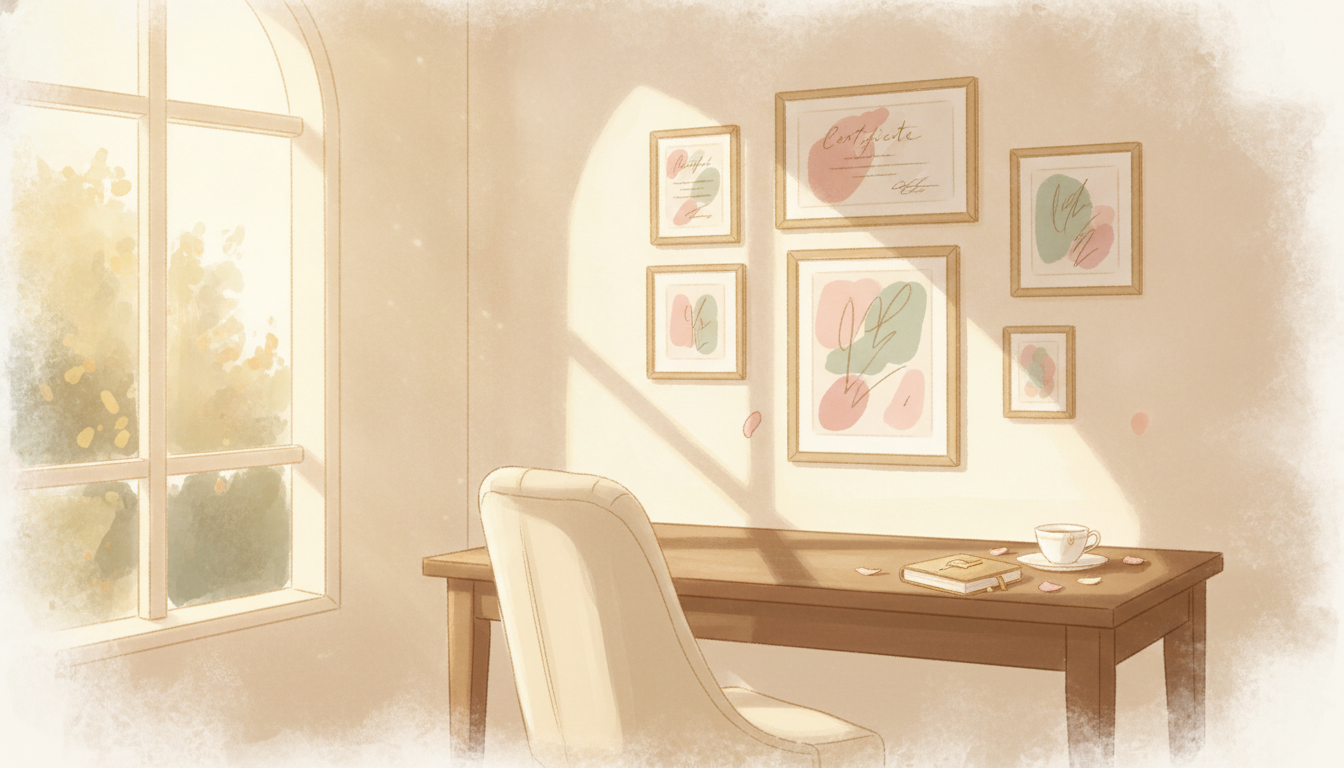
The frames are on the wall. Degree. Award. A letter from someone important thanking you for work that mattered.
You hung them yourself, straight, measured twice. They look like they should mean something settled. Like they should fill the room with proof.
Instead, you stand in the doorway and feel — nothing much. Or something worse than nothing: a quiet hollow where satisfaction was supposed to be.
You checked the boxes. You hit the milestones. You did what you were told would matter, what you told yourself would finally feel like enough.
The applause came. You smiled. You said thank you.
And when the room cleared, the feeling you expected — arrival, fullness, rest — didn't come. What came was a question, soft and persistent: Is this it?
When achievement doesn't fill the room
This isn't about being ungrateful. It's not about having the wrong goals or not wanting enough.
It's about what achievement was wired to do inside you — and what it was never wired to do.
For many high achievers, accomplishment was never primarily about joy. It was about safety. Visibility. Belonging. Proving — to someone, or to a version of yourself that learned early to keep moving — that you were worth keeping around.
The gold star didn't feel like celebration. It felt like temporary permission to exist.
So you collected them. You kept going. Each milestone arrived, and for a moment the hollow went quiet — and then it returned, asking for the next thing, because the next thing was always where relief was supposed to live.
Emptiness after achievement isn't failure to appreciate your life. It's what happens when accomplishment was carrying weight it was never designed to hold.
The childhood contract
Somewhere early, many of us signed a contract we didn't know we were signing.
The terms varied. Be useful and you'll be loved. Be exceptional and you'll be seen. Don't need too much and you won't be disappointed. Keep achieving and you'll stay safe.
The contract made sense in the context where it was written. Maybe love in your house was warm but inconsistent. Maybe praise came when you performed and faded when you rested. Maybe you watched a sibling get attention for different things and learned that your lane was achievement — that being the capable one was your role in the family ecosystem.
You weren't wrong to adapt. You were a child reading the room, learning what kept connection alive, what prevented withdrawal or criticism or invisibility.
Achievement worked. It got results. It still gets results.
It just doesn't deliver what the child hoped it would: a permanent sense of being enough. Because enough was never actually for sale. It was always conditional, always the next quarter, always one more frame on the wall.
The applause and the silence after
There's a particular quality to achievement applause when your inner world is quiet.
People congratulate you. They call it inspiring. They ask how you did it, what's next, whether you're proud.
You say the right things. You feel a flicker of something — pride, maybe, or relief, or a brief warmth — and then it passes, like water over a surface that doesn't absorb.
The applause is real. The hollowness is also real.
Holding both isn't contradiction. It's accuracy. You can recognize that you worked hard and that the work mattered to other people, while also noticing that something inside you wasn't reached by any of it.
That something might be the part of you that needed to be loved without performing. The part that wanted to be seen on a Tuesday afternoon when nothing special was happening. The part that was told, directly or silently, that your value was in what you produced — and that heard the message, and built a life around it, and is still waiting for the producing to finally feel like enough.

You can be proud of what you've built and still feel the ache of what achievement was never going to give you.
What the emptiness is pointing toward
Emptiness isn't always absence. Sometimes it's space.
Space where something else might eventually live — if you stop trying to fill it with the same thing that never quite reached the bottom.
That something else isn't another goal. It's not a bigger milestone or a more impressive frame. It's often quieter. Being known without your resume. Resting without earning it first. Letting an ordinary Tuesday count as a day you were worth loving.
For people who've spent decades achieving, this sounds almost suspiciously soft. Like it couldn't possibly be what the hollow is asking for. Like the answer must be more complex, more productive, more measurable.
But the hollow persists through every measurable success. Which suggests the measurement was never the point.
The child who signed the contract wasn't trying to collect frames. They were trying to be kept. To be safe. To matter when nothing special was happening.
That child is still in the room with you, standing in the doorway, looking at the wall.
The child who learned to achieve for safety wasn't naive. They were paying attention to what the room rewarded.
You don't have to dismantle what you built
Understanding this doesn't require burning the certificates or quitting the career or pretending the achievements didn't happen.
You worked for those frames. They represent real effort, real skill, real impact on the world. That matters. It can matter without filling the hollow.
What comes next — if anything comes next — is quieter than demolition. It's the slow work of separating your worth from your output. Of letting ordinary moments count. Of noticing what fills you when nothing is being evaluated — a walk, a conversation, an hour with no purpose except being alive in it.
That work is not another achievement to chase. It doesn't have a frame. It doesn't applause.
It might feel like nothing at first. Which makes sense. You spent years learning to feel something only when the room was watching.
The wall and the window
The certificates are still on the wall. They'll stay there if you want them to. They document a life of showing up, of capability, of impact.
And beside the wall, there's a window. Ordinary light. A tree moving slightly. An hour with nothing required of you.
The hollow might not fill today. It might not fill this year. But it might soften — not because you achieved the next thing, but because you started letting unremarkable moments count as part of a life, not as interruptions to one.
The frames catch the afternoon light. Dust on the glass. A bird outside the window, unbothered by any of it. You checked every box. The room is still quiet. Maybe quiet is where something else begins — not louder, not brighter, just closer.
Related book
It Started Before You Remember
Keep reading
- What it means to feel less alone — even by one personYou don't need a crowd. You need one person who stays when things aren't pretty.
- Why the people who get you don't always get you right awayReal belonging takes time. The instant click is rare. The slow build is where trust lives.
- The exhaustion of performing connection without feeling itYou showed up. You smiled. You asked questions. And you drove home feeling emptier than before.