What happens when you outgrow the role you were given
You're not the caretaker anymore — but the family still expects you to be. When the role you played to survive no longer fits who you're becoming, and the quiet friction that follows.
By Trupti Gavit
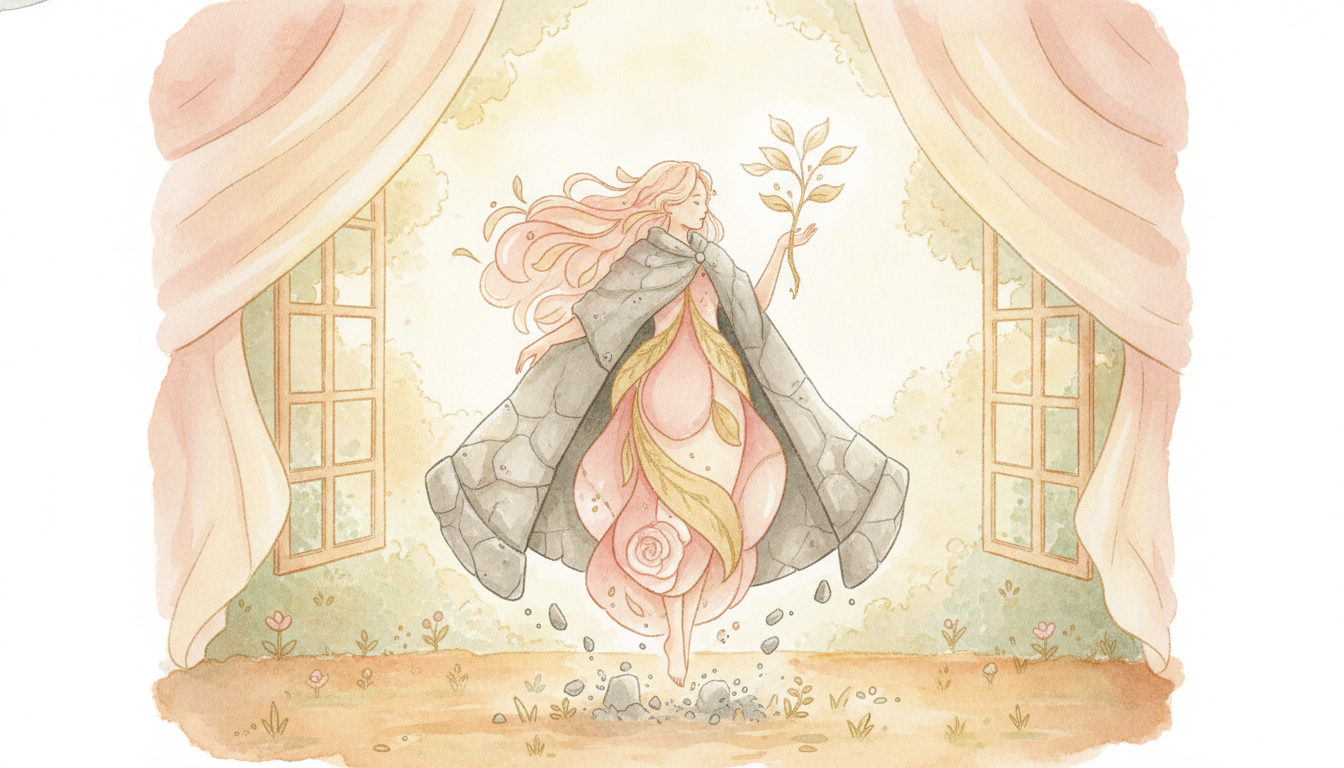
You're not the caretaker anymore — but the family still expects you to be.
At the holiday dinner, your mother mentions she's been stressed and looks at you — not dramatically, just the way she always has. Your sibling starts a story about a problem at work and pauses, waiting for you to offer the solution, the comfort, the plan. Someone says, You're so good at this — and you feel the old role settle over your shoulders like a coat you've outgrown but everyone still recognizes.
You want to help. Part of you still does help, automatically, before you've checked whether you have the capacity. But another part of you is tired. Tired of being the one who holds the mood. Tired of arriving with your own life half-finished because someone else's crisis needed tending first.
You've changed. The family script hasn't.
The role that kept you in the room
Most family roles weren't chosen. They were assigned — by temperament, by birth order, by who was sensitive enough to notice what was needed, by who learned early that being useful was how you kept your place in the room.
You might have been the caretaker — the one who checked on everyone, mediated arguments, remembered birthdays, absorbed the worry so others didn't have to carry it. You might have been the responsible one, the peacemaker, the funny one who lightened the mood, the steady one who never showed need because need would have made things harder for everyone else.
That role was real. It wasn't a performance you put on for applause. It was how you survived — how you stayed connected, stayed valued, stayed inside the circle when the circle felt fragile.
The role you outgrow wasn't fake. It was real enough to keep you included — and real enough to cost you something no one saw.
When the fit starts to chafe
Outgrowing a role rarely announces itself clearly.
It might start as irritation you can't name — a resentment that arrives when the group chat fills with someone else's problem and your thumb hovers over the keyboard, composing the reassuring reply you've sent a hundred times. It might start as exhaustion after every family gathering, the kind that takes days to recover from. It might start as a quiet question: When did I become the only one who holds this?
You might set a boundary — say no to something you would have always said yes to — and feel the room change temperature. Not always dramatically. Sometimes just a pause. A look. A That's not like you that lands like a small accusation.
The family isn't cruel. They're responding to a pattern that has held for years — sometimes decades. You were the caretaker. You were reliable. You were the one who showed up. Why would that change?
Because you changed. And the role that once kept you safe might now be what's keeping you small.

The grief of stepping out of character
There's a particular loneliness in outgrowing a family role.
You're not leaving the family — not necessarily. You're leaving a version of yourself they depended on. The one who always knew what to say. The one who never needed much. The one who could be counted on without being asked.
Some of them will adjust. Some won't know what to do with you when you stop playing your part. Some will feel abandoned — not because you left, but because the person they knew how to relate to isn't showing up the same way anymore.
You might feel guilty. You might wonder if you're being selfish, difficult, ungrateful for the family that raised you. You might miss being the one everyone turned to — the visibility of being needed, even when being needed was exhausting.
Outgrowing a role can feel like loss — not because the role was wrong, but because it was yours for so long that putting it down feels like putting down a part of yourself.
What the family sees and what they don't
Your family might see the change as withdrawal. As distance. As you becoming someone they don't recognize.
They might not see the years of carrying what wasn't yours to carry. The holidays where you tended everyone and no one asked how you were. The phone calls where you listened for an hour and hung up emptier than when you answered. The slow accumulation of giving without receiving — not because they never gave, but because the role didn't leave room for you to need.
You can love them and still need to stop being the only one who holds the center. You can be grateful for what the role taught you — the empathy, the steadiness, the capacity to show up — and still need to set it down sometimes, or permanently, or in certain rooms where it was never reciprocated.
Both can be true. The gratitude and the exhaustion. The love and the need for something different.
When the new self meets the old script
The friction isn't always a sign to leave. Sometimes it's a sign to stay differently.
You might still show up to the holiday dinner — but leave earlier. You might still listen when someone is struggling — but not offer to solve it unless they ask. You might still be the capable one — but let someone else be capable too, even if they do it differently, even if it's harder to watch.
You might say, I'm not in a place to help with this right now — and let the silence that follows be theirs to fill, not yours to rescue.
Your body might panic when you don't step into the role. The old house might feel close — as if not caretaking means the center won't hold, the mood will sour, someone will be disappointed and it will be your fault.
Sometimes the center holds anyway. Sometimes someone else steps in. Sometimes the family adjusts, slowly, unevenly, with friction and confusion and occasional grace.
Sometimes it doesn't. And that's information too — about which relationships can stretch to hold who you're becoming, and which were built for the role you played.
You don't have to abandon who you were to stop being who you always had to be. The caretaker can rest without disappearing.
Holding the role and releasing it
The role will probably call you back. Familiar patterns do — especially in families, especially in rooms where you've played the same part since childhood.
You might slip back in without meaning to. You might caretaker automatically and only notice afterward, when your shoulders are tight and your own needs are still waiting. That's not failure. It's habit — deep, practiced, written into how you love.
Noticing is the beginning. Noticing when the coat settles over your shoulders. Noticing when you say yes before you've checked whether you mean it. Noticing when the old script starts and you have a choice — even a small one — to play a different line.
The apron is still on the hook. The kitchen is quiet. Morning light moves across the counter where you used to stand, tending everyone else's needs before your own. Someone might walk in later and look at you the way they always have — expecting the old role, the familiar response. You could pick the apron up again. You could leave it hanging and sit down at the table instead, empty-handed, present without performing. The family script is old. Yours is still being written.
Related book
It Started Before You Remember
Keep reading
- What it means to feel less alone — even by one personYou don't need a crowd. You need one person who stays when things aren't pretty.
- Why the people who get you don't always get you right awayReal belonging takes time. The instant click is rare. The slow build is where trust lives.
- The exhaustion of performing connection without feeling itYou showed up. You smiled. You asked questions. And you drove home feeling emptier than before.