Why you learned to read the room before reading yourself
You became an expert at other people's moods — and lost track of your own. When scanning the room became more natural than checking in with yourself.
By Trupti Gavit
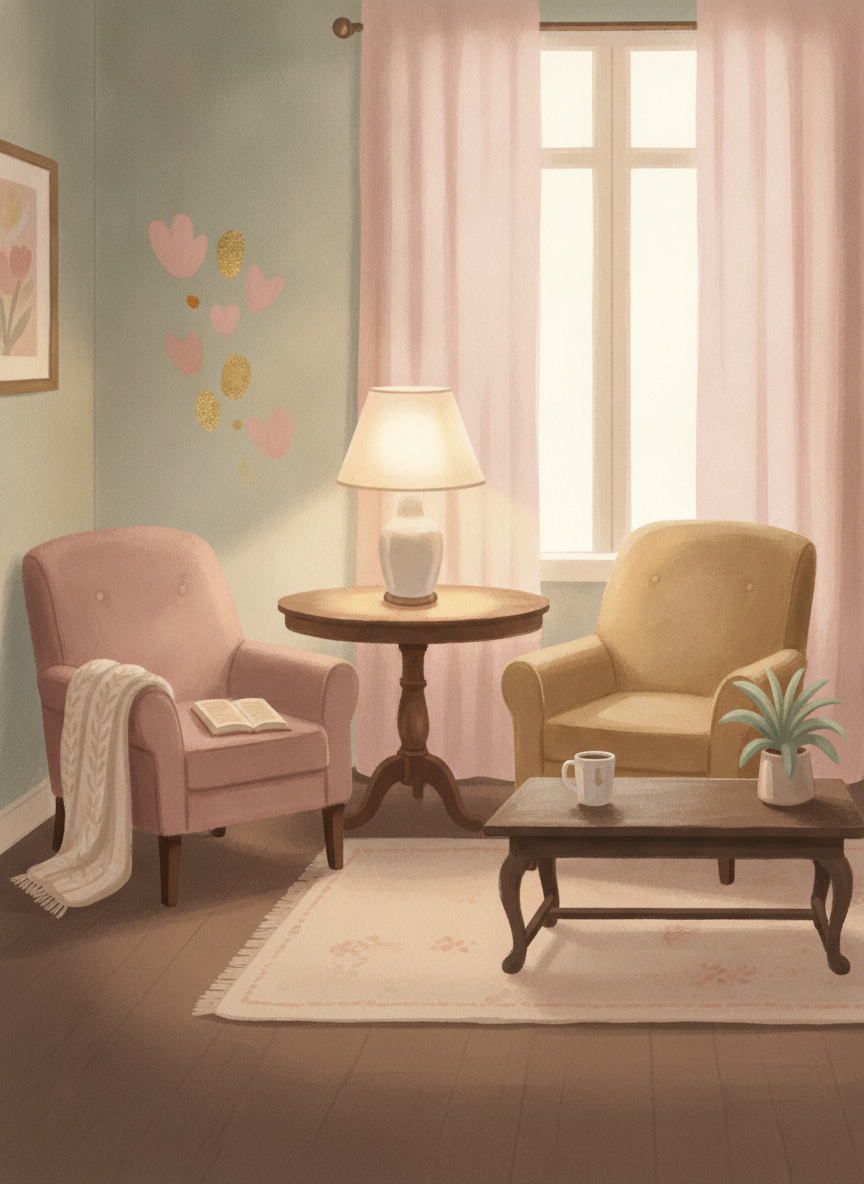
You pause in the hallway before opening the door.
Not because you're afraid. Because you're gathering information. The tone of voices inside. The rhythm of footsteps. Whether the laughter sounds real or performed. Whether the silence means peace or the kind that comes before something shifts.
You do this at work. At family dinners. In your own kitchen when your partner comes home. You do it so automatically you barely notice — but your body notices. It's always scanning, always updating, always one step ahead of your own arrival.
You became an expert at other people's moods. Somewhere along the way, you lost track of your own.
When the room's weather mattered more than yours
In some homes, the room's mood wasn't background noise. It was the main event.
You learned early that your comfort depended on reading it correctly. Was today a good day or a careful day? Was the silence restful or loaded? Did that sigh mean tired or disappointed — and if disappointed, was it about you?
You got good at it. Good at adjusting your volume, your words, your presence. Good at becoming what the room needed before the room had to ask. Good at making yourself small when space felt tight and useful when someone needed tending.
That skill kept you safe. It probably still serves you — you notice things others miss, you de-escalate without thinking, you can walk into a gathering and sense within seconds what's happening beneath the surface.
But the skill came with a trade. While you were reading everyone else, who was reading you?
You learned to be a weather station for the whole house. No one taught you to check your own forecast.
The self you stopped listening to
When your attention lives outside you — tracking faces, tones, shifts in energy — your own signals get quiet.
You might not know you're hungry until you're faint. You might not know you're tired until you snap at someone and surprise yourself. You might not know you're sad until you're alone and the feeling arrives all at once, like it was waiting in the hallway for you to finally stop moving.
Someone asks what you want for dinner and you genuinely don't know. Not because you don't care — because you've spent so long reading what everyone else wants that your preferences got buried under the habit of accommodation.
Someone asks how you are and you say fine, and you mean it, sort of, because you haven't checked in long enough to know if something else is also true.
This isn't superficiality. It's what happens when a young body decides that survival means external focus — and never updates the setting when survival is no longer the primary task.

When watching the room was also a kind of love
It can be tempting to frame this as purely a wound — something to outgrow, something that kept you from yourself.
But that watching was also a form of care. You were paying attention because people mattered to you. Because you didn't want to make things harder. Because you loved the people in the room enough to learn their patterns, their shifts, their needs before they had to voice them.
That attentiveness is real. It's not a flaw dressed up as a strength. It's a capacity you developed because the environment asked it of you.
You don't have to stop caring about others to care about yourself. Your own face can belong in the scan — not instead of theirs, alongside them.
You weren't wrong to watch the room. You just weren't shown that your own face belongs in the scan.
What it feels like to come back inward
Reading yourself after years of reading everyone else can feel strange — even selfish, at first.
You might sit with the question What do I want? and draw a blank. You might notice you're uncomfortable and not know why. You might reach for your phone or a task because stillness asks you to feel something you don't have language for yet.
That's normal. This kind of attention wasn't exercised much when you were young. It starts small.
Am I hungry, or just tired? Do I want to go, or am I going because I think I should? Is this silence okay with me, or am I performing okay because the room expects it?
You don't need perfect answers. You need the question. The pause. The willingness to let your own signal be as worth hearing as anyone else's tone of voice.
Over time, the blank spaces fill in — not all at once, but in fragments. You notice you prefer tea over coffee in the morning. You notice your chest loosens when a certain friend cancels. You notice you feel lighter when you leave a gathering early instead of staying until the room says you can go.
Each fragment is data. Your own data. Gathered with the same attention you once gave exclusively to others.
Holding both skills at once
You don't have to choose between reading the room and reading yourself.
The room still matters. Other people's feelings still matter. Your capacity to sense what's happening around you is a gift — one that can make you a thoughtful partner, a perceptive friend, a person who shows up with quiet understanding.
But the gift works better when it's paired with an inner check-in. When you scan the room and ask, Where am I in this? What do I need? Is this okay with me?
That pairing takes practice. Some days you'll slip back into old mode — full external focus, your own weather unreported. That's not failure. That's a habit with deep roots. You notice, you return, you ask one honest question about yourself before the moment passes.
The room will always have a weather report. The invitation is to include your name in it.
The hallway is quiet. The voices inside have settled into something you can read — but for once, you're not only reading them. You're also noticing your own breath, your own shoulders, the small pull toward the door or toward staying. The photograph on the side table catches the lamplight. The child who learned to watch is still here. And so is the adult who is learning, slowly, to be watched too.
Related book
It Started Before You Remember
Keep reading
- What it means to feel less alone — even by one personYou don't need a crowd. You need one person who stays when things aren't pretty.
- Why the people who get you don't always get you right awayReal belonging takes time. The instant click is rare. The slow build is where trust lives.
- The exhaustion of performing connection without feeling itYou showed up. You smiled. You asked questions. And you drove home feeling emptier than before.